
Calling all food aficionados! Picture this: the sizzling sounds of gourmet cooking filling your kitchen as an 8 oz steak cooks to perfection, the aroma of perfectly browned filet mignon tantalizing your senses—got your attention, didn’t I? Hold your forks, because we’re about to uncover the calorie count of this luxurious lean meat and delve into the art of steak preparation using the revered reverse searing technique. Fear not, calorie counters, because indulgence and health go hand-in-hand when you play your cards right in the culinary game.
Key Takeaways
- Discover the calorie count of an indulgent yet lean 8 oz filet mignon.
- Understand how reverse searing elevates the filet mignon’s texture.
- Learn the secret to a perfectly crispy crust with even cooking throughout your steak.
- Find out how to maintain the steakhouse caliber without compromising the dietary checkbook.
- Embrace the sizzle of gourmet cooking while keeping nutrition in check.
What Makes Filet Mignon a Premier Choice?
When you think of a premium beef cut, it’s almost impossible not to conjure the image of a tender steak that’s both luxurious and steeped in culinary reputation. And in the realm of gastronomical delights, filet mignon sits comfortably on the throne. So, let’s slice into what makes this elegant cut the crown jewel in the kingdom of beef and a must-have for your next gourmet adventure!
The Appeal of Filet Mignon’s Textural Euphoria
The filet mignon is the epitome of tenderness. Its textural euphoria is akin to the first bite of a cloud if one were edible – purely divine. Achieving such perfection is no accident; it’s the result of a muscle that does little work, which means less connective tissue and thus, a buttery softness that has branded the filet mignon as a tender steak superstar.
Filet Mignon in Culinary Culture
Iconic dishes have stories, and filet mignon has penned a novel. It’s synonymous with upscale dining and has a culinary reputation that chefs around the world revere. From five-star restaurants to your dinner table, filet mignon boasts a flavor that’s subtle yet undeniably profound, making each meal an occasion rather than just another dinner.
Selecting the Best Cut
Best quality selection – this isn’t just lingo. It’s your manifesto when hunting for the perfect filet mignon. Aim for that ideal 1.5 to 2-inch thickness, with marbling that’s almost poetic. Uniformity in shape means a steak that cooks evenly, ensuring your culinary efforts result in a round of applause from your tastebuds.
| Feature | Description | Why It Matters |
|---|---|---|
| Thickness | 1.5 to 2 inches | Ensures even cooking and a consistent end-to-end pinkness |
| Color | Deep red | Indicates freshness and high quality |
| Marbling | Minimal | Filet mignon should be lean, offering a melt-in-your-mouth experience |
| Texture | Buttery, soft | Delivers the tender bite associated with premium steak |
Armed with the knowledge of what to look for, you’re ready to transform your culinary escapades with a cut that’s quite literally the ‘tender’ loving care your palate deserves. Choose wisely, cook passionately, and savor every moment.
The Reverse Sear Method for Perfect Texture
Unlock the full potential of your filet mignon with the magic of the reverse sear technique. With oven roasting gently coaxing your steak to the perfect pink and pan-searing delivering that quintessential steak crust, you’re about to become the culinary artist you’ve always dreamed of. Aim for even cooking? That’s the reverse sear promise—never again will you have to apologize for unevenly cooked steak.
Here’s the drill:
- Start the show with a low-temp oven roast, creating the perfect stage for an evenly cooked masterpiece.
- Then, it’s time for the grand finale: a sizzling pan sear that’ll give your steak a crust worth bragging about.
But what does this look like in real terms? Think of steak so perfectly cooked, it whispers tales of even cooking with every bite. A crust so divine, it could bring a tear to a chef’s eye. That’s the reverse sear spectacle!
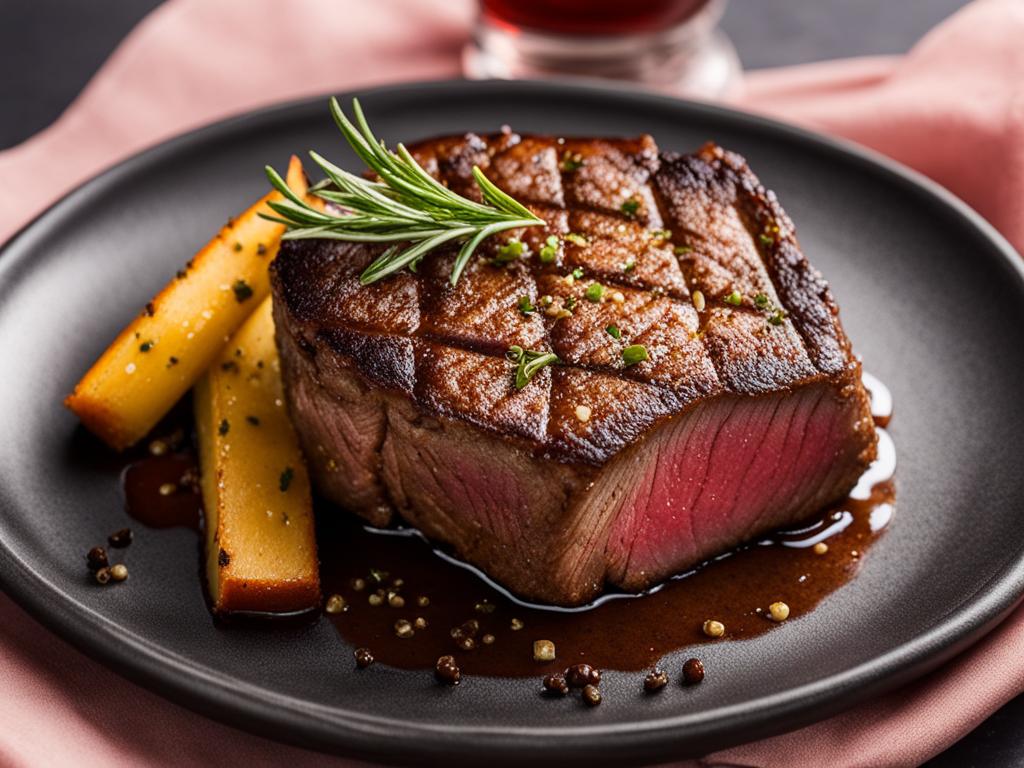
Let’s break it down into the simplest of terms with a table that could double as modern art in your kitchen:
| Stage | Oven Roasting | Pan-Searing |
|---|---|---|
| Temperature | Low and Slow | High and Fast |
| Goal | Evenly cooked interior | Crusty, savory exterior |
| Time | Depends on thickness | A minute or so per side |
| Utensils | Oven-safe Thermometer | Cast Iron Skillet |
| End Result | Luscious pink core | Gorgeously browned crust |
And there you have it, you’re not just cooking steak; you’re engineering a gourmet experience. So, don your apron, preheat your oven, and get ready to brandish that skillet like a pro. Your taste buds (and your stunned guests) will thank you.
Ingredients: The Building Blocks of Flavor
Embark on a culinary journey that begins with selecting the perfect steak and ends with a symphony of flavors on your palate. But remember, the road to a succulent, sear-kissed steak is paved with not just any ingredients, but the choicest of them all. So strap in, as we dive deep into the essentials of selecting and preparing those crucial recipe ingredients, ensuring that your steak endeavor is nothing short of extraordinary.
Choosing Your Steak: Beyond Just Filet Mignon
You already know the lean and tender filet mignon, but let’s expand your horizon. Ever considered the robust flavors of top sirloin, or perhaps the sumptuous fattiness of a ribeye? Maybe the iconic bone-in opulence of a t-bone steak? Each steak choice brings its unique personality to the table, and with the reverse sear method, they hold their own, boasting a perfect crust with a tender heart.
The Role of Quality Seasoning
Think of seasoning as your steak’s best ally. The right touch can catapult a good steak to celestial heights. A sprinkle of Montreal steak seasoning or a classic mingling of salt and cracked black pepper can turn your steak into a mouthwatering masterpiece. The secret lies in the quality seasoning, binding with the meat’s natural juices, creating a crust of flavor that’s impossible to resist.
The Best Oils for Searing
Your choice of healthy cooking oils can make or break that enviable sear. High-smoke-point oils – like the steadfast avocado oil – are your go-tos for that perfectly browned exterior. But here’s the plot twist: Introduce a knob of butter and a few cloves of garlic into the mix during searing, and watch as they conspire to infuse your steak with aromatic excellence.
Choosing the right steak cut, opting for quality seasoning, and using healthy cooking oils are more than just steps in a process – they’re the pillars of crafting a culinary delight that’s as pleasurable to cook as it is to eat. Every element matters, and with the finest ingredients at your disposal, you’re well on your way to achieving steakhouse-level grandeur in your very own kitchen.
Sizzle Slim’s Unique Cooking Technique
Ever wonder how to achieve that steakhouse-quality sizzle in your home kitchen? Look no further. Sizzle Slim is not just a passing trend in meat preparation; it’s an entire culinary strategy designed to optimize steak browning and transform your home-cooked meat into a gourmet centerpiece. Let’s dissect this succulent puzzle step by succulent step, shall we?
First things first: Dry the steak thoroughly. This isn’t just patting it down with a paper towel; think more along the lines of enough dabbing to make a sea sponge jealous. Only when you think you’ve dried it enough, dry it once more.
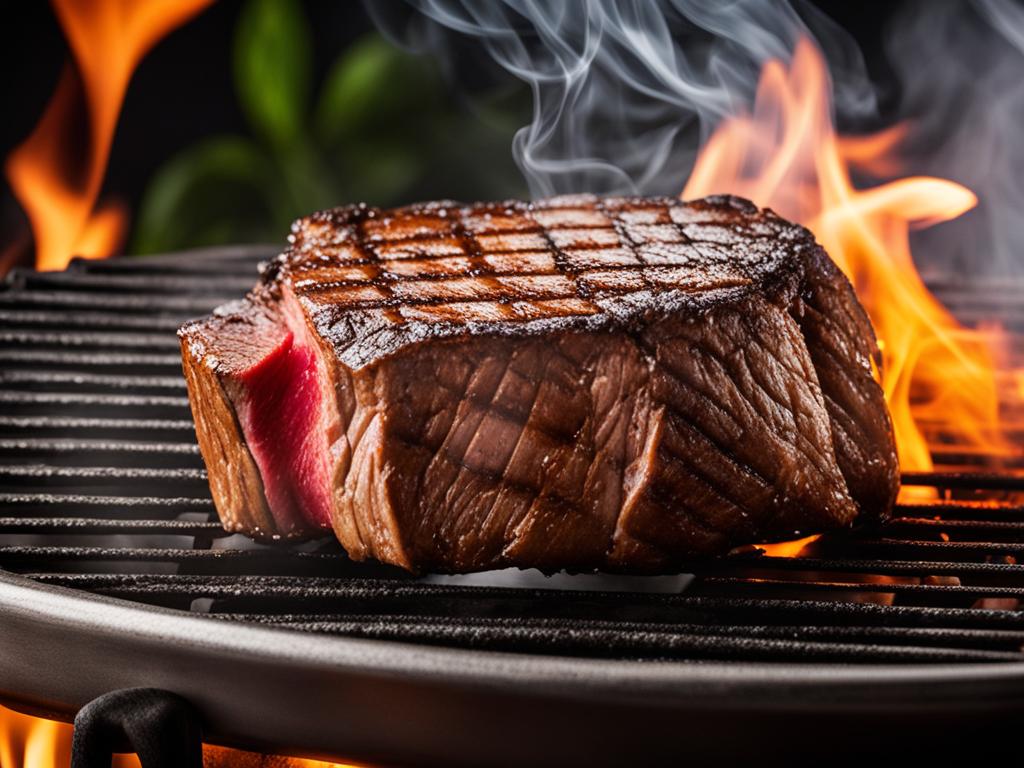
Now, let’s talk seasoning during the meat preparation phase. It’s more than just a sprinkle here and a dash there. Envision creating a salt and pepper halo around your steak, a kind of dry brine that whispers promises of flavor to every fiber of the meat. Let it sit and imbibe those promises while it comes to room temperature.
Once you place this future masterpiece into the oven for slow roasting, that’s when the alchemy happens. It’s not a rush job; precision is your friend. We’re sewing a culinary tapestry with threads of tasteful patience.
Now for the grand finale, the steak browning. This is not merely tossing the steak in a hot pan; oh no. You’re going to heat the oil until it’s shimmering with anticipation—seriously, it should look like the surface of a sunlit ocean. Place the steak in the pan and listen to that sizzle, that snap and pop of culinary fireworks.
Remember, the final sear isn’t just about heat; it’s also about flavor. Introduce some butter and garlic to the pan, and baste your steak as if you’re an artist gently brushing strokes onto a canvas. The result is an exterior that’s as richly browned as a crust can only aspire to be.
- Step 1: Arrange steak to dry on rack
- Step 2: Generously season for dry brining
- Step 3: Slow roast to near-perfection
- Step 4: Heat oil until it voices readiness
- Step 5: Sear steak to that quintessential crust
- Step 6: Baste with butter and garlic for heightened taste
By now, you’ve probably gathered that Sizzle Slim’s signature culinary strategy is not just about the cooking steps; it’s a philosophy, a commitment to the art of steak. Take these words, your spatula, and that prime cut of meat, and embark on the journey of cooking that will end with triumph on your plate.
Calories in a Filet Mignon 8 oz
Attention all diet-conscious diners! If you think indulging in a decadent 8 oz filet mignon means waving goodbye to your dietary goals, think again. The good news is that this prized piece of steak comes loaded with nutritional information that’s bound to make you smile. It’s not just a feast for your taste buds, but also a stealthy ally for your health regime.
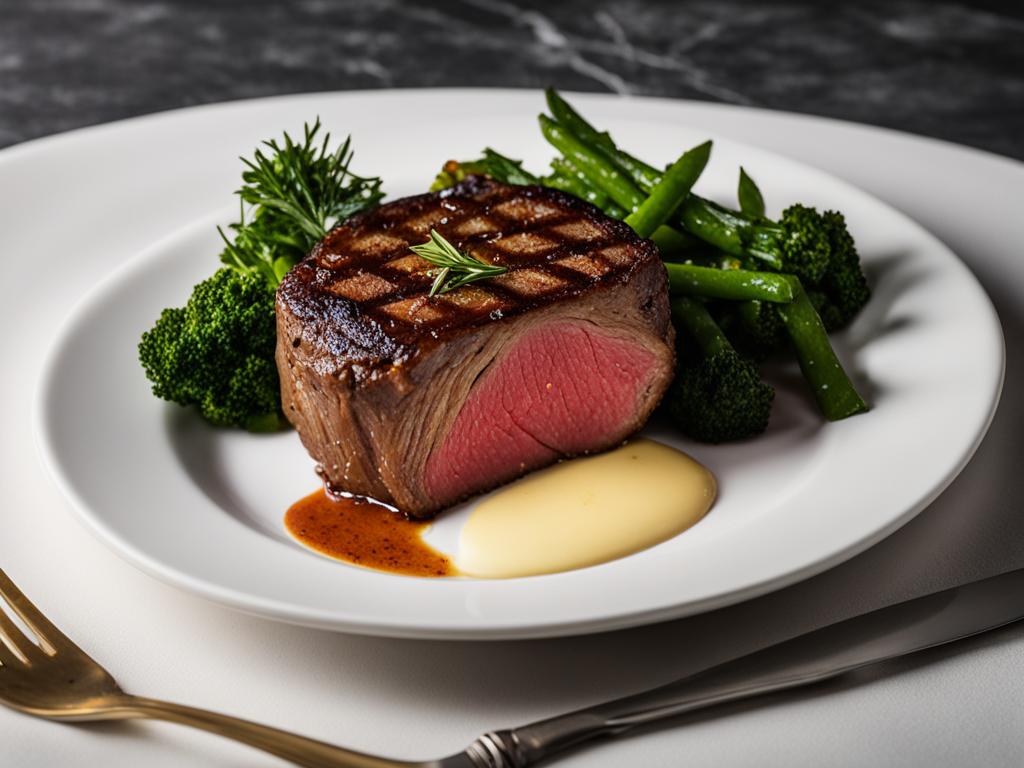
With its impressive profile as a lean protein, filet mignon treads lightly on your caloric budget. This makes it an excellent selection for those who prioritize diet-conscious dining. Revel in the sumptuous texture and rich flavor, all while keeping your calorie intake in the realm of reason. Imagine that—a luxurious dining experience without the post-meal guilt!
- Low in calories
- High in protein
- Minimal fat
- Suitable for sophisticated palates
When you choose to treat yourself to an 8 oz filet mignon, you’re embracing a meal that respects your health just as much as your cravings. So go ahead, cook it up, and enjoy every bite. Your waistline will thank you later!
Optimizing Doneness: Temperature and Cooking Times
Ever find yourself playing culinary roulette with that pricey cut of steak, dancing between undercooked and over-charred? It’s time to nail down the science of steak doneness with precision cooking to turn that gamble into a guarantee. Whether you like it barely past blue or you prefer it at that no-pink-in-the-middle stage, I’ve got the lowdown on the perfect steak preparation savvy enough to impress your dinner guests. So, grab your apron, and let’s turn your kitchen into a steakhouse stage where you’re the star chef!
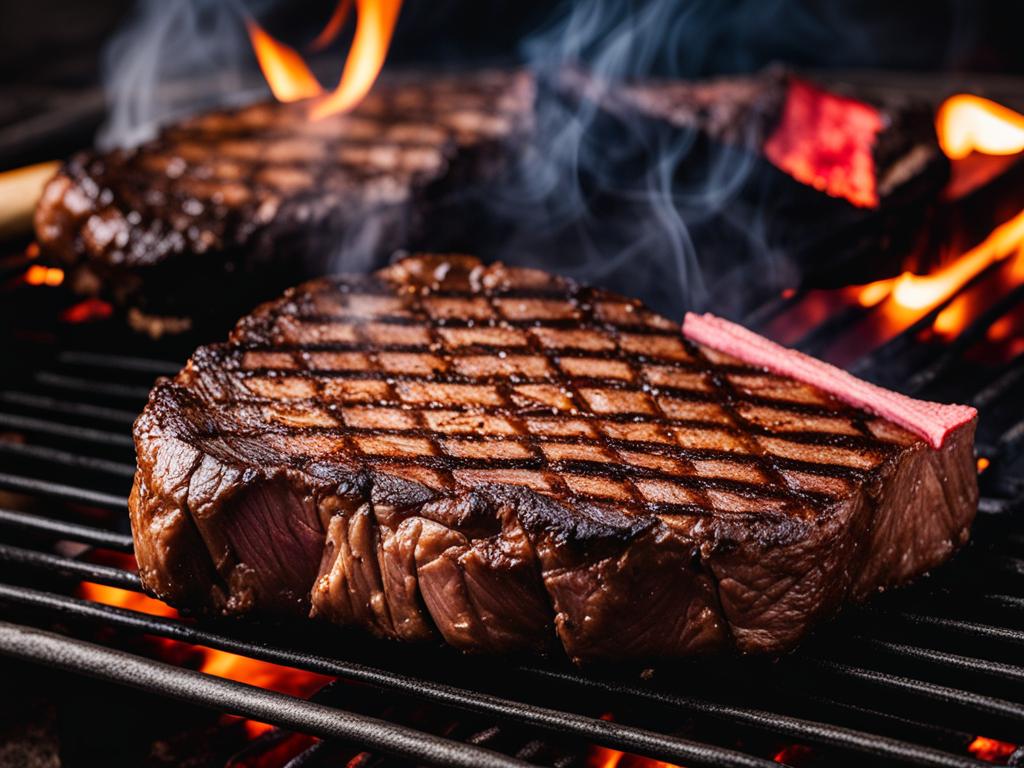
Understanding Steak Doneness Levels
First off, let’s demystify the levels of steak doneness. There’s a whole spectrum from rare, with its cool red center, to the well-done territory, where it’s all brown with no pink insight. But how do you achieve these levels without second-guessing? Enter the trusty meat thermometer, your sidekick for ensuring your steak’s readiness is up to snuff. Remember, a steak continues to cook even after you’ve pulled it off the heat source, because of residual heat, so factor in a little carryover cooking to hit that sweet spot.
Reverse Sear Steak Time Chart
Reviving the magic of old-school techniques with a modern twist, let’s talk about the reverse sear. This method is not just about oomph; it’s about control and precision for an evenly cooked masterpiece. Take a gander at this cooking temperature guide tailored for the reverse sear process:
| Steak Doneness | Internal Temperature | Time in Oven (Approx.) | Time in Pan (Approx.) |
|---|---|---|---|
| Rare | 125°F (52°C) | 15-20 min | 1 min per side |
| Medium Rare | 135°F (57°C) | 20-25 min | 1-2 min per side |
| Medium | 145°F (63°C) | 25-30 min | 2 min per side |
| Medium Well | 150°F (66°C) | 30-35 min | 2-3 min per side |
| Well Done | 160°F (71°C) | 35-40 min | 3-4 min per side |
While you consider this table your hallowed road map to precision-cooked steaks, remember that cut size and oven peculiarities could play a part – some might run hot, others cool. Adjust accordingly, and soon, you’ll be dishing up steaks that smack of perfection. A well-cooked steak is not only a work of art on the plate but also a testament to your culinary prowess!
Tips for a More Flavorful and Healthy Steak
Let’s dive into a world where your steak is not just a meal, but a masterpiece of flavor and health. Imagine biting into a steak so succulent, so rich in taste, it dances on your palate while promising a bounty of benefits for your body. You’re not dreaming—this can be your reality with a few expert healthy cooking tips.
Seasoning Your Steak to Perfection
You know the drill: seasoning is to steak as a playlist is to a road trip—it sets the vibe. But did you know that steak seasoning techniques can be as simple as adhering to Julia Child’s wisdom? Yes, the cooking icon advocated a mere teaspoon of salt per pound of meat to unleash a torrent of taste. Combine that with a blend of fresh herbs, a pinch of black pepper, and maybe a whisper of smoked paprika, and you’ll elevate your steak from “just OK” to “Oh, wow!” faster than you can say “medium-rare.”
The Importance of Resting Your Steak
Patience is a virtue, especially when it comes to meat resting. The golden rule? Give your steak some me-time after cooking, just sitting there, relaxing, redistributing juices like it’s on a mini-spa break. This isn’t just good manners; it’s science. It keeps the steak lusciously tender and moist. So, whether it’s five minutes or ten, that rest period is your ticket to enhanced flavors and a texture so divine, you’ll be elevated to the culinary hall of fame in your own home.
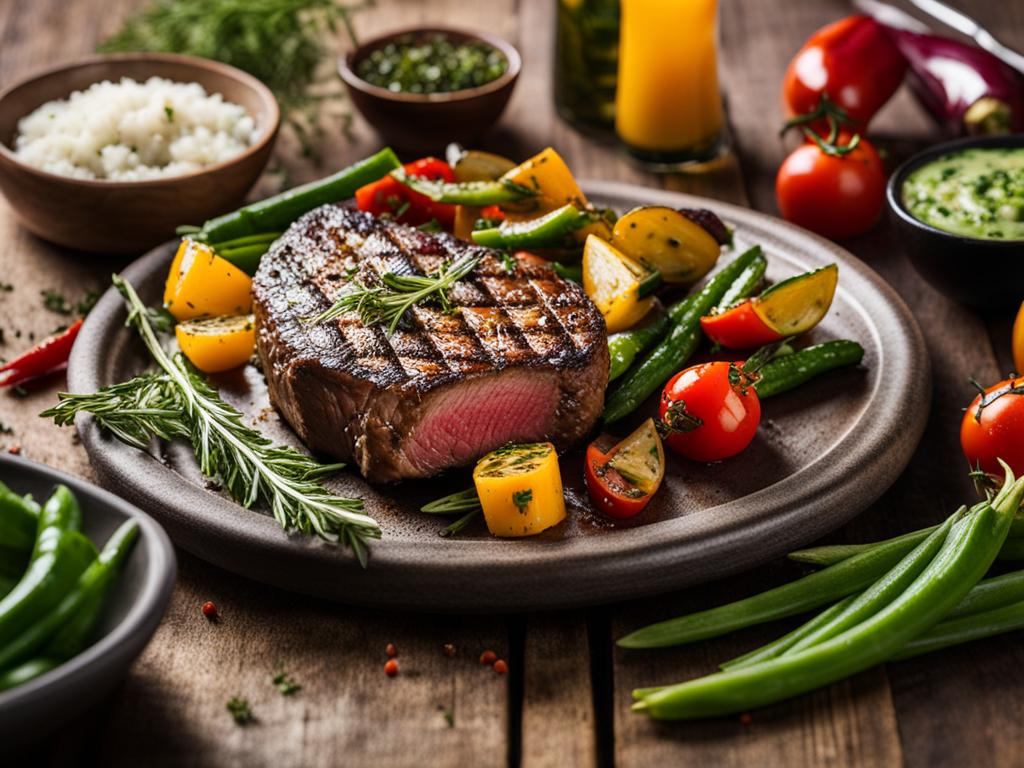
Always let your steak rest after cooking to ensure maximum flavor and tenderness. – Every Steak Enthusiast Ever
Let’s not forget that a steak is more than a piece of meat; it’s a canvas waiting for your artistic touch. Below is a table of the ideal rest times for various steak cuts, so you can ensure every bite equals perfection.
| Steak Cut | Thickness | Rest Time |
|---|---|---|
| Filet Mignon (Tenderloin) | 1.5 inches | 5-7 minutes |
| Ribeye | 1 inch | 5 minutes |
| New York Strip | 1 inch | 5 minutes |
| T-Bone | 1.5 inches | 10 minutes |
| Porterhouse | 1.5 inches | 10 minutes |
| Top Sirloin | 1 inch | 5 minutes |
Now that you’re equipped with these tips, don your apron, grab your tongs, and get ready to cook up a feast that’s equal parts delicious and nutritious. Happy grilling!
Side Dishes and Accompaniments
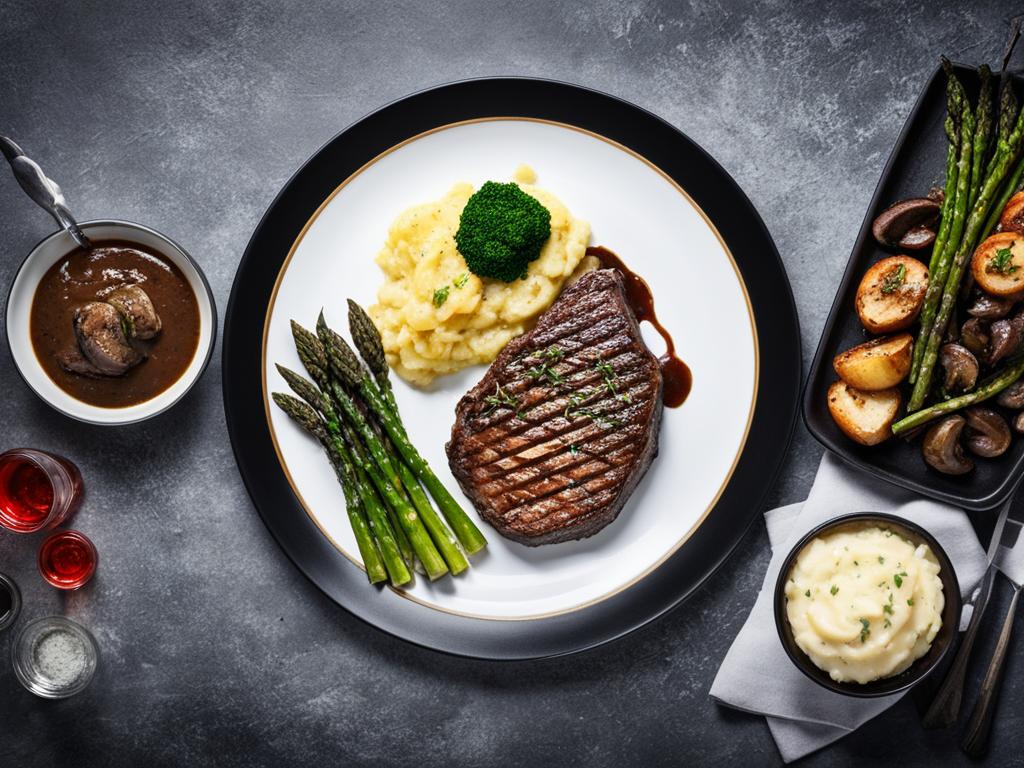
As you sink your teeth into the tender, reverse-seared perfection of a filet mignon, it’s only natural to crave side dishes that rise to the occasion. Your steak shouldn’t be alone on this journey, and that’s where gourmet sides come into play. Consider this your guide to crafting complete meals that dazzle every sense and satisfy from the first bite to the last.
- Whipped Sweet Potatoes with a Hint of Maple Syrup
- Roasted Brussels Sprouts with a Balsamic Glaze
- Steamed Asparagus with Lemon Butter
But let’s talk healthy pairings, because we know you care about what complements your steak not just in taste but in wellness. Picture this: herbed quinoa pilaf intermingling with the savory juices of your steak, or a crisp arugula salad with a citrus vinaigrette offering a refreshing contrast. These aren’t just sides; they’re complementing flavors that elevate your meal to gourmet status.
| Sides | Health Benefits | Flavor Profile |
|---|---|---|
| Grilled Mediterranean Vegetables | High in Fiber, Vitamins A and C | Rustic and Smoky |
| Cauliflower Mash with Roasted Garlic | Low-Carb, Rich in Antioxidants | Smooth and Creamy with a Savory Punch |
| Citrus Herb Quinoa | Protein-Rich, Full of Fiber | Bright and Zesty with Herbaceous Notes |
Think outside the box of traditional appetizers and let your creativity whisk you away. From velvety butternut squash soup to shaved fennel and pomegranate salad, the right companions can transform your steak from a single sensation into a symphonic complete meal. So, load up your fork with the perfect bite, and let those flavors perform a harmonious ballet on your palate. After all, isn’t that what a true gourmet experience is all about?
The Steakhouse Experience at Home
Yearning for that high-end steakhouse vibe without leaving the comfort of your abode? Well, you’re in luck because crafting a steakhouse atmosphere is easier than you might think. It starts with the sizzle of a perfect steak and flows through every detail of your home dining setup. We’ll walk you through the simple elegance of turning your dining area into a realm where gourmet cooking intersects with a cozy environment, coaxing a luxurious yet familiar quality out of every corner.
Crafting the Perfect Ambiance
Imagine soft lighting, the gentle clink of cutlery, and the intoxicating scent of a well-prepared filet mignon greeting your senses. That’s the steakhouse spirit, and it’s yours to invoke. Begin by dimming the lights or adding candles to create a subdued, intimate atmosphere. Lay out your finest tableware and ensure that your seating invites comfort and relaxation for prolonged enjoyment. Set the stage, as the pleasurable company and the pleasures of the palate are equally important in your steak endeavor.
Complementing Flavors: Wine Pairing and Sauces
Any steak connoisseur will tell you that the magic lies not just in the succulence of the meat but in the harmonious accents that complement it. A thoughtful wine selection is paramount—reach for a bold Cabernet Sauvignon or a heady Malbec that eloquently balances out the richness of your meal. And wouldn’t you agree that gourmet sauces add panache to the plate? Offer a variety from velvety peppercorn to vibrant chimichurri, adjusting to personal preference. British chef Gordon Ramsay might suggest, “Let the steak be the star, and the sauces the best supporting actors.” In this culinary production, you’re directing a symphony of flavors, textures, and fragrances that culminate in an unparalleled dining experience, rivaling the very essence of the storied steakhouse.
FAQ
Why is filet mignon considered such a prestigious cut of beef?
Filet mignon seduces meat-lovers with its luxurious tenderness and fine texture. Its lean profile and buttery flavors have seared it a spot at the top of the steak hierarchy, making it a hallmark of gourmet cooking.
How much does an 8 oz filet mignon typically weigh after cooking?
Brace yourself for minimal shrinkage! An 8 oz steak generally remains close to its pre-cooked weight due to the low fat content of filet mignon, which means less weight loss during cooking. Consider it the Houdini of steaks – now you see it, now you still do.
What is the calorie count of an 8 oz filet mignon?
For those counting, an 8 oz filet mignon is a calorie-conscious choice at approximately 275-450 calories depending on the preparation. It’s lean meat luxury that fits your macros with wiggle room for a side of indulgence.
Can the reverse sear method be used on other steak cuts?
Absolutely! While filet mignon is the belle of the ball, the reverse sear waltz can be danced with other thick-cut partners, such as a robust ribeye or a statuesque T-bone. Show off your searing prowess, no matter the dance card.
What seasoning works best for a filet mignon?
Ah, the spice of life! A classic dusting of salt and pepper is the Fred and Ginger of steak seasoning. But why not turn up the heat? Throw in some Montreal steak seasoning, and let your taste buds tango!
Which oils should I use for the perfect sear on my steak?
Avocado oil is the slick choice for a high-smoke-point tango with your steak. Post-sear, swirl in some butter and garlic, to make sure your steak is not just seared to perfection but also basted in a cloak of aromatic charm.
What are the temperature and cooking times necessary for perfect doneness using the reverse sear method?
Grab your thermometer—it’s science time! Aim for 275°F (135°C) and let your steak bathe in the oven’s warm embrace. Cooking times vary, but expect around 20-30 minutes. Finish with a pan-searing scorch and voilà—perfection on a plate.
How do I season my steak like a culinary guru?
Channel your inner Julia Child and tame your steak with 1 teaspoon of salt per pound of meat. It’s not just about flavor—it’s about creating a crust that’s the envy of the culinary world. Go ahead, season like the pro you were meant to be!
What side dishes can elevate my filet mignon without overpowering it?
You want sides that complement, not compete. Think a refined waltz with oven-roasted vegetables or a twirl with creamy mashed cauliflower. They’re the perfect supporting cast to your filet mignon’s star performance.
What are some tips for recreating a steakhouse experience at home?
Set the stage with mood lighting and a playlist that whispers “steakhouse chic.” Pair your masterfully cooked filet mignon with a bold red wine that can match its depth, and don’t forget a swirl of gourmet sauce for that final flourish. Congratulations, your home just got a Michelin star.