
So, you fancy yourself a culinary maestro, a virtuoso of the home kitchen, primed to transform a simple chunk of red meat into a pan-seared ribeye masterpiece. Welcome to the ultimate crash course in achieving steakhouse quality within the cozy confines of your own abode. Here, cast iron cooking isn’t just a method; it’s your golden ticket to nailing that perfect steak your taste buds have dreamt of.
Let’s set the stage with that trusty cast iron skillet, the cornerstone of every self-respecting steak whisperer’s arsenal. This is where the magic happens, where home-cooked becomes home-cooked ribeye excellence. Ready your timers, folks – in just 10 minutes, you could be slicing into that idyllic balance of a crispy crust encasing a juicy, flavor-packed interior. But wait, let this introduction marinate a bit; the best is yet to come.
Key Takeaways
- Transform into a home-cooked hero with a skillet and a dream.
- Discover the secret to that steakhouse-perfect sear using cast iron.
- Timing is everything – ten minutes is all it takes.
- Crispy crust outside, succulent juice party inside.
- Using the tools you’ve got to create a meal that tastes like it’s straight out of a chef’s kitchen.
- Cast iron’s heat distribution is the unsung hero of perfect steak prep.
The Ultimate Guide to Selecting the Perfect Ribeye
Before you’re dazzled by the dance of flames in the skillet, give yourself a head start by selecting the right hunk of beef. When it comes to a mouthwatering, flavorful ribeye, not all cuts are created equal. Below, you’ll find your very own butcher’s guide to picking out that primo piece of meat that’s got your name on it.
Identifying Quality Marbling
Let’s talk about steak marbling—the art within the beef. Those little white streaks aren’t just there for show; they’re flavor highways, melting during the cook-off to infuse your steak with moisture and a buttery taste. Your target is a beautifully marbled ribeye, something akin to a culinary Picasso, with the fat evenly dispersed throughout the muscle. This sign of a premium cut ensures your steak will be the life of the dinner party.
Choosing Between Bone-In and Boneless
The debate between bone-in vs boneless ribeye steaks is as timeless as BBQ itself. If you’re yearning for deeper flavor, go for the bone-in. That hunk of calcium conducts heat within the meat, making it cook evenly and granting an extra punch of taste. Boneless, on the other hand, is all about the ease—quicker to cook, easier to carve. Know your priorities, and choose your weapon accordingly.
The Impact of Thickness on Cooking
Turns out, size does matter—in the steak world, at least. The thickness of your ribeye affects the entire cooking show. Aim for a steak about 1 to 1½ inches thick to achieve that steakhouse-style crust without sacrificing the juicy pink center. Thin enough to cook evenly, yet thick enough to create a warm, succulent middle, it’s the golden rule for a reason. Remember to keep steaks consistent in size, especially if they’re sharing the stage on the heat, to ensure every bite is as good as the last.
- Look for well-distributed marbling for top-tier flavor and moisture
- Bone-in steaks promise richer flavor; boneless steaks offer convenience
- Aim for 1 to 1½ inch thickness for balance between crust and tenderness
Now that you’ve gotten the skinny—quite literally—on making the prime cut, you’re one step closer to donning that grill master’s hat with gusto. Get out there and make that quality ribeye selection. Your taste buds will thank you, and your dinner guests will raise their glasses in your honor.
The Seasoning Secrets for Cast Iron Ribeye
When it comes to elevating your cast iron ribeye, seasoning is king. The perfect harmony of steak seasoning and flavor enhancement begins with the fundamental duo of salt and pepper, your primary agents for accentuating the rich taste of red meat seasoning. And let’s not overlook the prodigious power of garlic herb butter, which when melted over the steak, enrobes it in an indulgent glaze that will make your taste buds feel like they’ve hit the jackpot.
Ready to amplify your culinary game? Introduce these seasoning tips to your repertoire and transform a simple piece of meat into a maestro of mouthwatering delight:
- Generously season both sides of the ribeye with coarse salt and freshly ground black pepper for a solid foundation of flavor.
- Turn your steak into a gourmet masterpiece by liberally rubbing with crushed garlic; it’s the secret handshake amongst steak aficionados.
- Before the steak kisses the skillet, consider a sprinkle of high-quality seasoning blends such as Borsari, or whip up your own unique concoction.
- Prior to serving, crown your cooked ribeye with a dollop of garlic herb butter, watch it melt, and witness the magic as it soaks into the succulent cracks, offering a final flair of luxury.
Behold, the underrated hero of the seasoning world:
| Seasoning Ingredient | Role in Flavor | Application Tip |
|---|---|---|
| Coarse Salt | Enhances inherent flavors | Apply liberally 40 minutes before cooking |
| Freshly Ground Black Pepper | Adds a mild heat and complexity | Crack over the steak after salting |
| Fresh Garlic | Brings zest and aromatic sharpness | Smash and rub onto steak pre-cooking |
| Herb Butter (with Rosemary, Thyme, etc.) | Brings a luxurious, buttery finish | Melt atop steak immediately after cooking |
When you embrace these techniques, you’re not just making a steak – you’re crafting an experience. So don your apron with pride and remember: when in doubt, more butter. Always more butter.
And to seal the deal, behold the centerpiece of your gustatory concerto:

In conclusion, the journey from a humble piece of ribeye to a symphony of savory indulgence is a path paved with robust seasoning, lavish garlic herb butter, and the unwavering confidence of a cast iron maestro. You are the architect of flavor, and this, your delectable blueprint, assures that achieving steakhouse-quality splendor in your own kitchen is not merely a dream, but a delicious reality.
Prepping Your Cast Iron Skillet for the Perfect Sear
Imagine your cast iron skillet as the stage and your ribeye as the star of the show. Just as the spotlight beams on the lead actor, so too must your skillet radiate with the warmth that only proper skillet prepping can provide. Trust me, your audience of taste buds will thank you for the performance that’s about to unfold. Now, let the curtain rise with our essential pre-heating technique, and choose your ideal cooking fat for a perfect steak sear worthy of a standing ovation.
The Importance of Pre-heating Your Skillet
Skip this step, and you’re setting yourself up for a steak that’s more lackluster than blockbuster. Pre-heating your cast iron is the critical beginning, creating a surface so sizzlin’ hot, it’s guaranteed to give your ribeye the enviable crust loved by steak aficionados everywhere. It’s not just about cranking up the heat; it’s about ensuring that every square inch of your trusty skillet is evenly bathed in fiery heat, ready to welcome the meat with open arms and an open flame.
Oil vs. Butter: Choosing the Right Fat for Your Steak
Your choice of cooking fats could be the pivotal decision between a good steak and a great steak. Are you in the butter camp, swayed by its rich, luxurious flavor? Or do you lean towards the high smoke point of oils, ensuring a sear without the scare of burning? Whether it’s butter’s creamy caress or the sheer resilience of oil, pick a partner for your ribeye that brings out the best in that pristine piece of protein.
Remember, a prodigious pre-heat and the right fat lead to that coveted, caramelized, golden-brown deliciousness that is the hallmark of steak searing mastery.
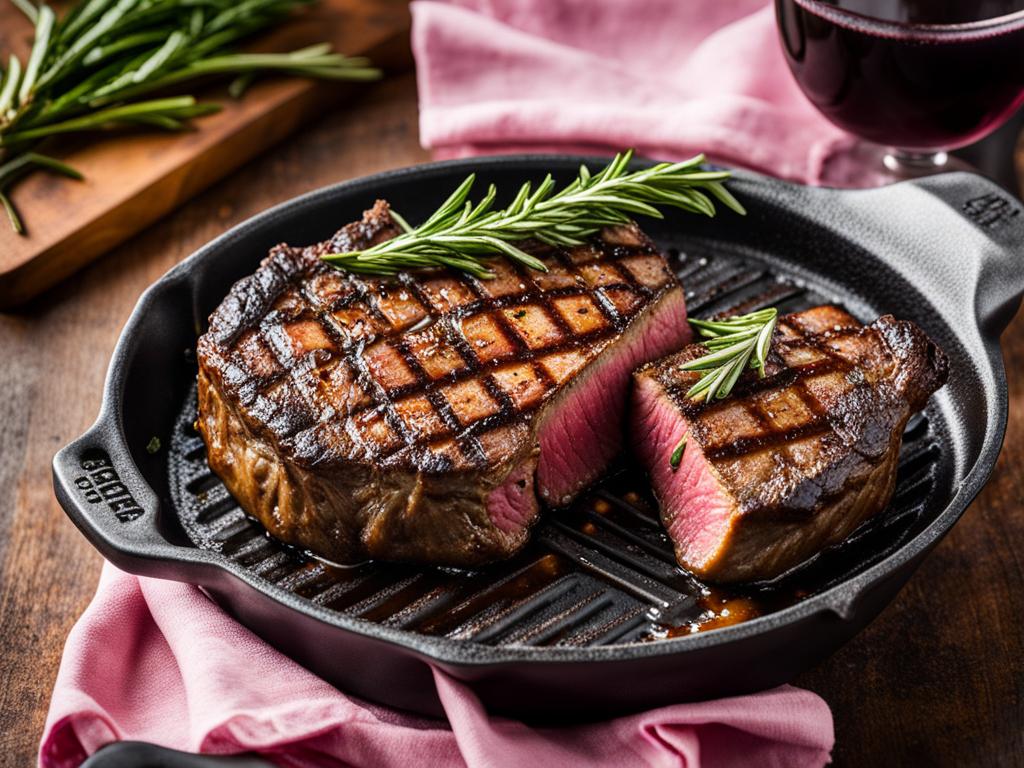
Are you ready to get to grips with the fatty facts? Let’s dive into a table comparing popular cooking fats, so you can ignite that skillet with confidence and send your steak searing to stellar heights. These steak searing tips are hotter than your skillet – embrace them.
| Type of Fat | Smoke Point | Flavor Profile | Ideal for Searing? |
|---|---|---|---|
| Canola Oil | 400°F (204°C) | Mild | Yes |
| Extra-Virgin Olive Oil | 325°F (163°C) | Robust and Fruity | No |
| Grapeseed Oil | 420°F (216°C) | Neutral | Yes |
| Clarified Butter (Ghee) | 450°F (232°C) | Rich and Nutty | Yes |
| Regular Butter | 350°F (177°C) | Creamy and Slightly Sweet | With Caution |
Now that you’re armed with the knowledge, it’s time to take that skillet from cold to confident. May your steak sear be perfect, your crust delectable, and your culinary accolades as numerous as the bubbles in a skillet of simmering butter. Happy searing!
Mastering the Sear: A Step-by-Step Guide
If you’ve ever stared in awe at the searing ribeye steak at your favorite steakhouse, wondering how they achieve that mouthwatering crust, then hold onto your tongs—we’re divulging the steak cooking techniques that’ll catapult your kitchen cred. Let’s break down the perfect pan frying method into chewable bites, shall we?
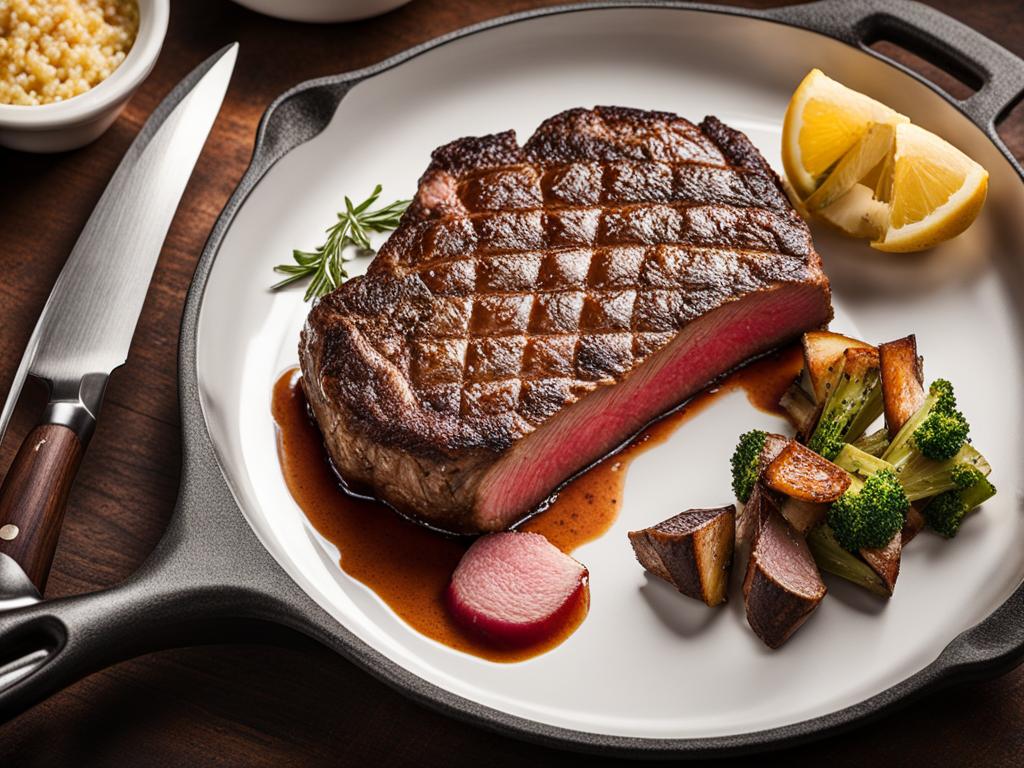
Here’s the lowdown: timing is everything. To start, you’ll want your steak to be dry—patience and paper towels are your friends here. The drier the surface, the less steam, and the more crust potential. But remember, creating crust on steak isn’t a chore; it’s your kitchen ballet, and your cast iron is the stage.
| Step | Action | Tip |
|---|---|---|
| 1. Preheat Pan | Get that skillet as hot as you dare, aim for medium-high to high heat. | Hold your hand above the pan; when you feel a strong heat without touching it, you’re close. |
| 2. Lay the Steak | Gently place your steak in the skillet for the initial sear. | No crowding—each steak deserves its personal space. |
| 3. The First Flip | After 3-4 minutes, flip for your first glimpse at the glorious crust. | Don’t fiddle with it; let the steak sear in peace. |
| 4. Baste Away | Enter stage left: butter, garlic, and thyme, spooning over the steak after the flip. | Lean in—the sizzle is your applause. |
| 5. Final Rest | Remove your masterpiece and let it rest to seal the deal on juiciness. | Be strong; let it rest for about half the cook time. |
Remember, searing ribeye steak is not about a quick tango. It’s a smoldering slow dance between steak and skillet—a union that results in the crispiest, most flavorful union possible.
So, go on. Next time you’re in the spotlight of your kitchen, remember these steps. Sear your steak with the bravado of a seasoned chef, and bask in the sumptuous symphony of flavors you’ve orchestrated. Bravo!
Creating a Flavor-Packed Crust with Butter Basting
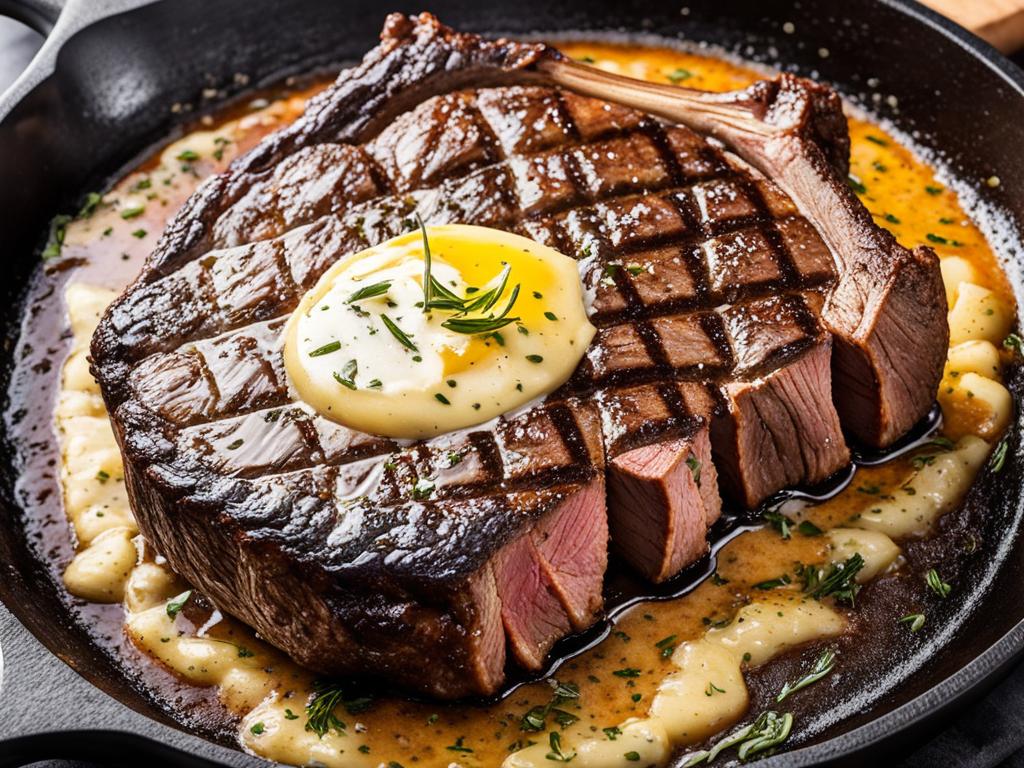
Unlock the steak cooking art that chefs whisper about – butter basting. It’s not just a process, it’s a performance. As you gently coax flavors from fresh herbs and garlic into the steak, you’re not just cooking; you’re crafting a crust with a symphony of savory notes. Picture the surface of your steak sizzling as it receives a lavish bath of melted butter, the herbs floating like green gems, and the aroma of garlic infusing the air. It’s a culinary ballet, and you have the best seat in the house.
Timing the Butter Baste for Optimal Flavor
The clock ticks, the steak sizzles, and the moment to create crust flavor magic arrives. You wait for the exact second – just after that first flip – to let the butter cascade over the ribeye’s seared surface. As it foams and froths, it’s not just butter basting; it’s the essence of flavor being locked firmly into every fiber of the meat. Get this right, and your guests will think they’ve been transported to the best chophouse in town.
How to Utilize Fresh Herbs and Garlic
Now, let’s talk about the VIPs of the butter basting soiree – fresh herbs and that ever-so-pungent garlic. The fresh herbs in cooking are more than garnishes; they’re the fragrant whispers that complement the bellowing beefiness of a good ribeye. And garlic? It’s not just for warding off vampires; it’s for the infusion of that subtle, earthy piquancy that elevates a simple piece of meat to a masterpiece. When these players join the basting pool, they don’t just swim; they dive deep into the taste profile, leaving nothing behind but plate-licking goodness.
Understanding Steak Doneness and Temperature Control
Welcome to the pivotal moment of steak preparation – achieving that perfect level of doneness. Does your dream steak ooze with a barely-there rose center or do you fancy a bite unblemished by any hints of pink? Whatever your preference, the secret to steak nirvana is all about mastering steak doneness levels and internal meat temperature. Imagine slicing into a steak that’s cooked just the way you love – it’s not just good luck; it’s science, and you’re about to master it.
Grab your trusty meat thermometer, because it’s going to become your best friend in the quest for the ultimate cast iron ribeye. You see, eyeballing just doesn’t cut it – if you’re serious about your steak, precise temperature measurement is the only way to fly. Cooking to preference isn’t a guessing game; with a thermometer in hand, you’re the architect of your own steak destiny.
Behold, before you dive into that pan searing action, let’s take a moment to familiarize ourselves with what exactly “doneness” means. In the table below, you’ll find a handy guide to the temperatures that correspond to different levels of doneness. But here’s a pro tip: always pull your steak off the skillet a few notches before it hits the desired temperature. Why? It’s all thanks to the magic of residual cooking, which will gently carry your steak to that perfect internal temp.
| Doneness | Temperature | Texture | Color |
|---|---|---|---|
| Rare | 120-125°F (49-52°C) | Soft & Juicy | Bright Red Center |
| Medium Rare | 130-135°F (54-57°C) | Firm yet tender | Warm Red Center |
| Medium | 140-145°F (60-63°C) | Somewhat springy | Pink and Warm |
| Medium Well | 150-155°F (66-68°C) | Little give | Slight Pink |
| Well Done | 160°F (71°C) and above | Firm | Minimal to no pink |
There you have it, your very own roadmap to casting culinary spells in your kitchen. Whether you’re in the mood for a steak that hums with a gentle pinkness or one that’s stoutly done, you’re set for success. Keep that meat thermometer usage consistent, and you’re guaranteed to serve up a steak that will have everyone at the table in awe of your grill prowess. Now, raise your tongs, and let’s get cooking.
Cast Iron Ribeye: Nailing the Resting and Slicing Technique
Now that your ribeye has sizzled to perfection, you stand at a crucial juncture in the steak preparation journey – embracing the steak resting ritual and mastering the art of slicing steak. This isn’t simply about patience; it’s about ensuring that every slice of your steak is as juicy and flavorful as possible. Let’s tempt those taste buds a bit more before you indulge.
The Importance of Resting
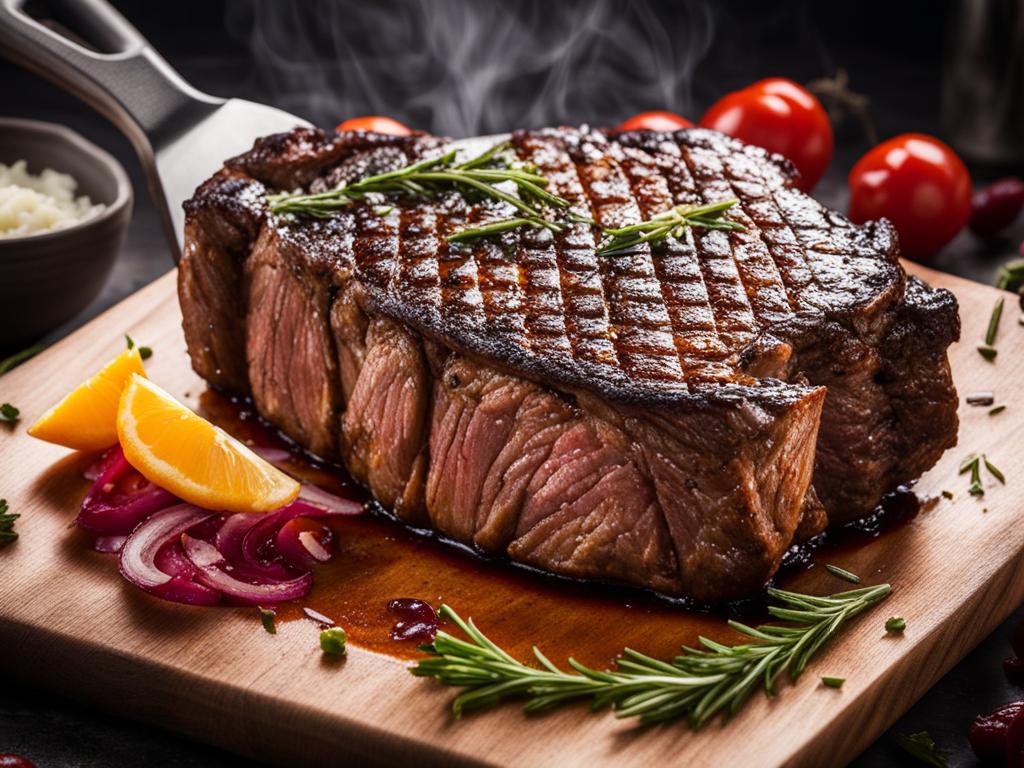
You might be tempted to cut into that beautiful, hot-off-the-skillet steak immediately, but hold your horses! The resting period is like the closing ceremony of your steak cooking Olympics—it’s where the magic really happens. Wrapping your ribeye snugly in aluminum foil might look like a steak swaddle, but this technique allows heat to evenly redistribute throughout the meat. Consequently, the juices settle luxuriously into every fiber, making your steak not just juicy, but epically juicy. Give it a good 5 to 10 minutes (depending on the size of your carnivorous cut), and let the flavors intensify.
The Art of Slicing Against the Grain
Once your steak has achieved zen, it’s time to channel your inner samurai because slicing steak is a veritable art form. Observe the meat fiber orientation closely—it’s like the lines on a leaf or the grain in a piece of wood. Your mission, should you choose to accept it, is to slice against this grain. Not along, not parallel, but against—crosswise. This approach intersects the muscle fibers, shortening them and thereby gifting you with melt-in-your-mouth tenderness with every bite. Remember, a sharp knife is your best friend here; don’t go into battle with a blunt blade.
By assiduously adhering to these carnal commandments, you ensure that your steak doesn’t just taste good, it becomes the opus of your kitchen orchestrations, the juicy steak symphony to your palate’s auditorium. Now, my gastronomic virtuoso, plate up that masterpiece and prepare for the ovation that follows.
Serving Suggestions to Elevate Your Cast Iron Ribeye Experience
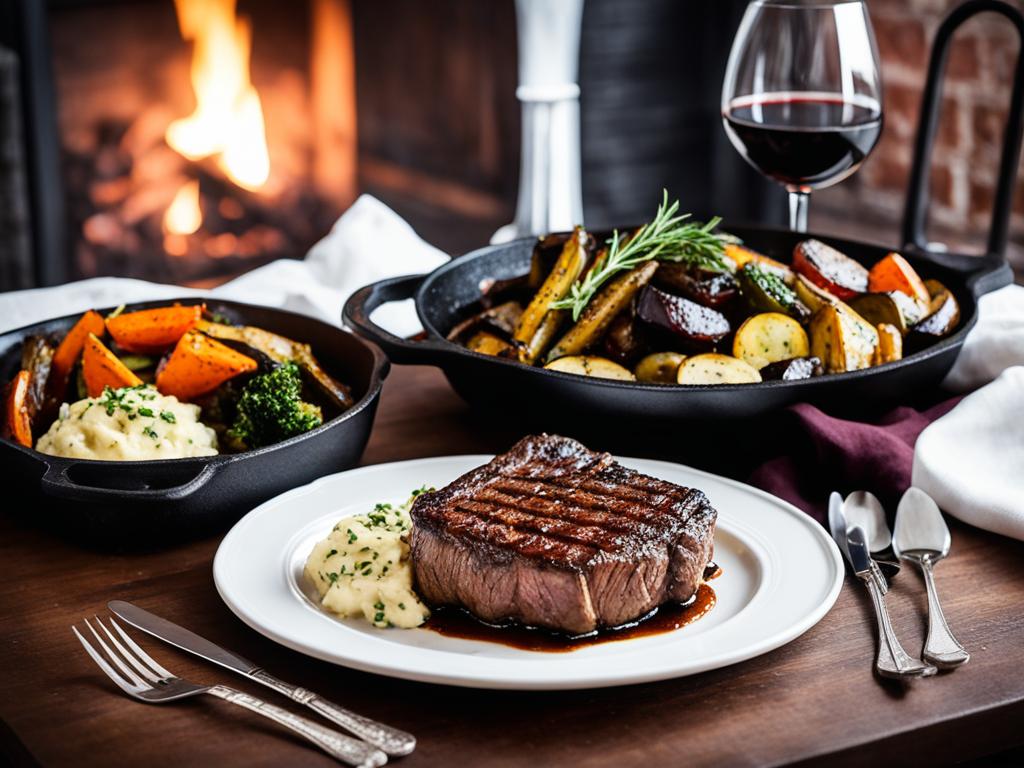
Let’s talk about those steak side dishes that not only complement but truly transform your ribeye into a complete steak dinner. When it’s time to serve up that succulent slab of beef, the right accompaniments for ribeye are your stagehands, working behind the scenes to enrich the star of the show. You wouldn’t attend the Oscars in sweatpants, right? So, don’t let your steak strut out solo; dress it with the best.
Alright, get ready! Because here’s where you’ll plate up like a pro and ensure your dinner is not just a meal but a gastronomic performance that’d have food critics penning rave reviews.
- Potato Glory: Whether it’s the buttery embrace of creamy mashed potatoes or the golden crunch of roasted spuds, potatoes are the backbone of your enriching steak meal.
- Veggie Medley: Mix it up with vegetables that can hold their own. Think about char-grilled asparagus or some honey-glazed carrots—such vibrancy on a plate!
- Sweet Contrast: A little sweetness can be a game-changer. Perhaps a beetroot salad with a balsamic glaze to cut through the richness?
Introducing the grand alliance between your ribeye and its trusty partners-in-crime:
| Side Dish | Texture | Flavor Profile |
|---|---|---|
| Garlic Herb Mashed Potatoes | Creamy & Smooth | Rich with a Garlic Punch |
| Thyme Roasted Carrots | Tender-Crisp | Earthy with a Caramelized Sweetness |
| Balsamic Glazed Brussel Sprouts | Crunchy & Charred | Tangy and Bold |
And as you orchestrate these steak side dishes to round out your culinary concerto, remember that balance is key. Every element on your plate should make your ribeye sing a little louder and the entire dining experience a harmony of flavors. So go on, make your ribeye proud and give it the company it deserves!
Conclusion
Your venture into ribeye mastery reaches its crescendo as you lay eyes on that impeccable slice of home-cooked steak, its smoky perfume filling the kitchen with promises of an unforgettable meal. Through tenacity and the trusted cast iron, you’ve become a maestro of meats, the virtuoso of the sear, unearthing the secrets to achieving the perfect steak. Let the splendor of your seared ribeye serve as evidence that the gap between restaurant quality and home-cooked delight can indeed be bridged with knowledge, patience, and a good dash of confidence.
The wisdom you’ve gleaned—on marbling, seasonings, and temperatures—translates into more than just a meal; it’s a testament to cast iron ribeye success. With each step meticulously executed, from selecting the finest cut to letting the flavors marry as the steak rests, you’ve crafted an experience that transcends the ordinary. So, as you dive into the fruits of your labor, remember that this culinary triumph isn’t a fluke—it’s the product of a newfound prowess etched into your skillet-savvy spirit.
Now, as you slice into the juicy spectacle before you, pause for a moment. This isn’t just any steak dinner; it’s a masterful expression of skill, a delightful dance of flavor and texture that had its tempo set from the moment you chose your ribeye. With each bite, savor the realization that the once-daunting goal of steakhouse success has evolved into the comfort and triumph of your home cooking. It’s time to relish in your achievements; the cast iron ribeye is indeed your well-deserved trophy.
FAQ
What’s the trick to achieving that perfect steakhouse quality sear at home?
The trick is to preheat your cast iron skillet to a sizzling temperature and use high heat to create a deliciously crispy crust. And don’t forget to be patient; let that steak sear uninterrupted for the first few minutes before flipping!
How do I choose the best ribeye for cooking in a cast iron skillet?
Look for a ribeye with even, quality marbling. The fat within those swirls of marbling melts as it cooks, adding irresistible flavor. Also, decide if you’re a bone-in or boneless aficionado, and ensure your steak is about 1 to 1½ inches thick for optimal cooking.
Can I use butter to sear my ribeye in a cast iron pan?
While butter can burn at high temperatures, introducing it after the initial sear gives you the best of both worlds: high heat for the crust, and rich, buttery flavor aftewards. Start with oil, add butter after flipping, and baste to your heart’s content.
What’s the perfect doneness temperature for a ribeye steak, and why use a meat thermometer?
Perfect doneness is subjective; rare is around 120°F, medium-rare is 130°F, medium 140°F, medium-well 150°F, and well-done 160°F. Use a meat thermometer to nail this precisely. It’s your secret weapon against overcooking.
How long should I let my cast iron ribeye rest after cooking, and why is it so important?
Let that steak take a well-deserved break for about 5-10 minutes. This allows the juices to redistribute, ensuring every bite is as flavorful as the last. Think of it like a flavor-locking siesta.
What are some side dishes that complement a pan-seared ribeye steak?
You can’t go wrong with sides that balance the richness of your ribeye. Roasted vegetables add a fresh contrast, while classic potatoes – mashed, roasted, or air-fried – never disappoint. The sky’s the limit here; choose what tickles your palate!
What is the most important factor to consider when achieving a perfect cast iron ribeye at home?
While every step is important to ribeye mastery, if you had to choose one, it’s the heat. Consistent, high heat in your cast iron is fundamental for that dreamy crust and tender, juicy interior. It’s like conducting an orchestra where heat is your baton!
Does the type of cooking fat I use in the skillet impact the flavor of my steak?
Absolutely! High-smoke point oils are great for searing, but adding a dollop of rich, grass-fed butter amplifies flavor and brings a creamy note. Think of it as the bold stroke in your flavor painting.
How do you boost the flavor of a ribeye besides salt and pepper?
Your ribeye is begging for that extra zing. Freshly smashed garlic, a sprinkle of your favorite seasoning blend, or just a smidgen of personality (like smoked paprika or rosemary) can add depth and character to your steak.
How critical is the thickness of the ribeye when cooking in a cast iron skillet?
Thickness isn’t just a number; it’s your road map to perfection. Aim for a 1 to 1½ inch thick steak to master that magical barrier where the crust is crisp and the center is soft and pink – it’s steak equilibrium.