
Ever wondered why a juicy ribeye steak makes a meal unforgettable? It’s all about perfect cooking. This art turns a popular cut into a mouthwatering delight. In this article, we’ll share essential tips for selecting, preparing, and cooking ribeye steak perfectly.
Want to impress at your next dinner party or enjoy a delicious meal at home? Master these techniques. Every bite of your ribeye steak will be as flavorful as the last. Let’s explore the world of ribeye steak and learn why it’s a top choice for steak lovers.
Introduction to Ribeye Steak
Discover what makes ribeye steak a favorite among meat lovers. It’s tender, full of flavor, and beautifully marbled. This cut comes from the cow’s rib section. It is famous for its fat, which makes it taste delicious.
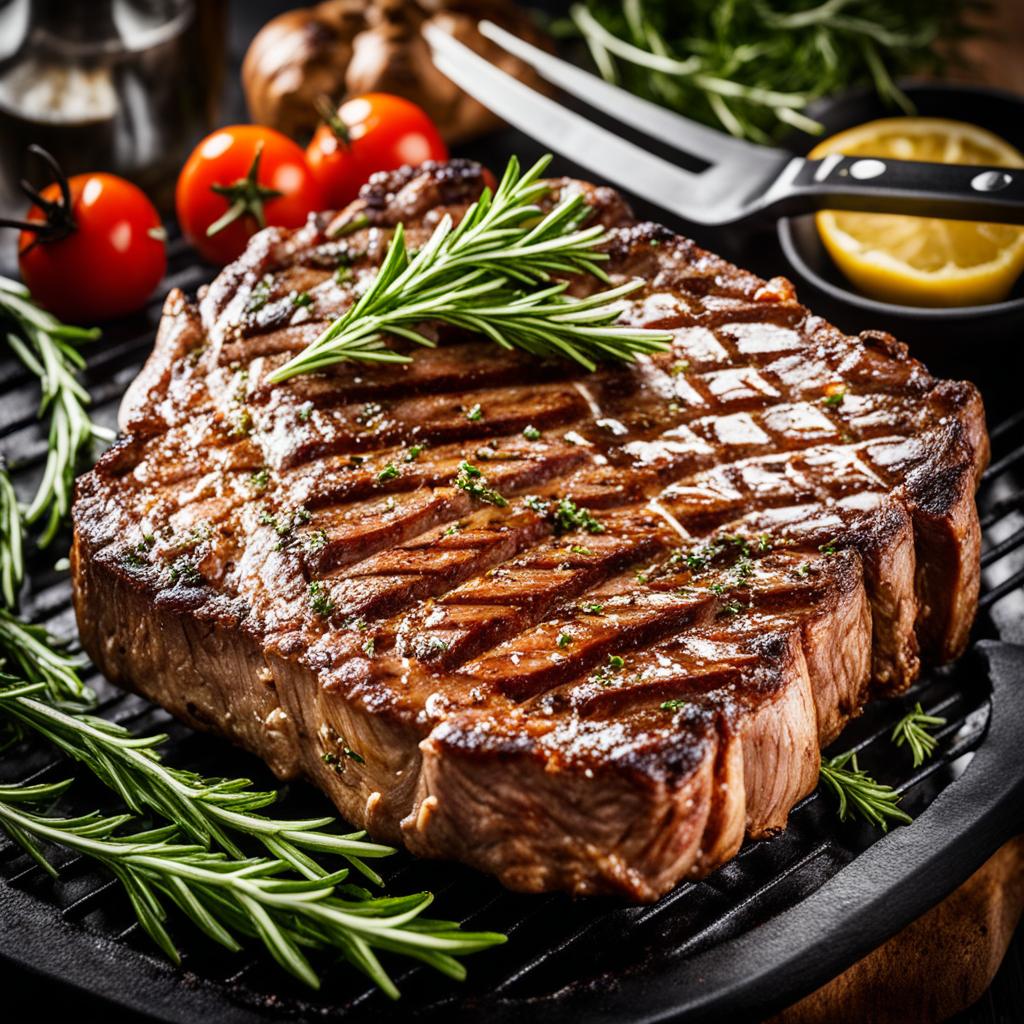
You can find ribeye with or without bones. So, it suits many tastes. Its tender meat makes every meal special. Cooking ribeye turns a simple dinner into something amazing.
Why Ribeye Steak is a Favorite Cut
Ribeye steak is a top choice among meat lovers for several reasons. Its flavor is rich and buttery. This comes from the fat marbled through the meat, which melts as it cooks. This fat makes the steak juicy and tender, so it’s a favorite for cooks everywhere.
Flavor Profile of Ribeye Steak
Ribeye steak stands out because of its beefy flavor. It tastes both savory and a bit sweet, creating a unique experience. The fat in the steak makes it tender and juicy. This allows you to cook it in different ways, like grilling or pan-searing, without losing its quality. Every bite of ribeye is full of flavor and texture.
Comparison with Other Cuts of Beef
Compared to other cuts, ribeye steak is often the favorite. Filet mignon is tender but not as flavorful. Sirloin has less fat, making it less juicy. Ribeye wins with its rich taste and feel, making it popular for both everyday meals and special occasions.

The Perfect Ribeye Steak Ingredients
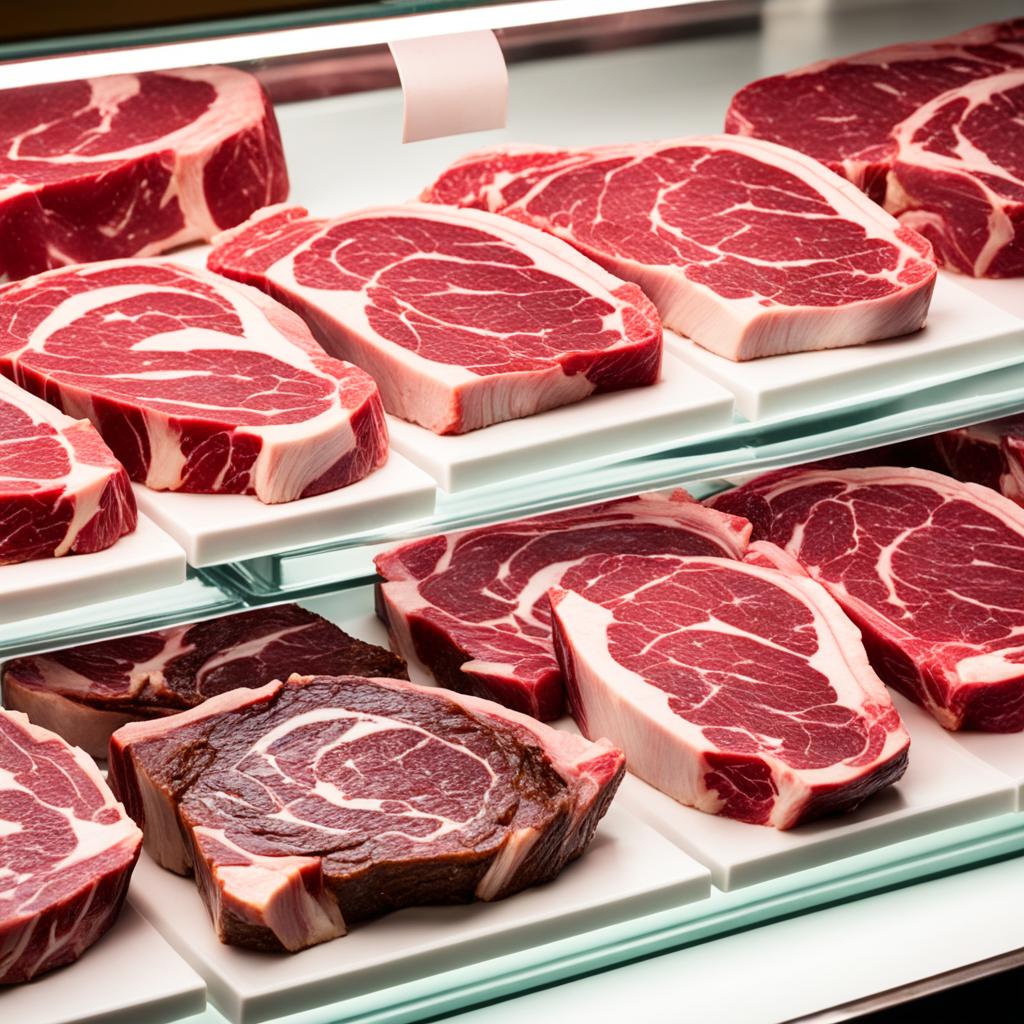
Choosing the right ribeye steak is key to a delicious meal. Look for marbling, as fat boosts flavor and tenderness. Opt for thicker cuts, at least 1-inch, to cook evenly. USDA Prime is the top choice for its quality.
Choosing the Right Ribeye Steak
Good marbling is vital for a juicy, flavorful steak. Pick one that looks deep red for freshness. Thick steaks are best for cooking, especially on the grill or in a pan.
Essential Seasonings for Ribeye Steak
Simple seasonings work best for ribeye. Just use kosher salt and black pepper to bring out its taste. You might add garlic powder, paprika, or herbs for more flavor. A pat of unsalted butter after cooking adds richness. The right seasonings take your steak from good to great.
Preparing Your Ribeye Steak
To make the perfect ribeye steak, start right. Thawing and seasoning well can make your dish taste better and cook right.
Thawing and Bringing to Room Temperature
For thawing ribeye steak, timing is key. First, put the frozen steak in the fridge for at least 24 hours. After it’s thawed, let it sit out for 30-60 minutes. This helps it cook evenly and sear nicely.
Best Practices for Seasoning Ribeye Steak
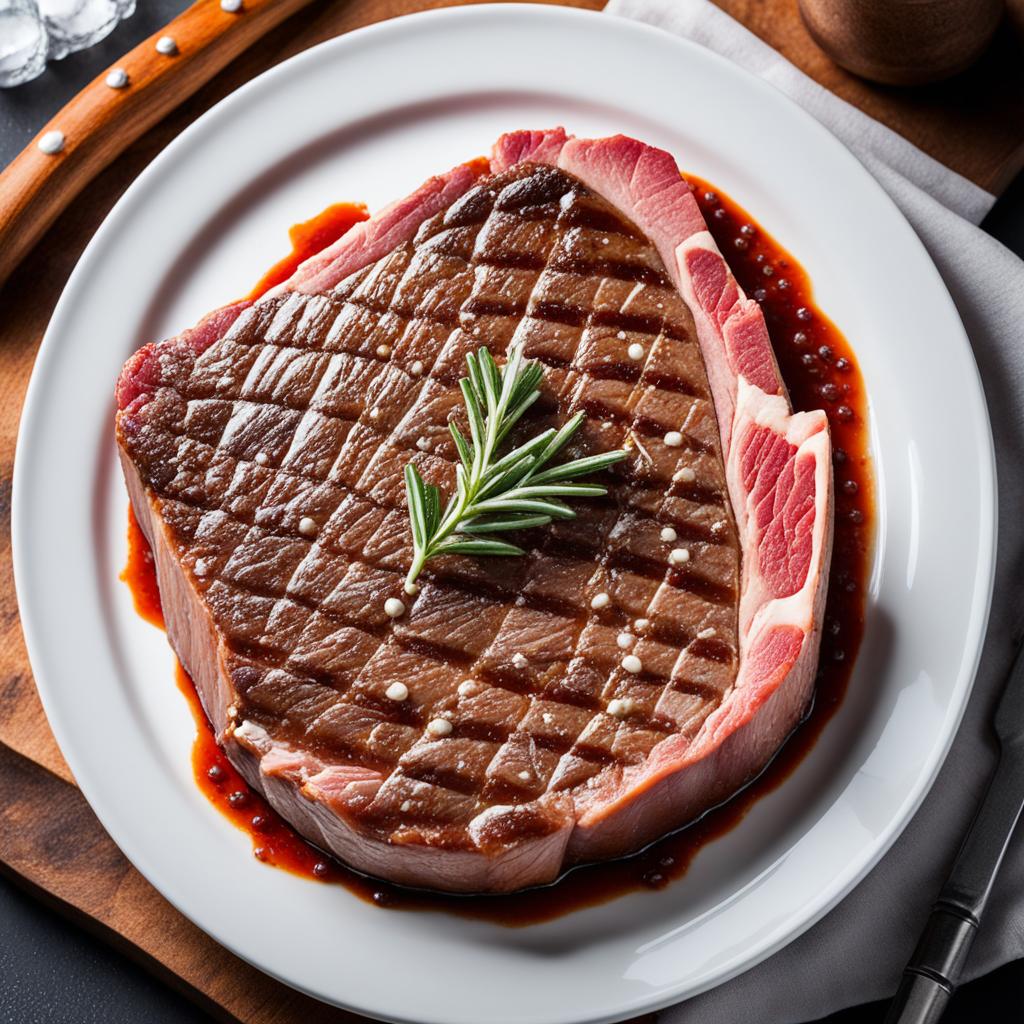
For a tasty ribeye steak, seasoning is important. First, coat the steak with oil like vegetable or canola. This helps the seasonings stick. Then, right before cooking, season both sides and the edges well. The seasonings mix with the meat during cooking for a delicious meal.
Cooking Methods for Ribeye Steak
Ribeye steak is great for different cooking methods. The two top ways are grilling and using a cast iron in the oven. Both methods bring out unique flavors and textures. This means there’s a choice for everyone’s taste.
Grilling Ribeye Steak
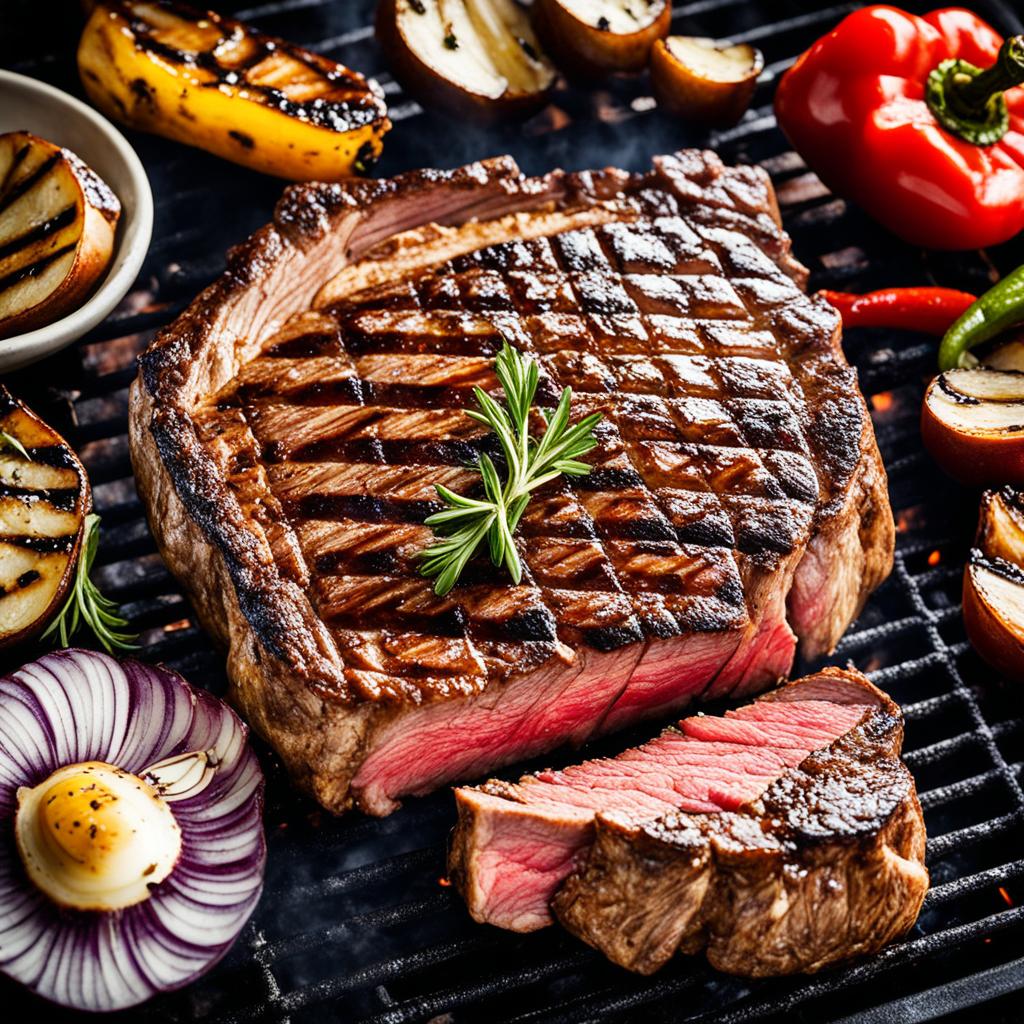
Grilling ribeye adds a smoky flavor that makes the steak richer. Start by heating your grill to medium. Then, cook the seasoned steaks on the grill. They need about 5-7 minutes on each side for a medium-rare finish.
How thick your steak is can change the cooking time. Grilling gives the steak a nice char and keeps it juicy and full of flavor.
Oven Cooking with Cast Iron Skillet
Cooking ribeye in a cast iron skillet in the oven is another great method. First, heat your skillet on the stove until it’s really hot. Sear each side of the steak for 2 minutes to get a crust.
Then, put the skillet in a 400°F oven until the steak is cooked how you like it. Cooking with cast iron makes the steak flavorful and tender. It’s a method loved by many who cook at home.
The Reverse Sear Method
The reverse sear is a top way to cook a ribeye steak. It makes sure your steak is cooked just right: juicy inside with a tasty crust outside. By cooking it slow, then searing it fast, you get great flavor and texture. This method keeps the moisture in and makes the whole steak evenly cooked.
Overview of the Reverse Sear Technique
First, you bake the ribeye steak in the oven on low. This slowly raises the internal temperature of the steak. After it’s at the right temperature, you sear it on a hot skillet or grill. The sear gives the steak a delicious crust, keeping the inside juicy and tender. The reverse sear is great for any thickness of ribeye, delivering consistent, restaurant-quality results.
Benefits of the Reverse Sear for Ribeye Steak
Using the reverse sear method has big benefits:
- Minimized risk of overcooking, ensuring a perfect medium-rare every time.
- Enhanced juiciness, as fat renders throughout the slower cooking process.
- Improved texture, resulting in a delightful contrast between the crust and the tender interior.
- Better flavor development, allowing you to savor the rich, buttery notes of ribeye steak.

Temperature and Timing for Ribeye Steak
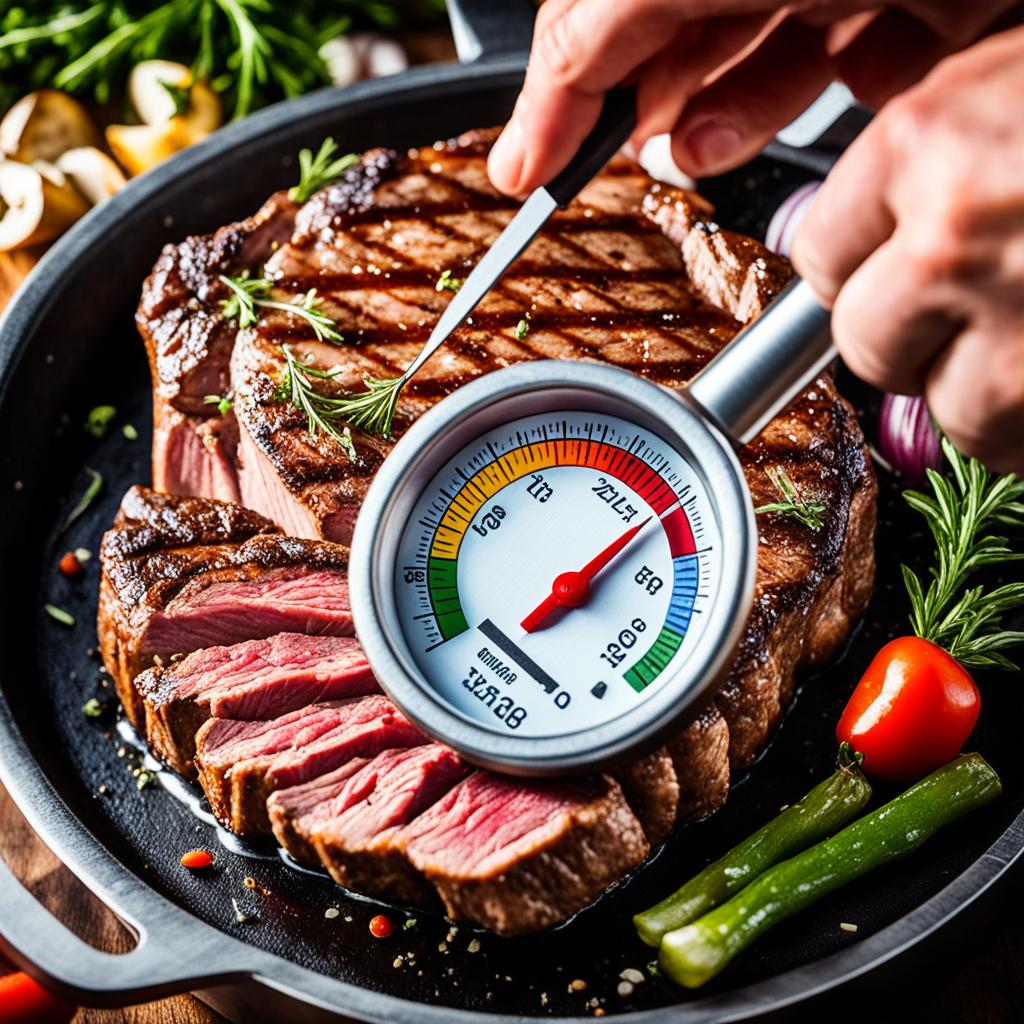
To cook the perfect ribeye steak, know about temperature and timing. Use a meat thermometer to check for doneness. It makes sure you get your steak just right every time.
Using a Meat Thermometer
For the best ribeye, put the thermometer in the thickest part, avoiding bone or fat. This ensures a precise temperature read. Aim for 130°F for a medium-rare steak. Think about carryover cooking after taking the steak off the heat.
Preferred Levels of Doneness
Learn the steak temperature guide for your preferred steak. Here’s what each level means:
- Rare: 125°F
- Medium-Rare: 130°F
- Medium: 145°F
- Medium-Well: 155°F
- Well-Done: 160°F
Understanding these temperatures helps plan your cooking time. The steak’s thickness affects how long to cook it. You’ll get consistently great ribeye with some practice.
Resting Your Ribeye Steak
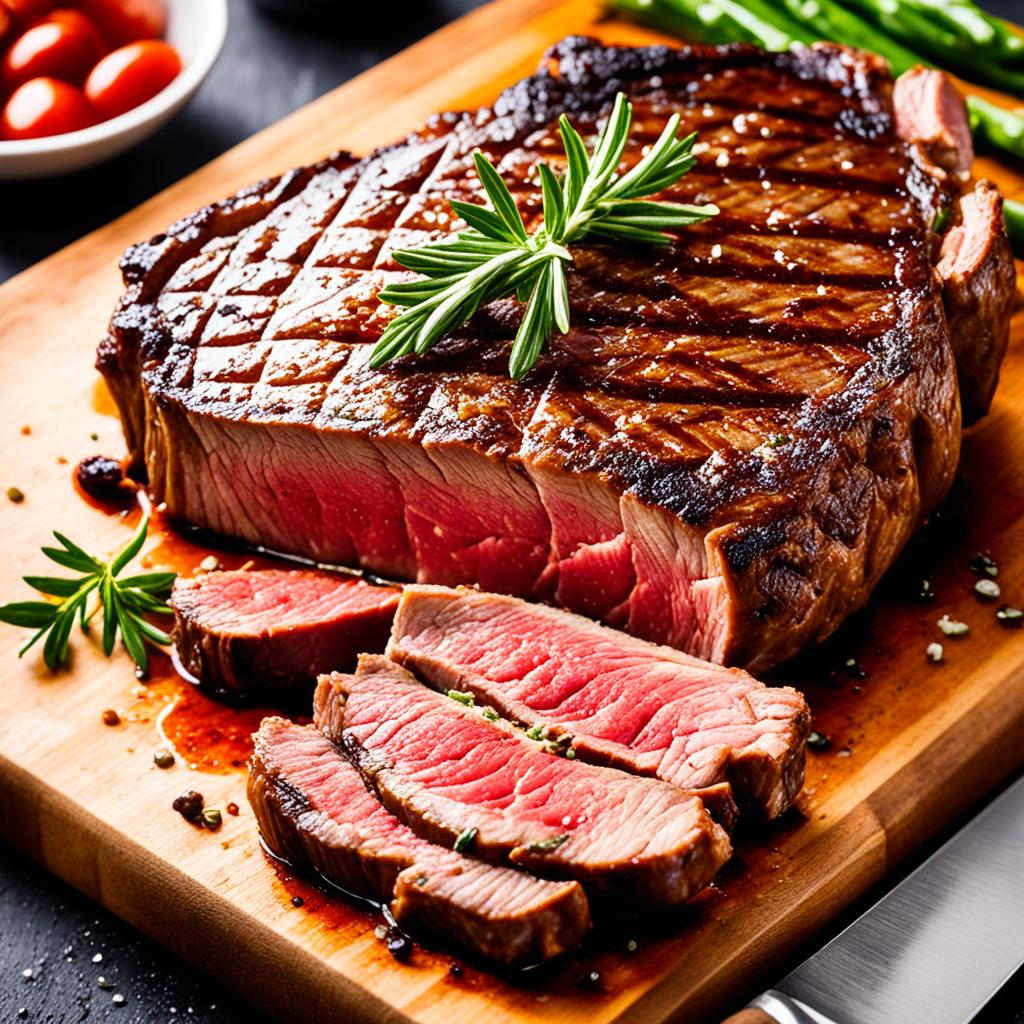
After you cook it, giving your ribeye steak time to rest makes a big difference in taste and texture. This step helps the juices spread back through the steak, making every bite juicy and delicious. Without resting, the steak ends up dry, which isn’t what you want.
Importance of Resting
Resting your steak does more than just cool it down. Cooking pushes juices to the steak’s surface. Letting the steak rest pulls the juices back throughout, making it juicy and flavorful. A properly rested steak is tender and full of taste, improving your meal.
How Long to Rest Ribeye Steak
Let your ribeye steak rest for 5 to 10 minutes, especially if it’s a thick cut. Cover the steak with foil to keep it warm while resting. This ensures all the flavorful juices stay in when you cut the steak, maximizing juiciness.
Serving Suggestions for Ribeye Steak
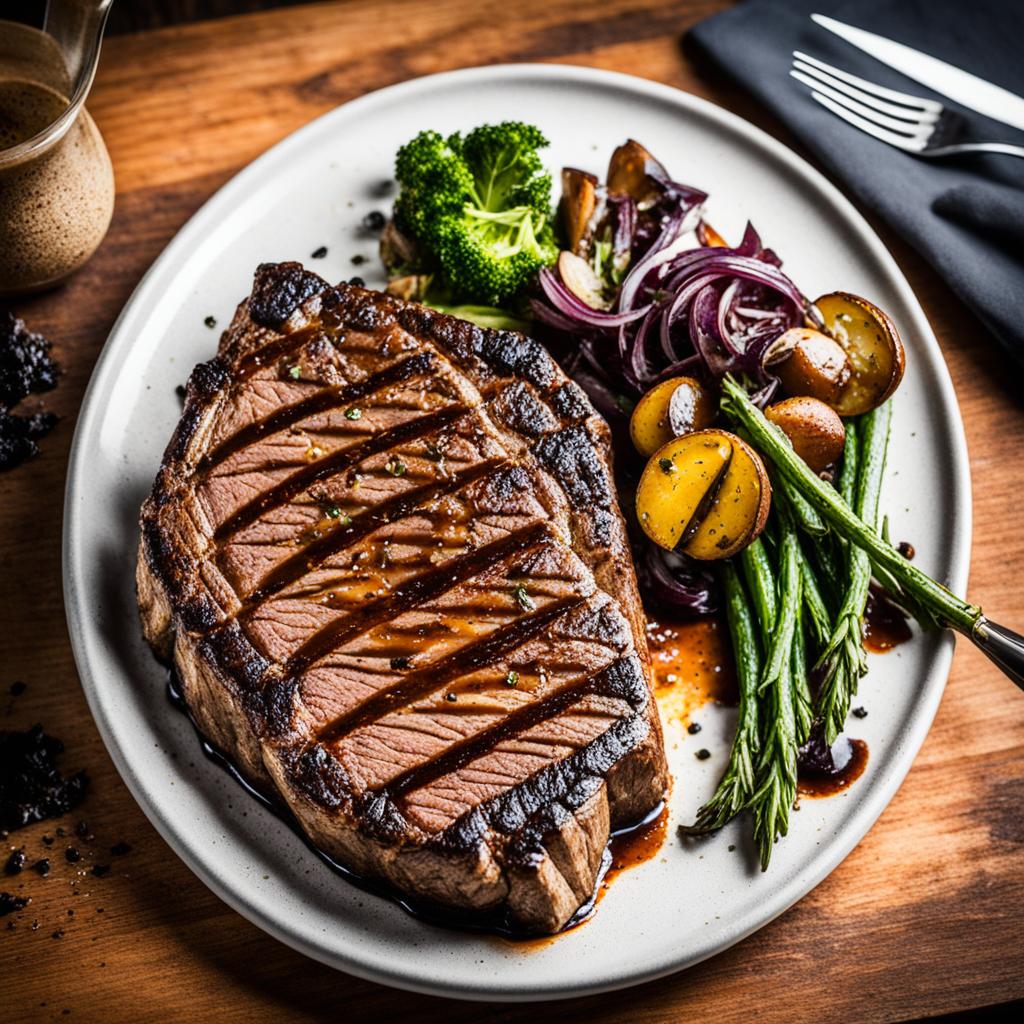
Picking the right side dishes is key to enjoying ribeye steak. You want sides that balance the steak’s rich flavors for a perfect meal.
Popular Side Dishes to Pair with Ribeye Steak
Classic sides add variety and improve the meal. You might like:
- Garlic mashed potatoes
- Sautéed mushrooms
- Roasted vegetables
- Simple arugula salad with olive oil
- Tomato salad for a refreshing contrast
These choices don’t just match the steak’s richness. They make for a complete, satisfying meal.
Creating a Delicious Sauce for Ribeye Steak
A great sauce takes ribeye steak to the next level. Try these simple yet tasty options:
- Red wine reduction for a rich flavor
- Butter sauce with garlic and herbs
The perfect sauce won’t overpower the steak. It makes your meal feel fancy, impressing everyone.

Common Mistakes When Cooking Ribeye Steak
Cooking ribeye steak right needs focus on detail. You might run into some mistakes that ruin your dish. Avoiding overcooking and seasoning errors helps make your beef delicious.
Overcooking the Steak
Overcooking the steak is a common error. It makes the steak tough and dry. Instead, use a meat thermometer. Check the steak’s temperature before it’s fully done.
Monitoring the temperature is key to cooking beef right. It helps make your ribeye juicy and full of flavor.
Inadequate Seasoning
Not seasoning enough is another mistake. It can make your steak taste bland. Season both sides of the steak right before cooking.
Don’t forget the fatty edges. They add a lot to the flavor. Proper seasoning boosts the steak’s taste and highlights the beef’s richness.
Storing and Reheating Leftover Ribeye Steak
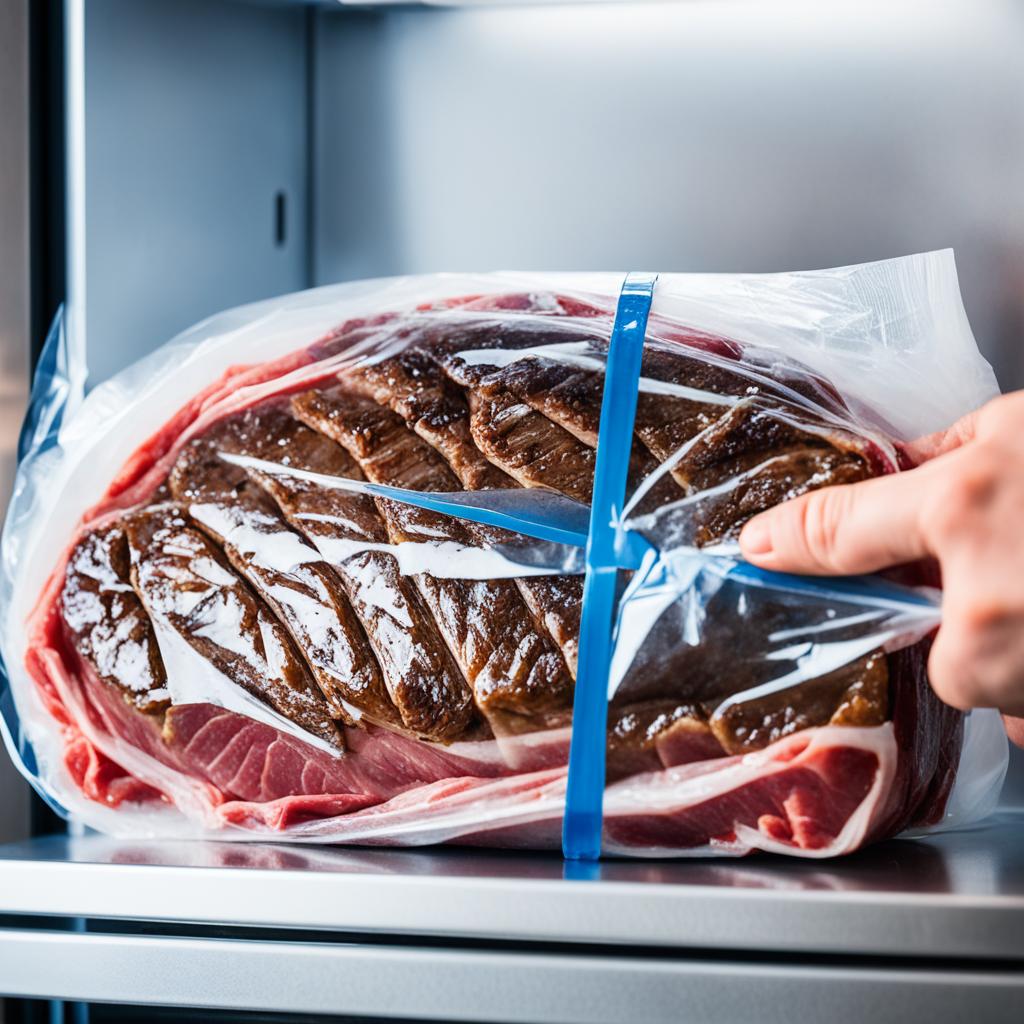
Had a great ribeye steak but ended up with leftovers? Storing it right can keep it tasty for later. Here’s how you can keep your steak fresh in the fridge for a few days.
Best Practices for Refrigerating Ribeye Steak
Want your leftover steak to last longer? Follow these easy steps:
- Wrap the ribeye tightly in plastic wrap or aluminum foil.
- Then, put it in an airtight container. This keeps air out.
- Make sure the steak is cool before you fridge it. This stops water from forming.
- Eat the steak within four days to enjoy its best taste and freshness.
Reheating Tips for Tender Steak
Ready to eat your ribeye again? How you reheat it is key. Use these tips to keep your steak tender:
- If using a microwave, go for low power. Cover your steak and set it to 50%. This helps keep it moist.
- Or, reheat it in a skillet with some broth or water. It’s good for warming up the meat without making it hard.
- Stay away from high heat to avoid drying out and toughening your steak.
Enhancing Flavor: Marinades and Rubs
To elevate your ribeye steak, think about using marinades and rubs. Ribeye steaks are already tender and packed with flavor. But a marinade can add more taste and make it even better. Simple approaches often work best.
Simple Homemade Marinades
Making your own ribeye marinades is easy and fun. You just need a few basic things:
- Olive oil
- Vinegar (balsamic or red wine)
- Fresh herbs (like rosemary or thyme)
- Garlic (minced or crushed)
Mix these together and let your steak soak in them for 1-2 hours before cooking. This short time lets the flavors mix into the meat. It does so without hiding its natural taste.
Spice Blends for Extra Flavor
Spice blends also add great flavor to steak. Make your own mix with spices that go well with ribeye, like:
- Smoked paprika
- Cumin
- Cayenne pepper (for a kick)
- Salt and pepper
Just rub your mix on the steak before cooking. This not only adds a pop of flavor. It also makes a tasty crust on the dish.
Nutrition Facts About Ribeye Steak
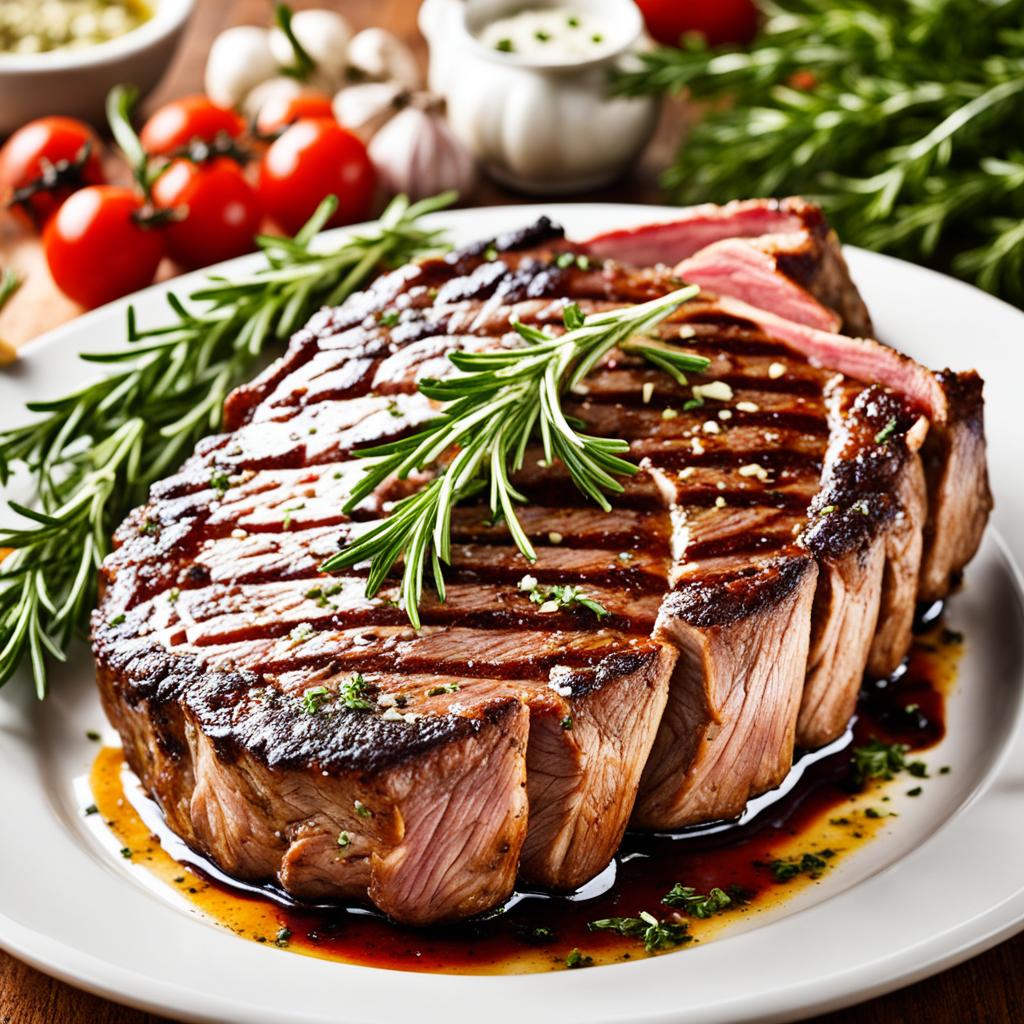
Knowing about ribeye steak’s nutrition can help you choose your meals wisely. It is tasty and full of nutrients. An 8-ounce ribeye has about 694 calories, 46 grams of protein, and 57 grams of fat. This gives you the key macronutrients your body needs.
Calories and Macronutrients
Ribeye is rich in nutrients, especially protein. Protein is important for building and repairing muscles, which is great for staying active. Although it has more fat than leaner meats, it includes healthy fats. These fats are good for your heart if you don’t eat too much.
Health Considerations
About ribeye’s health benefits, remember to eat it in moderation. Eating too much fat can affect your cholesterol. You might want to cut off extra fat or balance it with vegetables and whole grains. By doing this, you can maintain a balanced diet and still enjoy ribeye.
Buying Ribeye Steak: What to Look For
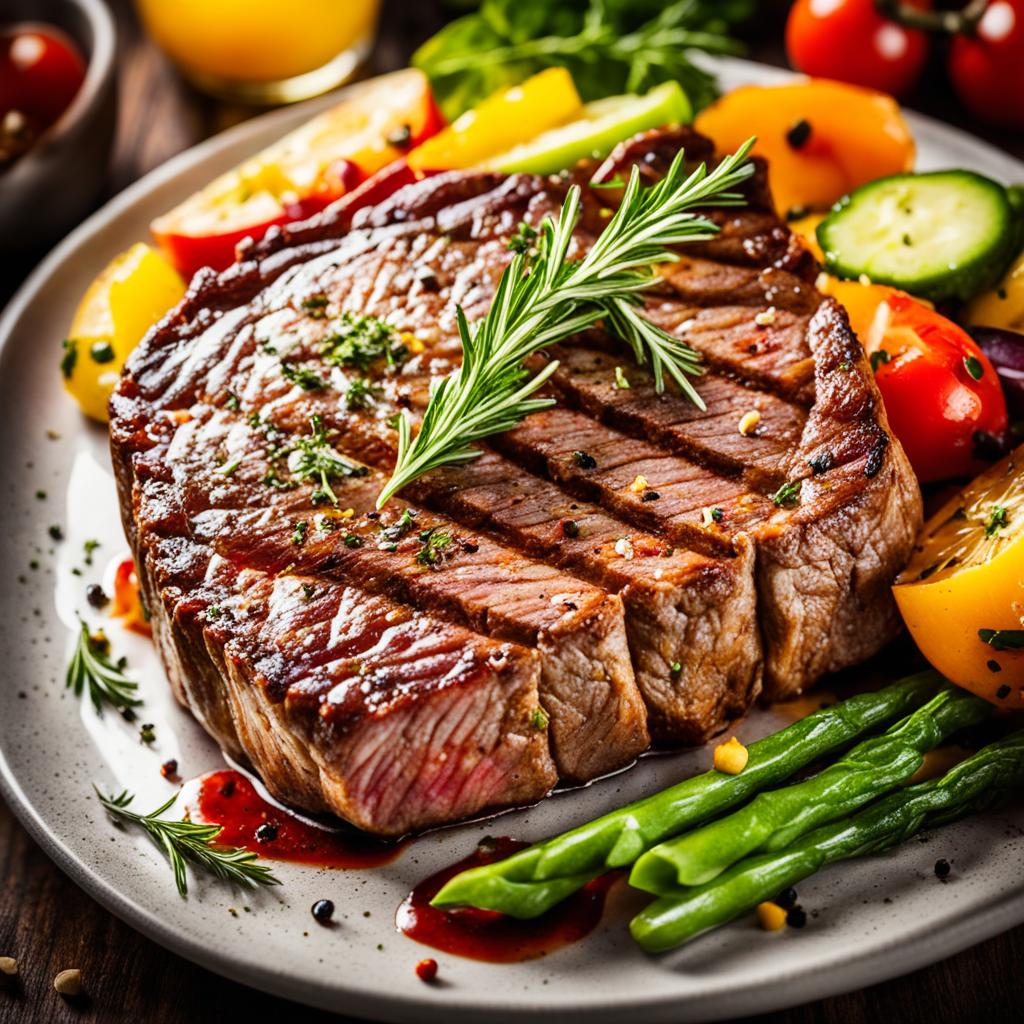
Seeking the perfect ribeye steak? It’s key to know the USDA grading system. This system sorts beef by factors like marbling, tenderness, and flavor. Understanding these grades helps you know what quality of ribeye steak you’re buying.
USDA Grading System Explained
The USDA sorts beef into different levels. The top is USDA Prime, known for its superb marbling. This means more flavor and tenderness. Next is USDA Choice, which is also great but with less marbling. USDA Select, the lowest grade, has even less marbling. Knowing these grades helps you pick the best steak for your taste.
Choosing Quality vs. Price
When buying ribeye steak, consider both quality and price. High-grade ribeyes are pricier, but they improve your dining experience. Try local butcher shops or trusted suppliers. They often have high-quality meats at reasonable prices.
- Evaluate the USDA grade for better quality assurance.
- Look for marbling that results in juiciness and flavor.
- Compare prices at various vendors to maximize value.
Finding the right balance between quality and price helps you make smart choices. This leads to a delicious meal.

Ribeye Steak in Different Cuisines
Ribeye steak is loved in many cuisines around the world. American ribeye cuisine is particularly favored. It’s often cooked in a classic way at steakhouses. This simple method brings out the meat’s delicious flavor. The steak is usually grilled or pan-seared. This lets its natural richness stand out.
American Steakhouse Style
In American steakhouses, the key is using high-quality meat and cooking it well. Diners like the straightforward way it’s prepared. This method highlights the ribeye’s tenderness and taste. Just salt and pepper can make the steak’s marbling the main attraction. Dishes such as baked potatoes and sautéed vegetables are common sides. Together, they make the perfect steakhouse meal.
International Preparations of Ribeye Steak
Ribeye steak is popular in many countries, adding unique tastes and styles. For example, Argentine asado cooks ribeye over open fire. It’s often seasoned with chimichurri for an extra zing. In Korea, ribeye becomes bulgogi. It’s marinated with soy sauce, sugar, and sesame oil, then grilled. These recipes from around the world show how versatile and loved ribeye steak is.
Ribeye Steak Cooking Tools
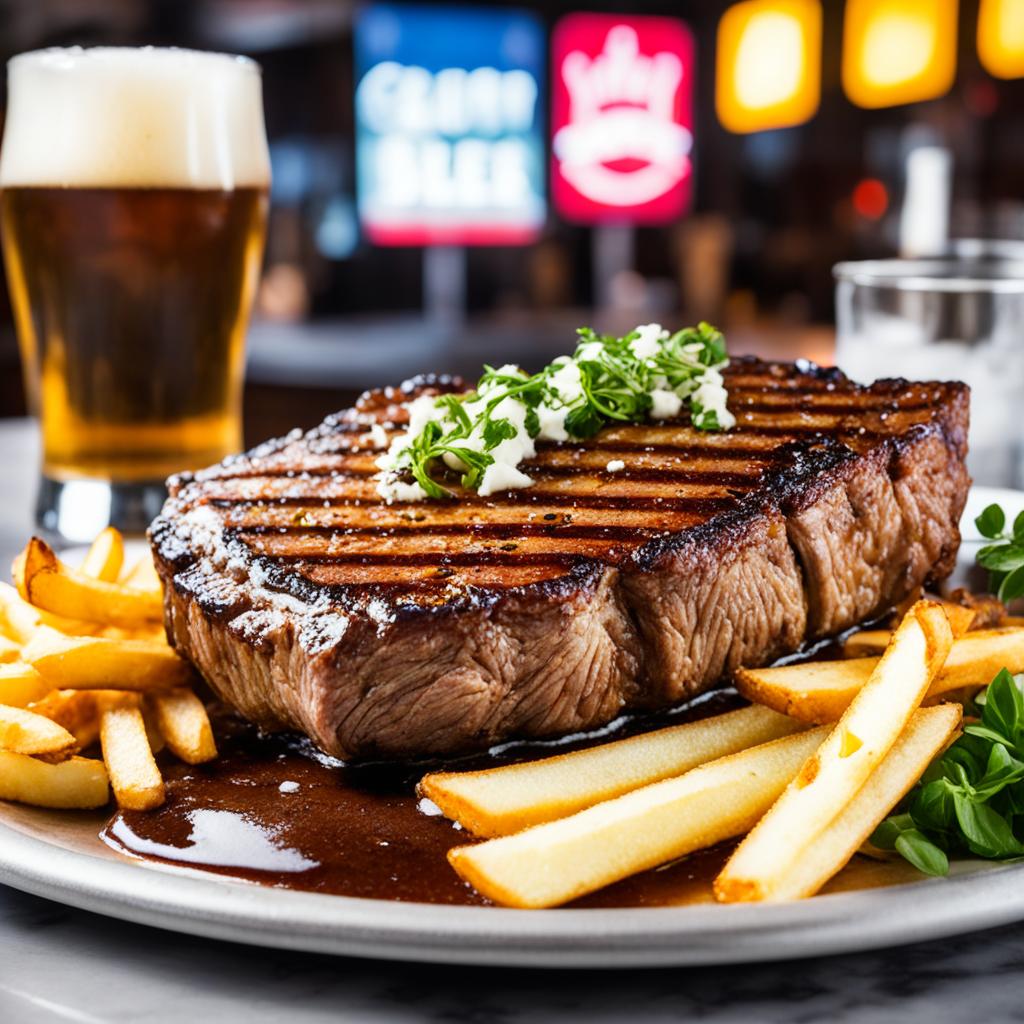
For the best ribeye steak, it’s important to have the right tools. Good kitchen gear makes cooking easier and helps make your steak tender and full of flavor.
Essential Kitchen Equipment
Here’s what you need in your kitchen for ribeye steak:
- A high-quality cast-iron skillet for superior heat retention
- A reliable meat thermometer to check for doneness
- Tongs for flipping and handling the steak with ease
- A sharp knife for slicing and serving
- Seasoning tools, like measuring spoons and bowls
Choosing the Right Pan or Grill
Picking the right pan or grill is key for amazing steak. A cast-iron skillet gives you a great sear on the stovetop. For those who love grilling, it adds that special barbecue taste.
Make sure your gear is hot to get the best results. For tips on making ribeye in a crock pot, see this crock pot recipe. It’s easy to follow.

Conclusion
Getting the perfect ribeye steak right is fully possible with the right knowledge and skills. We’ve delved into what makes ribeye so unique, discussing its rich taste and varied cooking ways. By following expert advice on how to prepare and season, your homemade ribeye can be just as good as any restaurant’s.
It doesn’t matter if you’re into grilling, pan-searing, or the reverse sear method. Knowing the details of ribeye will make your meals better. Important steps include picking the best meat and knowing when it’s cooked just right. Using these tips will wow your guests and fulfill your ribeye desires.
If you want to know everything about ribeye steak, from different cuts to how to cook them, click here: explore ribeye steak details. Have fun cooking, and may every ribeye you prepare be amazingly tasty!