
Did you know a single 8-ounce ribeye steak has about 600 calories? It’s loved for its rich flavor and tenderness. The marbling makes it a hit among steak enthusiasts.
Knowing about ribeye steak’s calories and nutrition is key for healthy eating. With this info, you can enjoy this meat and maintain your diet goals.
Introduction to Ribeye Steak: A Carnivore’s Delight
Ribeye steak is loved for its deep flavor and luxury feel. It’s a top pick for meat enthusiasts. It shines with awesome marbling and a tenderness that melts in the mouth. Imagine a steak that becomes the star of any meal. That’s ribeye.
The ribeye’s special texture and flavor make it top for a fancy meal. It’s great whether grilled, pan-seared, or roasted. Ribeye brings a rich taste to any table, impressing guests with every bite.

Understanding Ribeye Steak Nutrition
Enjoying a ribeye steak means getting a lot of nutrition. It’s packed with benefits that balance your diet well. Besides its delicious taste, ribeye steaks are nutritionally rich.
Protein Powerhouse for Muscle Maintenance
Ribeye steak provides about 22-25 grams of protein per 3.5-ounce serving. It’s key for muscle growth and repair. Adding ribeye to your diet is great for keeping muscle strong.
Vitamins and Minerals in Every Bite
Ribeye steak is full of important nutrients like Vitamin B12, iron, and zinc. These help with energy, immune support, and making red blood cells. Ribeye is great for your health. Learn more about ribeye steak nutrition facts here.

Calorie Count in Ribeye
Knowing the calories in ribeye steak helps us make smart eating choices. This tasty cut is rich in flavor. But, the calories vary with different portion sizes and how it’s cooked. Let’s look at common portion sizes compared to other steaks.
Standard Portion Sizes and Their Calories
A ribeye steak’s usual serving is between 3.5 to 4 ounces. For ribeye steak calories in this serving size, expect:
- 3.5-ounce serving: about 250-300 calories
- 4-ounce serving: roughly 300 calories
Keep these numbers in mind when planning meals. This way, you can enjoy ribeye without passing your daily calorie limit. Knowing about portion sizes is key.
Caloric Content Compared to Other Cuts
Ribeye has more calories than lean cuts like filet mignon or sirloin. This is because of its fat, which makes it tasty and soft. While ribeye is great to eat, careful with portion sizes helps keep a healthy diet.

The Sizzle on Steak: Choosing Quality and Flavor
Selecting a top-notch ribeye steak is key to a great meal. A prime ribeye enhances your eating experience with its rich tastes. It’s important to focus on specific qualities that mark the best cuts. This ensures each bite is tender and full of flavor.

Marbling in the steak is crucial for choosing a ribeye. This fat spread through the muscle adds flavor and affects texture. Aim for steaks rich in marbling, like those labeled USDA Prime, for the best juiciness and taste.
Here are important tips for finding the perfect ribeye:
- Check the color; bright red means it’s fresh.
- Look at the marbling; more fat equals more flavor.
- Shop from trusted places; local butchers or meat shops are good choices.
Paying attention to quality ensures every ribeye meal is extraordinary.
Nutrition Facts of Ribeye Steak
Ribeye steak is a rich source of essential nutrients, perfect for mealtime. It offers about 25 grams of protein in a 3.5-ounce serving. Protein is key for body maintenance and repair. The nutrition facts of ribeye also show important components for health.
Essential Nutrients Explained
This meat is loaded with vital nutrients:
- Iron: Supports oxygen transport in your bloodstream, essential for energy levels.
- Zinc: Plays a key role in immune system function and healing processes.
- B Vitamins: Help convert food into energy, supporting various metabolic functions.
These nutrients make ribeye beneficial, pleasing your taste and boosting health.
Role of Nutrients in Overall Health
These nutrients make ribeye steak important for a balanced diet. Protein helps with muscle upkeep and growth. Iron is crucial for energy, and zinc strengthens immunity. B vitamins turn food into energy, aiding metabolism.

Balancing Your Diet with Ribeye Steak
Eating ribeye steak can be both enjoyable and good for your diet. It’s all about moderation to keep a healthy balance. Try a piece of ribeye that’s about as big as a deck of cards. This will give you plenty of protein without too many calories.
For a well-rounded meal, add nutritious sides to your ribeye steak. Here are a few ideas:
- Fresh vegetables like steamed broccoli, roasted carrots, or a colorful salad.
- Whole grains such as quinoa, brown rice, or farro. They add fiber and nutrients.
- Healthy fats, like avocado or olive oil, can make your meal tastier and help your heart.
Adding ribeye steak to your meals wisely lets you enjoy its taste and stay healthy. It’s important to eat different foods and make smart choices for your body.
Steak Portion Sizes and Tips
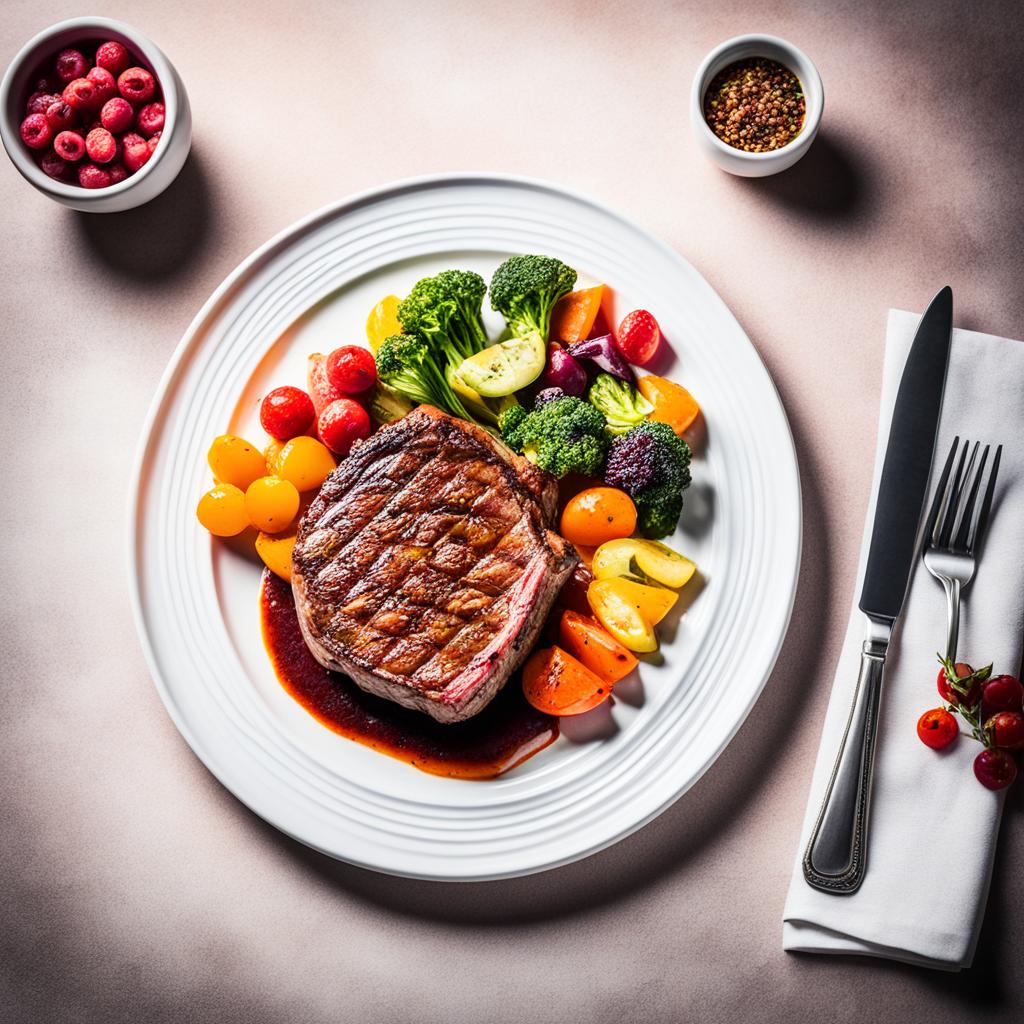
Eating ribeye steak is a great joy, especially when you understand steak portion sizes. Knowing the right amounts lets you enjoy ribeye’s rich taste while keeping a healthy diet. Picking the perfect portions makes meals better, ensuring you love every bite, without eating too much.
Optimal Portion Control Techniques
To eat ribeye steak the right way, it’s important to control portions. Here’s how to do it:
- Measure a 3-ounce portion with a food scale. It’s the perfect mix of taste and nutrition.
- Make sections on your plate. Steak should only be about one-quarter of your meal.
- Add lots of veggies to your plate. This helps you not to eat too much steak.
Visual Portion Size Guides
Visual cues for steak portion sizes can be really useful. These tips show you how much to eat. Keep these in mind:
- A 3-ounce steak should look like a deck of cards.
- A bigger, 6-ounce steak is about as big as a smartphone.
- You can also use your hand to guess the size. A standard piece should be as big as your palm.

Healthy Cooking Methods for Steak Lovers
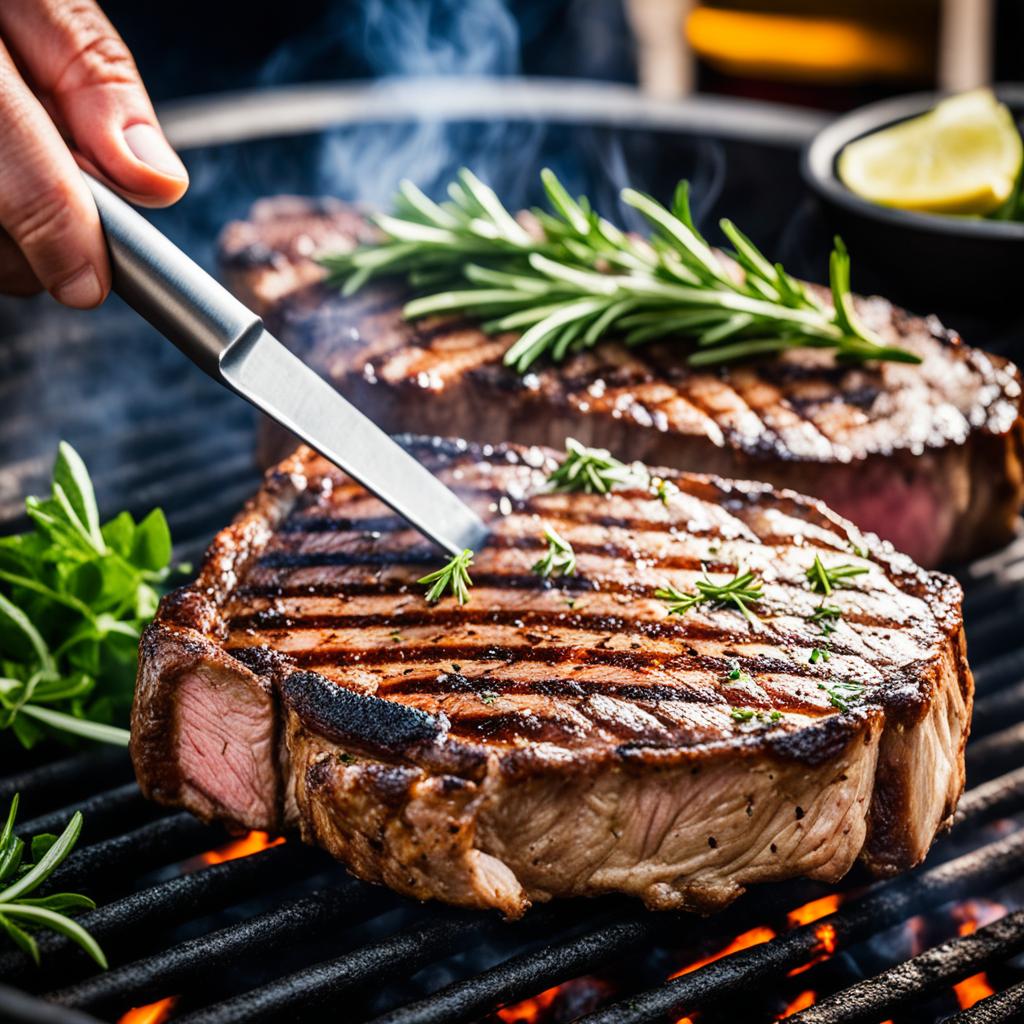
If you love steak, especially ribeye, then healthy cooking methods can make your meals better. Grilling is a great way to cook ribeye. It improves flavors while cutting down on fat. Using spices or fresh herbs can make the steak tasty without losing nutritional value.
Here are some effective healthy cooking methods to consider:
- Grilling ribeye steak—this allows excess fat to drip away while keeping the meat juicy.
- Roasting—perfect for ensuring the steak is cooked evenly without added oils.
- Sous-vide—this technique maintains moisture and flavor while controlling cooking temperatures.
For great steak cooking tips, always preheat your grill or pan. This ensures your steak sears nicely and stays juicy. Marinating with vinegar or citrus can tenderize and flavor the meat. Pair your ribeye with grilled veggies or a light salad for a balanced dish.
Ribeye Steak Calories: What You Need to Know
Understanding ribeye steak calories is key when enjoying this meal. The way you cook your steak affects its calories. Grilling keeps flavors and adds few calories, but frying adds fats and calories. This knowledge helps you enjoy your meal while sticking to your health goals.
Caloric Impact of Different Cooking Methods
Different ways of cooking change your ribeye’s taste and calories. Broiling or roasting can enhance flavor without adding many calories. However, using oil or butter during cooking increases calories. Knowing this lets you make smart eating choices.
Making Informed Choices
It’s about finding what works for you and your taste. Knowing how cooking methods affect calories helps you choose wisely. This way, you can enjoy a delicious steak and keep up with your health goals.