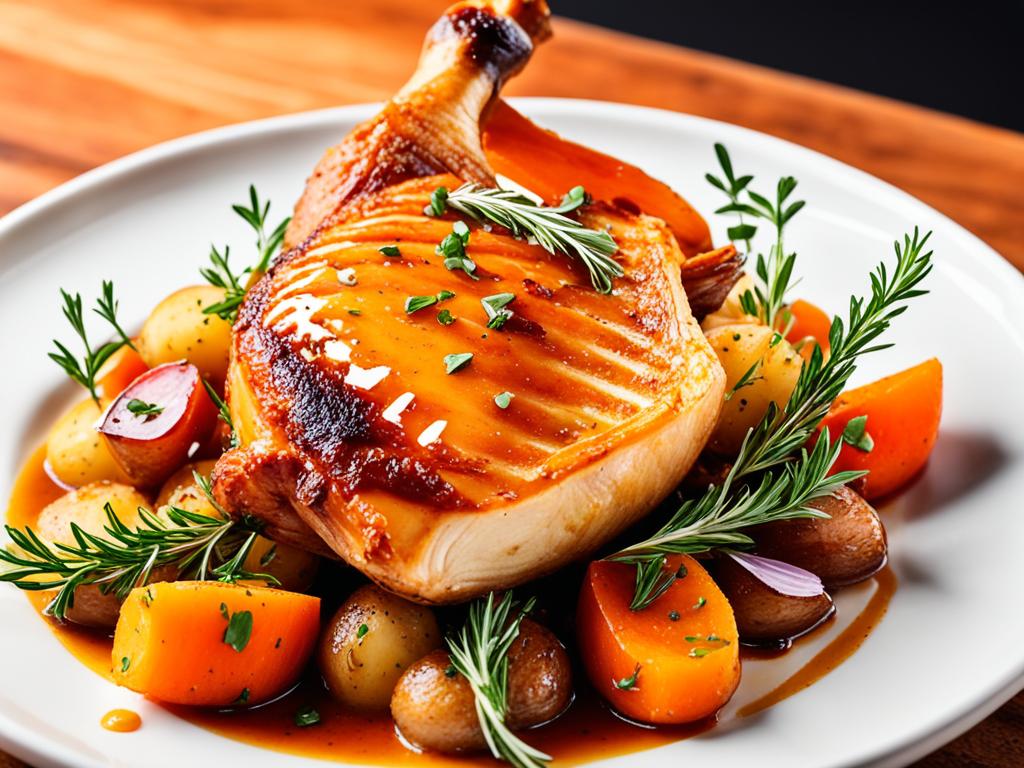
Welcome to the world of gourmet delight with our Crispy Duck Confit recipe. Prepare to elevate your culinary skills and indulge in a mouthwatering dish that will leave you craving for more. Duck Confit, also known as Confit de Canard, is a traditional French masterpiece that combines tender duck legs with a crispy, golden-brown skin, providing the perfect balance of flavors and textures.
But fear not, you don’t need to be a seasoned chef to achieve this culinary triumph. Our simplified method will guide you through the process, ensuring recipe success and an unforgettable dining experience. You’ll be amazed at how effortlessly you can create a dish that rivals restaurant-quality crispy duck confit in the comfort of your own kitchen.
Key Takeaways:
- Discover the art of making crispy duck confit with our easy-to-follow recipe.
- Experience the rich flavors and textures of this traditional French bistro dish.
- Learn the secrets to achieving perfectly tender meat and paper-thin crispy skin.
- Explore creative serving suggestions that showcase the versatility of duck confit.
- Unlock the value of rendered duck fat and explore tips for saving and utilizing it in your cooking.
What is Duck Confit and its Traditional Preparation
Duck Confit is an elegant and classic French bistro dish. The term “confit” refers to the method of slow-cooking the duck in its own fat, resulting in tender and flavorful meat. Traditionally, Duck Confit was prepared for preservation purposes, allowing the meat to be stored for extended periods.
The slow-cooking process in duck fat not only tenderizes the meat but also creates a paper-thin, crispy skin. Imagine sinking your teeth into succulent and juicy duck meat, complemented by a delicate, melt-in-your-mouth crispy skin. It’s a culinary masterpiece that will leave you craving for more.
“Duck Confit is like a symphony of flavors—each bite is a harmonious blend of tender meat and paper-thin crispy skin.”
This recipe stays true to the traditional method but with a simplified approach. You don’t need to be a French chef to master the art of Duck Confit. With a few essential ingredients and careful preparation, you can create a dish that rivals the ones served in the finest French bistros.
Slow-cooked to Perfection
The magic of Duck Confit lies in the slow-cooking process. The duck legs are gently simmered in duck fat over low heat, allowing the flavors to develop and the meat to become incredibly tender. This slow and patient cooking method is what sets Duck Confit apart from other dishes.
A Crispy Delight
After the slow-cooking process, the duck legs are carefully removed from the fat and transferred to the oven, where they are crisped to perfection. The result is a beautiful balance of textures—a combination of velvety, succulent meat and a crackling, golden-brown skin that shatters with each bite.
Ready to embark on a gastronomic journey? Let’s dive into the details of making Duck Confit, from selecting the right ingredients to the step-by-step process that will have your taste buds dancing with delight.
Easy and Efficient Duck Confit Recipe
Looking to impress your guests with a delectable Duck Confit without the hassle? This easy and efficient recipe is exactly what you need. You’ll be able to create a restaurant-worthy dish with minimal effort and minimal duck fat. Let’s dive into the details!
A Simple Method with Minimal Duck Fat
Unlike traditional Duck Confit recipes that require a copious amount of duck fat, this recipe takes a streamlined approach. You’ll only need a few cups of duck fat, which can be reused or stored for future use, saving you time and money. By arranging the duck legs snugly for cooking, you’ll maximize flavor and achieve tender results with less fat. It’s a win-win situation!
Make Ahead for Convenience
Busy schedules shouldn’t prevent you from enjoying the delightful flavors of Duck Confit. With this recipe, you have the option to prepare the Duck Confit ahead of time. Simply follow the steps, refrigerate the cooked duck legs, and when you’re ready to serve, finish them off in the oven for that irresistible crispiness. Whether it’s a dinner party or a quiet evening at home, you’ll have a crowd-pleasing dish ready in no time.
Duck Confit Recipe Overview
| Preparation Time | Cooking Time | Total Time | Servings |
|---|---|---|---|
| 30 minutes | 3 hours | 3 hours 30 minutes | 4 |
Now that you have a taste of what this recipe has to offer, it’s time to gather your ingredients and get cooking. Your journey to a flavorful Duck Confit starts here.
“This Duck Confit recipe is perfect for anyone looking to make a gourmet dish without the fuss. The simple method and minimal duck fat requirement make it a time-saving and flavor-packed option for your culinary adventures.”
Next, we’ll explore the key ingredients that will make your Duck Confit truly exceptional. Get ready to elevate your taste buds to new heights!
The Key Ingredients for Duck Confit
When it comes to creating the perfect Duck Confit, certain key ingredients are essential to achieve the desired flavors and textures. Let’s take a closer look at the components that make this dish a culinary masterpiece.
Duck Legs: Tender and Crispy
Achieving the ideal texture and taste starts with selecting the right duck legs. Opt for bone-in, skin-on duck legs to ensure that coveted crispy skin. The bone-in legs will also contribute to the succulence of the meat as it slow-cooks in its own juices.
Duck Fat: The Essence of Flavor
Using duck fat is a crucial element in Duck Confit, as it infuses the meat with richness and imparts a distinct flavor. You can easily find duck fat in stores or save it from previous cooking endeavors for future use. The combination of slow-cooking in duck fat and the subsequent crisping step creates the remarkable balance of juicy meat and a crispy exterior.
Fresh and Dried Herbs: Aromatic Enhancements
Infusing the duck legs with aromatic herbs is key to adding depth and complexity to the dish. Fresh herbs like thyme, sage, rosemary, oregano, and bay leaves bring a vibrant and earthy aroma. If fresh herbs aren’t available, dried herbs can be used as substitutes, ensuring that the flavors remain intact.
Garlic and Eschalots: Flavorful Additions
To elevate the taste of Duck Confit, garlic and eschalots (also known as shallots) play crucial roles. Their delicate yet potent flavors complement the duck meat perfectly, creating a harmonious blend of taste sensations.
A Combination of Spices: A Touch of Complexity
Adding a combination of spices takes the flavor profile of Duck Confit to another level. The inclusion of black peppercorns, coriander seeds, star anise, juniper berries, and cloves imparts depth and complexity, creating a symphony of taste that dances on your palate.
By combining these carefully selected ingredients, you can achieve a Duck Confit that delights your senses and showcases the true essence of French culinary tradition.
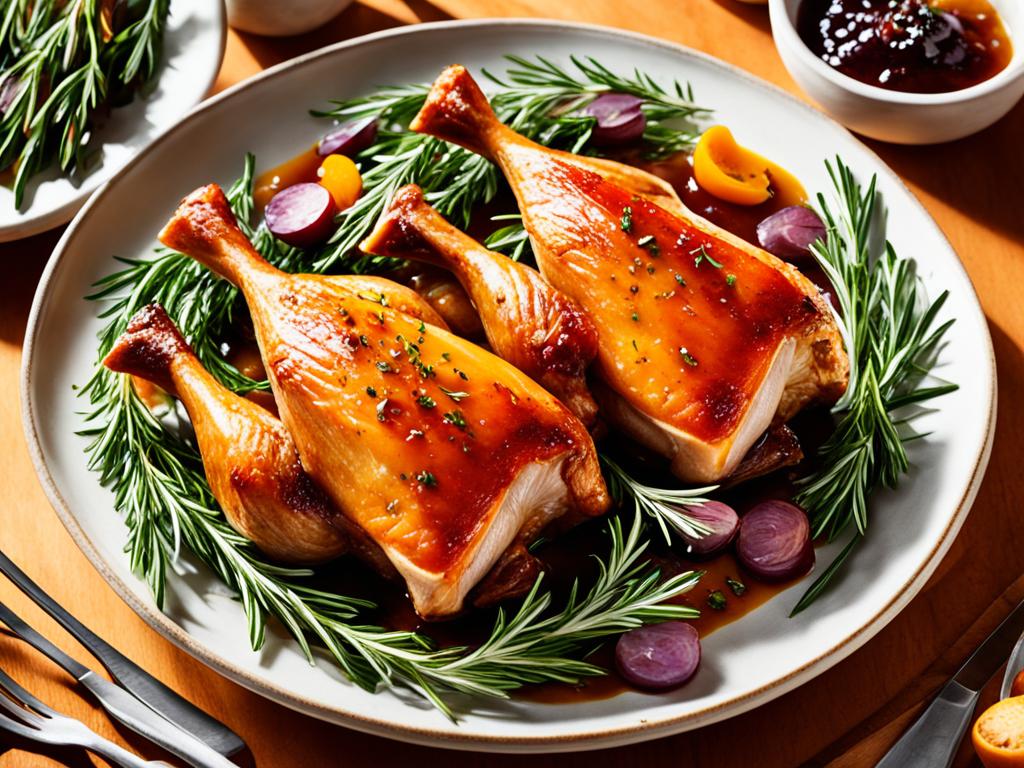
Step-by-Step Guide to Making Duck Confit
Making Duck Confit is a culinary adventure that requires careful preparation and precise execution. Follow these step-by-step instructions to create a mouthwatering dish that will leave your taste buds begging for more.
Gather Your Ingredients
Before you begin, make sure you have all the necessary ingredients to create the perfect Duck Confit:
- Duck legs
- Salt, herbs, and spices for the overnight cure
- Duck fat for slow-cooking
Having everything prepared and within reach will make the cooking process smooth and enjoyable.
Cure Overnight for Maximum Flavor
The secret to succulent Duck Confit lies in the overnight cure. Generously season the duck legs with salt, herbs, and spices, ensuring every inch is covered in flavorful goodness. Place the seasoned legs in a ceramic or glass dish, cover, and refrigerate overnight. This curing process allows the flavors to penetrate the meat, resulting in unparalleled taste.
Slow-Cook in Duck Fat
Once the overnight cure is complete, it’s time to embark on the slow-cooking journey. Preheat your oven and melt the duck fat in a small roasting pan. Nestle the cured duck legs into the warm embrace of the duck fat, ensuring they are fully submerged. The slow-cooking process is crucial for achieving tender and juicy meat that falls off the bone. Be patient and let the magic happen as the flavors meld together.
The Crisp to Perfection
After the duck legs have bathed in the savory goodness of the duck fat, it’s time to give them a final crisping. Preheat your oven to a high temperature, carefully remove the legs from the duck fat, and place them on a baking sheet. The high heat will transform the skin into a heavenly golden brown and create a delicate, crispy texture that contrasts beautifully with the tender meat.
The Final Countdown
Remove the baking sheet from the oven and behold the masterpiece you’ve created. Allow the Duck Confit to rest for a few minutes, allowing the flavors to fully develop and settle. This resting period adds the perfect finishing touch to your culinary creation.
“The slow-cooking process is like a symphony, each note crafting a harmonious melody of flavors that will transport you straight to the heart of France.” – Chef Jacques Pépin
Your Duck Confit Delight Awaits
Now that you’ve completed the final crisping step, your Duck Confit is ready to be enjoyed. Serve it as the centerpiece of a gourmet meal, accompanied by a selection of seasonal vegetables, or let it shine in a simple yet elegant salad. The possibilities are endless, and each bite is sure to tantalize your taste buds and transport you to the charming streets of Paris.
Storage and Serving Suggestions for Duck Confit
Now that you’ve mastered the art of preparing a crispy Duck Confit, it’s time to explore storage options and delightful serving ideas. With its extended shelf life and versatile nature, Duck Confit offers endless possibilities for enjoying this delectable dish.
Storing Duck Confit:
After indulging in this gourmet delight, you may find yourself with leftovers or wanting to prepare ahead of time for a special occasion. To store Duck Confit, simply place it in an airtight container or wrap it tightly in plastic wrap. When refrigerated, it can be stored for up to 5 days, allowing you to savor the flavors throughout the week. For longer storage, freezing Duck Confit is a great option, with a shelf life of up to 3 months. Just be sure to thaw it properly before reheating.
Reheating and Crisping:
When it’s time to enjoy your stored Duck Confit, the reheating process is crucial to maintain its luscious texture and crispy skin. To preserve the delicate skin, it is recommended to use a nonstick skillet. Gently reheat the Duck Confit over medium heat, ensuring that all sides are warmed through. This method will help retain the moisture and crispness, ensuring a delightful bite every time.
Serving Ideas:
Now that your Duck Confit is piping hot, it’s time to get creative with serving suggestions. Here are two irresistible ideas that highlight the versatility of this French delicacy:
Bistro-Style Delight
For a classic and elegant presentation, serve your Duck Confit with a side of mixed greens salad. The fresh and vibrant flavors of the salad complement the rich and tender meat of the duck perfectly. Drizzle some tangy vinaigrette over the greens, and you have yourself a light and bright accompaniment to the decadence of Duck Confit.
Japanese-Inspired Rice Bowl
If you’re in the mood for a fusion twist, incorporate the Duck Confit into a flavorful rice bowl. Start with a bed of steaming white rice and top it with sliced cucumber, pickled ginger, and a soft-boiled egg. Add a sprinkle of black sesame seeds and drizzle some soy sauce over the dish for an umami-packed experience. This fusion of French and Japanese flavors will surely satisfy your culinary curiosity.
With these serving ideas, you can elevate your dining experience with Duck Confit and impress your guests with your culinary prowess. Whether you choose the classic bistro-style dish or the eclectic rice bowl, one thing is certain – the combination of tender duck meat, crispy skin, and vibrant flavors will leave you craving for more.
The Value of Duck Fat and Tips for Saving It
While making Duck Confit, you’ll discover a hidden gem: rendered duck fat. Don’t let this flavorful treasure go to waste! There are multiple uses for rendered duck fat that can elevate your culinary creations.
One of the classic uses for rendered duck fat is frying potatoes. The richness of the fat adds a luscious flavor and crispy texture to your favorite spuds. Whether you’re making French fries, hash browns, or roasted potatoes, using rendered duck fat will take your potato game to the next level.
But potatoes aren’t the only star of the show. Rendered duck fat is also perfect for sautéing vegetables. It adds a depth of flavor and richness that can transform simple greens into a mouthwatering side dish. From Brussels sprouts and asparagus to kale and mushrooms, your veggies will thank you for this indulgent upgrade.
Pro Tip: Use rendered duck fat to make another batch of Duck Confit. The velvety fat will infuse the meat with even more succulence and flavor, creating a truly decadent dish.
The Versatility of Rendered Duck Fat
Rendered duck fat is a versatile ingredient that can be stored for future use. Its high smoke point makes it ideal for various cooking methods, from frying and roasting to sautéing and confiting. Don’t let any of this liquid gold go to waste!
Below is a breakdown of the multiple uses for rendered duck fat:
| Uses of Rendered Duck Fat |
|---|
| Frying potatoes |
| Sautéing vegetables |
| Making another batch of Duck Confit |
| Roasting meats |
| Enhancing gravies and sauces |
| Baking flaky pastries |
With rendered duck fat in your pantry, you’ll have an incredible ingredient to take your cooking to new heights.
Discover the magic of rendered duck fat and unlock a world of rich flavors. Don’t miss out on this culinary gem that can turn ordinary dishes into extraordinary creations.
Overcoming Common Challenges in Duck Confit Preparation
Making Duck Confit can be a delightful culinary adventure, but it’s not without its challenges. One common hurdle that many home cooks face is the risk of tearing the delicate skin during the crisping process. However, fear not, because we have a solution that will help you achieve perfectly crispy Duck Confit every time!
Preventing Torn Skin
The key to preventing torn skin is to use a nonstick skillet when crisping the Duck Confit. A nonstick skillet provides a gentle and even heat distribution, minimizing the risk of the skin sticking or tearing. This ensures that you can enjoy the full crispy goodness without any unfortunate mishaps. So, before you start cooking, make sure you have a trusty nonstick skillet on hand.
Using a Nonstick Skillet
Using a nonstick skillet is a game-changer when it comes to achieving crispy Duck Confit. Its smooth surface and excellent heat distribution make it the perfect tool for getting that beautiful golden-brown skin. Plus, it’s easier to maneuver the delicate duck legs in a nonstick skillet, reducing the risk of tearing and ensuring a stunning presentation.
So, next time you’re preparing Duck Confit, reach for that nonstick skillet with confidence. It’s your secret weapon to overcoming the challenge of torn skin and achieving professional-level results in the comfort of your own kitchen.
Recommended Tools and Equipment for Duck Confit
Preparing a delicious Duck Confit requires the right tools and equipment to ensure a smooth and enjoyable cooking process. Here are the recommended items:
Ceramic or Glass Dish
A ceramic or glass dish is essential for curing the duck legs. The non-reactive surface of these dishes ensures that the flavors infuse into the meat without any unwanted reactions. Additionally, the depth of the dish allows for even distribution of the curing mixture.
Small Roasting Pan
A small roasting pan is ideal for slow-cooking the duck legs in duck fat. Its size allows for the perfect amount of duck fat to cover the legs, resulting in tender and juicy meat. Look for a pan with sturdy construction and even heat distribution for consistent cooking.
Nonstick Skillet
A nonstick skillet is a must-have for the final step: crisping the duck confit skin. Its nonstick surface prevents the delicate skin from sticking and tearing, ensuring a beautiful golden-brown finish. Choose a skillet with a comfortable handle and a generous cooking surface for easy maneuvering.
With these recommended tools, you’ll have everything you need to create a delightful Duck Confit that will impress your guests and elevate your culinary skills.
Conclusion
Indulge in the culinary triumph of making a crispy Duck Confit at home. This gourmet delight is sure to tantalize your taste buds and elevate your dining experience. With a simplified method that requires minimal duck fat, you can achieve recipe success without breaking a sweat.
Thanks to the comprehensive step-by-step guide, you’ll be able to conquer this French classic with ease. The storage suggestions ensure that you can enjoy the crispy duck confit on different occasions, while the serving ideas provide versatility and inspiration for creating memorable meals.
Embrace the art of Duck Confit and savor the deliciousness of this irresistible dish. The crispy skin, tender meat, and exquisite flavors make it a feast worth celebrating. Whether you’re hosting a dinner party or craving a gourmet treat, this recipe guarantees a culinary triumph that will leave you wanting more.
FAQ
What is Duck Confit?
Duck Confit is a beloved French dish where duck legs are slow-cooked in duck fat until tender and then crisped to perfection.
How is Duck Confit traditionally prepared?
The traditional preparation of Duck Confit involves slow-cooking the duck legs in its own fat, resulting in tender and flavorful meat with a paper-thin crispy skin.
Is the Duck Confit recipe easy and efficient?
Yes, this Duck Confit recipe is incredibly easy and efficient. It requires minimal duck fat and can be made ahead of time.
What are the key ingredients for Duck Confit?
The key ingredients for Duck Confit include duck legs, bone-in and with the skin on, fresh or dried herbs, garlic, eschalots, and a combination of spices.
Can you provide a step-by-step guide to making Duck Confit?
Yes, the article provides a detailed step-by-step guide for making Duck Confit, including curing the duck legs, slow-cooking in duck fat, and crisping up the skin.
How long can Duck Confit be stored?
Duck Confit can be stored in the refrigerator for up to 5 days or in the freezer for up to 3 months.
How should Duck Confit be reheated and served?
To reheat and crisp the Duck Confit, it is recommended to use a nonstick skillet. It can be served as a classic bistro-style dish with a mixed greens salad or in a flavorful rice bowl.
What can I do with the rendered duck fat?
The rendered duck fat can be used for various culinary purposes, such as frying potatoes, sautéing vegetables, or making another batch of Duck Confit.
What are some common challenges in making Duck Confit?
One common challenge is preventing the delicate skin from tearing during the crisping process. Using a nonstick skillet can help overcome this challenge.
What tools and equipment are recommended for making Duck Confit?
Recommended tools include a ceramic or glass dish for curing the duck legs, a small roasting pan for slow-cooking, and a nonstick skillet for crisping the skin.