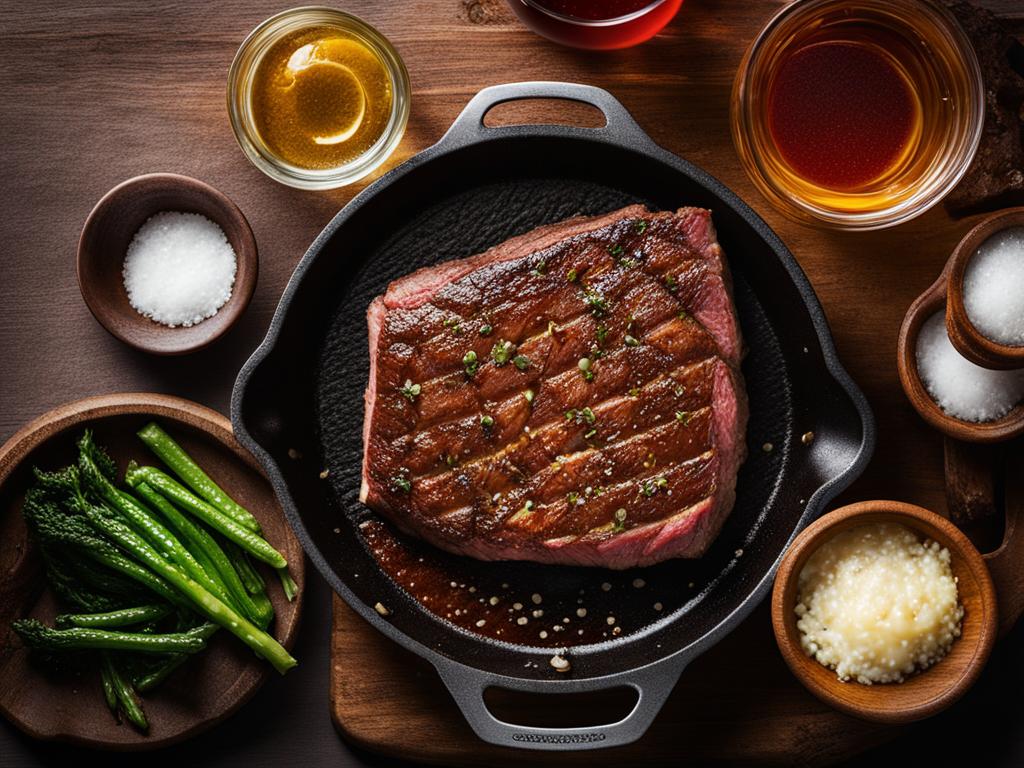
Imagine the sizzle, the irresistible aroma, and that first savory bite. That’s right, we’re talking about the pan seared New York Strip steak that turns a regular evening into a perfect steak dinner event. But this isn’t just any steak; this is steakhouse quality indulgence, right from the comfort of your kitchen. Curious about how you can wield a cast iron skillet like a seasoned chef? Well, brace yourself for a journey through the art of steak cooking techniques that’ll put a juicy steak recipe at your fingertips.
Key Takeaways
- Achieve the fabled steakhouse quality at home with the right heat and a trusty cast iron skillet.
- Timing is everything: Season the New York Strip just right before cooking for flavor that sings.
- Master the sear – that perfect crust awaits when you know just when to flip your steak.
- Butter basting is your secret weapon to a rich, juicy New York Strip that oozes flavor.
- Let patience reward you – resting your steak is crucial for that tender, melt-in-your-mouth experience.
- A mindful eye on temperature guarantees your desired doneness – no more guesswork for the perfect steak dinner!
The Art of Pan Searing a New York Strip Steak
Imagine this: a crust so sublimely caramelized it practically sings at first bite. That, my friend, is the high note of the pan searing technique, a sacred ritual for a cut as majestic as the tender New York Strip. No ordinary heat will do; your skillet must be like the sun’s surface to achieve that picturesque sear. Begin by anointing your steak with a rub that promises a crust of legends—a heady mix of black pepper and ancho chili powder.
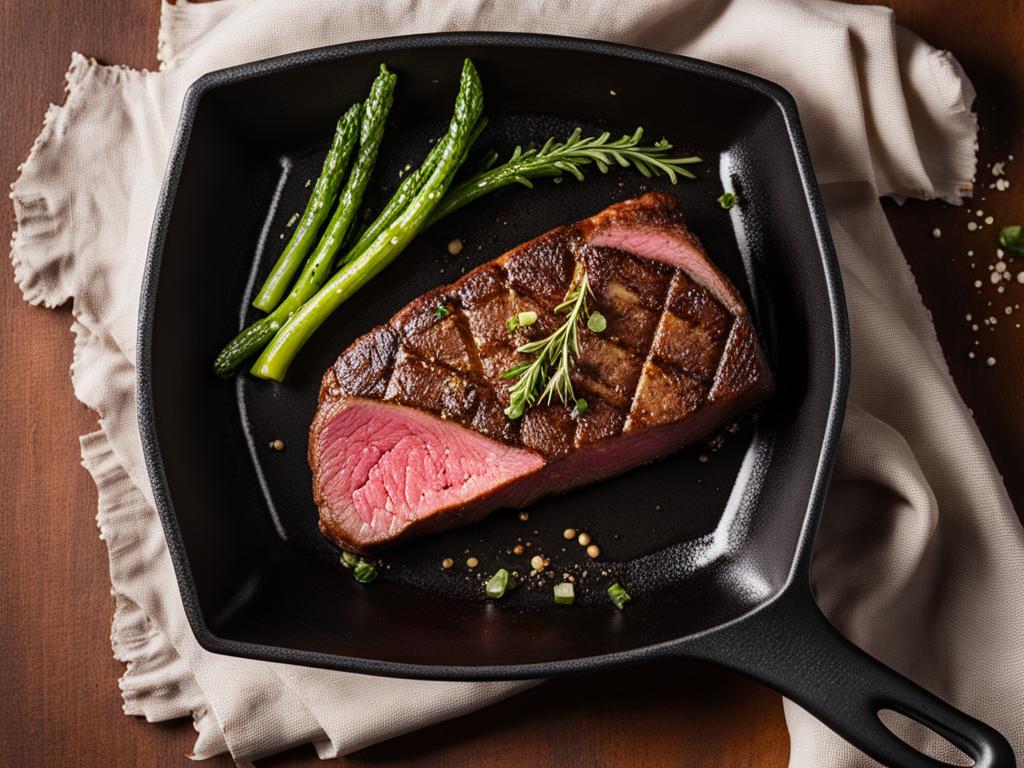
Ride the wave of searing heat with canola oil shimmering to its smoke point, ready to kiss your steak with the sear of a lifetime. Precision is your ally as you sear the first side for a mere 35-40 seconds, an ode to the dance of meat doneness. Now give it a flip and envelop your creation in a homemade glaze that’s as bold in flavor as it is in innovation—Dijon mustard marrying honey with a zest of horseradish and a whisper of mint.
Post sear, be daring and thrust your prize into the embrace of a 425-degree oven. Here is where patience melds with glazing and searing, a technique plush with promise. Monitor your New York Strip like a watchful guardian, assuring the ideal steak temperature is reached for that mouthwatering meat doneness. With two minutes to go, anoint your steak once more with the glaze, letting it cling to the steak, eager for the final act.
The culmination of your effort rests in the rest—yes, a brief but profound respite where your steak, drunk on the glaze and basking in the afterglow of the oven’s heat, becomes ready to reveal its innermost tender secrets. When sliced, may it sing a ballad of perfect medium-rare to your palate. Welcome to the upper echelons of pan seared excellence.
Pan Seared New York Strip: A Culinary Delight
They say a well-prepared New York Strip steak is a work of art, and, well, they are not wrong. It’s all about the prep and the finesse. Ever wondered how your steak can compete with those at a high-end steakhouse? It starts with the heavyweight champion of kitchen prep – the cast iron skillet. Throw in some kosher salt, a confident flick of the wrist for that perfect sear, and finish it off with a buttery curtain call. Amp up your home kitchen to deliver that juicy, tender steak that we all salivate over. Buckle up, chef, it’s time to turn up the heat!
Salting Your Steak: Timing and Technique
You wouldn’t rush an artist painting a masterpiece, and you certainly shouldn’t rush seasoning your steak. Approach your kosher salt with a boldness, approximately 10 minutes before that steak hits the skillet. Allow the crystals to work their magic, giving the New York Strip that deep, seasoned taste that tickles the taste buds. When you’re feeling experimental, let a marinade with a concoction of aromatics join the soiree. But keep an eye on the clock – timing is as crucial as the blend of spices in your marinade when you’re aiming for a tender steak.
Searing to Perfection: The Right Pan and Temperature
It’s showtime, and the perfect sear is your standing ovation. This is where your cast iron skillet comes into the limelight, its ability to stay screaming hot is what you need for that model-golden crust. Lay down your steak with confidence and don’t you dare nudge it until it’s time to flip. To hit the jackpot on steak doneness, befriend a meat thermometer – it’s the secret sauce to knowing when your juicy New York Strip is done just right.
Basting with Butter: Achieving Juicy, Flavorful Results
Think of butter basting as the encore to a culinary concert. As you flip your steak, add a pat of golden goodness to the pan. Baste with the gusto of a maestro conducting an orchestra; this not only infuses your steak with moisture but also weaves a rich tapestry of flavor, especially when herbs enter the mix. The result? A delectably juicy, tender steak that’s straight up mouthwatering. Follow these simple, yet effective cooking techniques, and the steak of your dreams will no longer be a figment of your culinary imagination.
FAQ
How do I achieve that steakhouse quality sear on my New York Strip at home?
Start by allowing your steak to reach room temperature for more even cooking, then season generously with kosher salt and fresh cracked pepper. Use a screaming hot cast iron skillet or stainless steel pan with olive oil to create that perfect crust. Sear undisturbed for 4-5 minutes on each side, and add a dollop of butter towards the end to baste and infuse richness into the steak.
What’s the secret behind a juicy steak recipe that produces a tender New York Strip?
Apart from proper seasoning and searing, allow your steak to rest for 10-12 minutes after cooking for the juices to redistribute. This step is key in ensuring your steak remains juicy and tender, delivering a mouthwatering steak dinner experience.
Can you overdo it with the seasoning when prepping your steak?
While seasoning is critical, it’s important to strike a balance. Generously salting with kosher salt about 10 minutes before cooking is just right. Adding any marinades or aromatics is welcome, but remember, timing is crucial to avoid drawing out moisture or leaving your steak bland.
For pan searing technique, what kind of skillet should I use to cook my steak?
A cast iron skillet is ideal due to its excellent heat retention which is perfect for searing. It helps to produce a delectable, uniform golden crust that elevates the flavor of your New York Strip.
What temperature should I aim for if I want a medium-rare New York Strip?
A medium-rare doneness is often achieved at an internal temperature of 130-135°F, which usually requires finishing the steak in a preheated oven of 275 degrees for 5-7 minutes after searing. Using a meat thermometer will guide you to precision.
How do I use the butter basting technique to make my steak juicy and flavorful?
Once you’ve flipped the steak, add a generous pat of butter to the pan. Spoon the melted butter over the steak, basting continuously for a minute or until the steak has a velvety finish. This technique not only adds moisture but also a deeper flavor, especially if you incorporate fresh herbs and garlic into the baste.
Are there any additional tips for achieving the perfect sear on a New York Strip steak?
Yes, don’t move the steak around in the pan, and let it sear undisturbed to develop a consistent crust. Additionally, heating your pan to the right temperature beforehand is crucial—the pan should be hot enough that it sizzles as soon as the steak touches it.
What are some indicators to know when my New York Strip steak is done?
Visual cues include a rich golden-brown crust and juices starting to pool on the surface of the steak. For more accuracy, a meat thermometer is your best bet. It takes the guesswork out and ensures the steak reaches the exact level of doneness you prefer.