
Welcome, culinary aficionados, to the ultimate guide on crafting the most delectable pan seared filet mignon right in your own kitchen. If you’ve ever found yourself pining for gourmet steak at home or dreaming of recreating that upscale dining experience without the reservation, then you’re in the right place. We’re here to help you sear your way to perfection, transforming that gorgeous cut of beef into something spectacularly juicy and flavor-packed.
So, tie on that apron and preheat your cast iron skillet— it’s time to elevate your home cooking game. Ready to turn your dining area into the best seat at a high-end steakhouse? Let’s do it! Unlock the secrets to a perfect filet mignon that will have your taste buds doing a happy dance and your dinner guests swooning in gastronomic bliss.
Key Takeaways
- Discover the simplicity of achieving a flawless pan seared filet mignon with restaurant-quality results.
- Learn to select the prime cut that promises tenderness in every bite for that true upscale dining experience at home.
- Grasp the essentials of gourmet steak preparation to bring out the rich, succulent flavors.
- Find out why your cookware could be the secret ingredient to a stunningly perfect filet mignon.
- Master the temperatures and timing to sizzle up your steak just the way you like it – every single time.
- Explore how the final touches in preparation can make all the difference between a good steak and a steakhouse legend.
Introduction to the Art of Pan Seared Filet Mignon
So, you’re intrigued by the sizzle and allure of the filet mignon. This isn’t your everyday cut of beef; it’s the epitome of a romantic steak dinner, a staple of the high-end, the centerpiece that turns heads in any steakhouse quality dining experience. Now imagine the power to captivate that same sizzling enchantment right in your culinary domain. Yes, you’ve guessed it: We’re talking about home-cooked filet mignon.
Why Filet Mignon is the Star of Special Occasions
When it comes to crowning the table for a special event, there’s hardly a more prestigious guest than the filet mignon. So, why choose filet mignon? Let’s cut right to the chase: it’s tender, juicy, and the embodiment of luxury. This is the steak that not only melts in your mouth but also melts hearts. It’s no wonder it wears the crown at affairs of the heart like anniversaries and Valentine’s Day dinners.
The Rise of Home-Cooked Gourmet Steaks
There’s a culinary revolution simmering in kitchens across America. The call for steakhouse quality dinners at home has never been louder. With a sprinkle of ambition and a dash of technique, recreating the magic of a filet mignon without the white tablecloths and the hovering waiters is your new reality. The bar has been raised, the stage is set, and now it’s your turn to sear the spotlight right at home.
Choosing the Best Filet Mignon for Sealing in Flavor
Let’s sink our teeth into the heart of the matter: selecting filet mignon that sets the stage for a taste sensation. Imagine the most tender cuts of beef surrendering to your bite, an experience only a filet mignon can provide. The key lies in its legendary softness, virtually whispering “I’m lean, I’m keen, and I don’t need no excessive trimming!”
So you fancy yourself a bit of a beef connoisseur, angling for that exquisite pan-sear? Keep your eyes peeled for well-marbled steaks—these beauties know how to hold their flavor even as the fire licks at their edges. And size does matter—aim for the sweet spot between 6 to 8 ounces, coupled with a 2-inch thickness; perfect dimensions to ensure an egalitarian heat distribution, whether you’re a fan of rare delicacies or a staunch advocate of well-done wonders.
Reality check: not all filets are created equal. That’s why, you, the intrepid gastronome, must embark on a pilgrimage for premium cuts. That marbling isn’t merely for aesthetic—nope, it’s the VIP pass to Flavor Town. You see, upon meeting a scorching skillet, those marbled whispers of fat will melt into your steak, anointing it with an unforgettably rich taste and succulence.
“Choosing a quality cut ensures the flavors you work to create in the kitchen are deeply ingrained in each succulent bite.”
- Inspect the marbling: More stripes, more hype.
- Gauge the thickness: 2 inches to hit the jackpots of juiciness.
- Weigh it up: 6 to 8 ounces to settle the debate between rare and charred devotees.
Don’t be shy, now. Grill the butcher about the origin of those delectable disks of deliciousness. Federal law dictates no fibbing at the meat counter, so you’re in safe hands—ask away! So go on, wrangle the perfect candidate, and prepare to sizzle with style.
Essential Tools for the Perfect Sear
Listen up, steak aficionados! If you’re gunning for that exquisite, mouth-watering sear on your filet mignon, it’s time to equip yourself with the culinary artillery that’ll make it happen. We’re not just cooking steak, we’re creating art—and every artist needs their trusted tools. Here’s your armory for the cast iron skillet filet mignon masterpiece.
The Unbeatable Cast Iron Skillet
Nothing can quite match the searing capability of a cast iron skillet. Its ability to retain and evenly distribute heat makes it your best ally in the quest for that perfect crust. When that skillet hits just the right temperature, your steak will sizzle into something spectacular, with a caramelized crust that’s the stuff of legend. Remember, your skillet is more than a utensil; it’s your partner in culinary crime.
Oven-Proof Pans: A Dual Cooking Approach
But wait, there’s more! Let’s rap about the dynamic duo approach. To nail that steakhouse-quality finish, you’ll need a partner-in-crime for your cast iron—the oven-proof sauté pan. This dynamic piece allows for a flawless transition to the oven, ensuring the inside of your steak is as perfectly cooked as the outside. Want a juicy, tender interior with a robust, seared exterior? You’re looking at your new best friend.

| Tool | Superpower | Ideal For |
|---|---|---|
| Cast Iron Skillet | Uniform heat retention & distribution | Creating an enviable crust |
| Oven-Proof Sauté Pan | Stovetop to oven ease | Achieving a tender, evenly cooked interior |
Go forth, culinary warriors, with your cast iron skillet filet mignon strategy and a trusty oven-proof sauté pan in hand. May your steaks always be seared to perfections, and your dinner parties legendary.
Pre-Searing Filet Mignon Prep: A Game Changer
Listen up, gourmands! Before you heat that skillet, let’s talk filet mignon preparation. If you want a steak that’s the envy of all dinner photos, it’s all in the prep. Let’s squeeze in some key facts to ensure your steak is not just good, but legendary. You don’t want to make rookie mistakes with a cut this fancy!
First, the secret to a flavorful outer crust begins long before it hits the heat. Pat that filet mignon dry with a paper towel—no one likes a soggy sear. Those droplets of water are the nemesis of a nicely charred exterior. Dry steak equals a stellar sear; moisture equals a mealtime mishap.
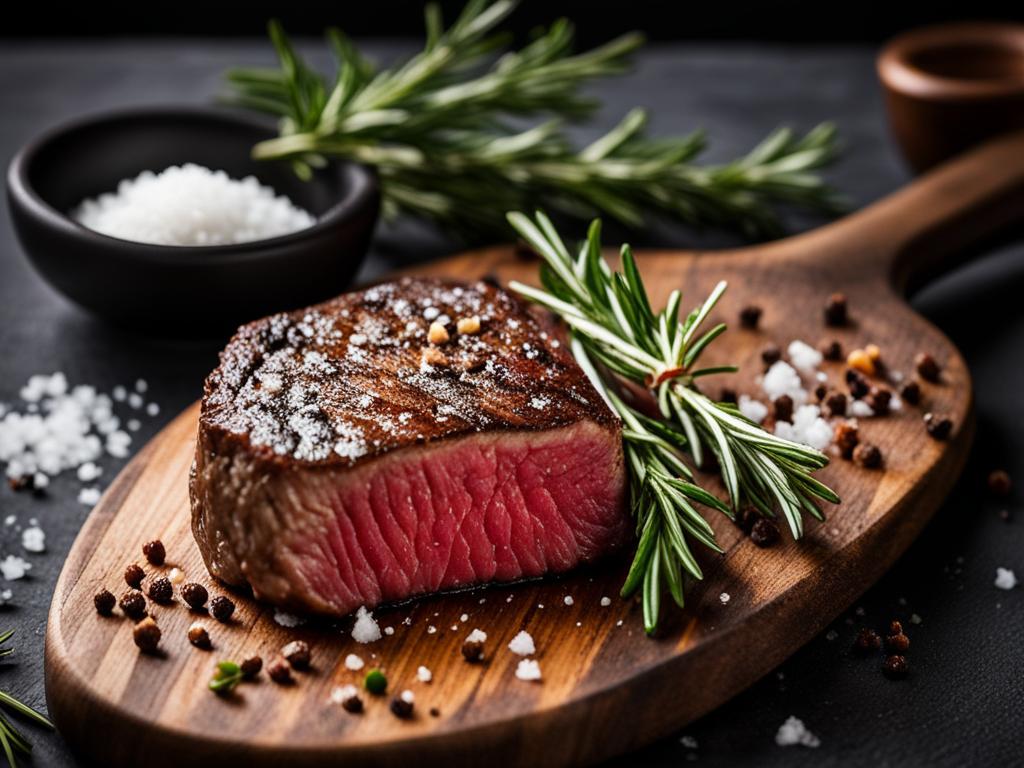
Next up, the counter coup—let your steak rest like a king on its kitchen throne until it reaches room temperature. About 30 minutes should do the trick. If you’re skeptical, just remember: a room temperature steak means no more uneven cooking—no more raw middles with overdone edges. The heat penetrates the meat evenly, creating a symphony of perfect doneness from edge to edge.
And as for seasoning steak, it’s simple yet paramount. Coat generously with kosher salt and freshly cracked black pepper. Don’t be shy; your steak can handle it. But don’t go mashing it into the meat—season with love, using a light dab. This isn’t a CPR exercise, it’s culinary finesse.
| Tender Tip | Seasoning Savvy | Heat Hack |
|---|---|---|
| Let steak sit until it’s room temp for uniform cooking | Generous kosher salt and pepper | Preheat the skillet to a hot, but not smoking, temperature |
| Pat dry with a paper towel for maximum sear appeal | Gently press seasoning onto surface | Avoid flipping steak repeatedly to maintain a robust crust |
| Use a thermometer for precise doneness | Consider adding dried herbs for extra zing | Finish in the oven if thickness exceeds 2 inches |
Proper preparation of your filet mignon wields a flavor that’s so right, it’s almost criminal. With your prep complete, and the perfect pan awaiting, you’re on course for a steak experience that’s nothing short of transformative. Welcome to the big leagues of home-chefs, where your culinary creations become instant classics.
Savoury Seasonings: Elevating Your Steak
You’ve chosen a top-notch cut of filet mignon, and now it’s time to transform it into a sensation that’ll have your taste buds dancing. With seasoning, you’re not just adding flavor; you’re orchestrating a culinary masterpiece. Let’s dive into the spice sorcery that’ll jack up your steak’s joy factor.
Understanding the Salt Factor
Salt is the Gandalf of your seasoning journey—wise and essential. But before you snowstorm your steak with those glistening crystals, understand the potency of your salt. A pinch of Morton might be saltier than a Hogwarts feast, leaving you to adjust accordingly. Remember folks, it’s all about the perfect sear: a flawless crust with a juicy inside that’s humming with flavor.
The Tempting Toppings: Butter and Garlic Finale
Dial up decadence by crowning your steak with a butter last seen tempting the gods. Melt butter, and as it foams, stir in minced garlic like you’re conjuring a love spell. Spoon this garlic gold over your mignon for the ultimate flavor enhancement. Because what’s a good steak without a little magic?
| Salt Type | Saltiness Level | Volume for Perfect Sear |
|---|---|---|
| Morton | High | 1/4 tsp per side |
| Kosher | Medium | 1/3 tsp per side |
| Sea Salt | Varies | Depends on crystal size |
Be the hero of your own kitchen escapade. Empower your filet mignon’s flavor forward with these insights, and brace yourself for a steak that’s not just eaten but savored.

Pan Seared Filet Mignon: Achieving the Quintessential Crust
So, you’re wielding a skillet with the elegance of a renaissance painter, ready to swipe the canvas with the pan-searing technique that immortalizes your filet mignon in the hall of culinary fame. Heat is your pigment, timing your brush strokes, and the filet, dear artist, is your masterpiece waiting for that crave-worthy crust.
Remember, a truly exceptional crust on your steak is not just about heat; it’s about the relentless pursuit of perfection. Seize your cast iron skillet, charge the flames to high, and await the sizzle that tells tales of readiness. Position your steak – a tribute to your discerning taste – and sear with conviction for exactly four minutes. The untouched steak forms a bond with the blistering skillet, and like any great relationship, it demands your patience and respects your space.

Lest you get lost in the sizzling symphony and let time slip, lean on the unassuming timer. It’s your quiet companion on this quest for crust, a vigilant guardian against the creeping shadows of overcooking. With it, the steak cooking times are not mere numbers; they’re the sacred metrics of a craft honed through times immemorial.
Four minutes each side, remember – not a moment more, for you’re not cooking just a steak, you’re orchestrating an opus of umami.
| Thickness | Rare (120-130°F) | Medium Rare (130-135°F) | Medium (135-145°F) | Well Done (155-165°F) |
|---|---|---|---|---|
| 1 inch | 4 minutes | 5 minutes | 6 minutes | 8+ minutes |
| 1.5 inches | 6 minutes | 7 minutes | 8 minutes | 10+ minutes |
| 2 inches | 8 minutes | 10 minutes | 12 minutes | Not recommended |
And when your tableau – juicy interior adorned with a flawlessly seared crust – reaches its zenith, bask in the glory of what your pan-searing technique has wrought. A standing ovation, a chef’s kiss, a nod of genuine respect to the alchemy you’ve mastered. You have not just earned a magnificent meal; you’ve captured the very essence of the steak’s spirit.
Transferring from Stovetop to Oven: The Heat Transition Technique
Alright, you’ve pan-seared your steak to golden-perfection—now what? Hold onto your tongs, because it’s time to master the art of cooking filet mignon through the seamless pan to oven method. Once you flip that gorgeous piece of meat, your mission is to transfer it from the fiery stovetop to the steady warmth of a pre-heated oven. Forget about magic tricks; this is all about oven finishing—a pivotal move where your culinary skills shine as bright as that tender center you’re aiming for.
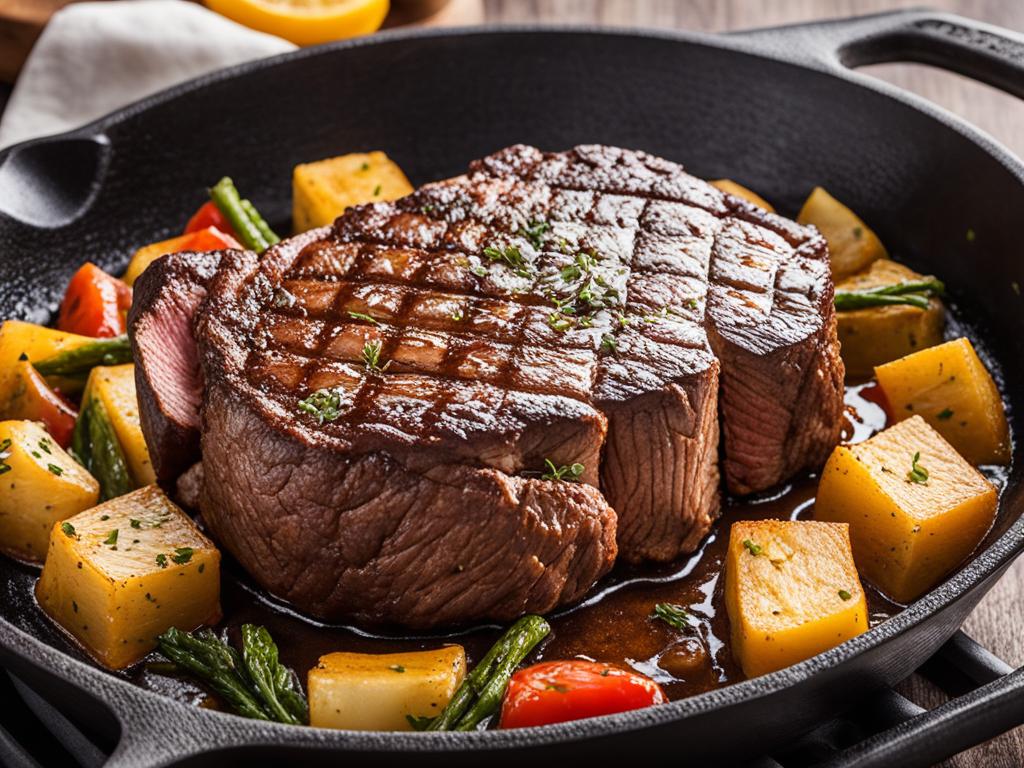
Imagine this: the sear has locked in those delectable juices, and just when Mr. Filet Mignon thinks the heat is over, it’s whacked with a 425° Fahrenheit embrace. This isn’t about being mean; it’s about achieving a tender symphony of flavors and textures. Like a culinary ballet, the oven takes over to cook the interior of your steak to sheer perfection while preserving that coveted crust.
Don’t just cook—transform your kitchen routine into a grand steak opera with the pan to oven method!
As you embark on this thermal journey, let’s savor some critical steps:
- Heat the oven to a sizzling 425°—no ifs or buts.
- Sear the steak and bask in the hiss and aroma—music to your foodie soul.
- Flip the filet mignon with confidence and talk it through its fate.
- Transfer your skillet to the oven with grace and poise—the audience (stomach) awaits.
Here is a handy dandy temperature guide for your chef’s arsenal:
| Doneness | Internal Temperature | Visual Cue |
|---|---|---|
| Rare | 120-125°F | Just a shy blush in the center |
| Medium Rare | 130-135°F | Let’s be friends pink |
| Medium | 140-145°F | Pink with ambitions |
| Medium Well | 150-155°F | Pink’s grown-up cousin |
| Well Done | 160-170°F | Pink has left the building |
Remember, your filet mignon is not just food; it’s a statement. With the pan to oven method, you’re not just cooking—you’re crafting an experience. So go ahead, give your filet mignon the oven finishing it deserves.
The Importance of Resting Your Filet Mignon Post-Sear
Did you know that to rest your steak is not just a casual suggestion, but an iron-clad rule in the steak connoisseurs’ bible? Yes, it’s time to talk about the crucial hiatus your filet mignon takes under a tented foil cap of solitude. Think of it as giving your steak a mini spa moment, letting it meditate on absorbing all those glorious meat juices it so selflessly developed during the sear.
Envision the scene: your kitchen smells like a steakhouse, and the sizzling sound has just ceased. The filet mignon is gently lifted onto your serving plate, and you artistically drape it with foil. This isn’t just for show; you’re setting the stage for a magical transformation. As the fibers of your steak unwind, a symphony of flavor consolidation takes place. Ignore this step, and it’s like watching the credits roll before the movie ends – utterly unsatisfying.
- Rest period: 5 to 10 minutes to balance out temperature and redistribute moisture.
- Foil tenting: it’s like a little steak jacket that ensures your filet retains warmth while resting.
- Juice retention: this little break allows the cut to reabsorb and lock in those juices.
Some might say patience is a virtue, but when it comes to resting your steak, it’s a non-negotiable virtue. So, give your filet mignon the rest it deserves, and prepare yourself for a succulent, tender meal that will leave your palate singing hymns of appreciation.
Deciding on Delightful Sides for Your Filet Mignon
Now that you’ve cooked up a storm and your filet mignon is resting, it’s time to think about the trusty sidekicks that will turn your meal into a symphony of flavors. Your steak deserves more than a mere afterthought, right? It’s all about striking the perfect balance on your plate.
Light and Refreshing Vegetable Pairings
Picture this: you’ve got the king of steaks, and it begs for a side that complements without stealing the show. Enter baby bok choy, a leafy green that’s as versatile as it is vibrant. Grilling it adds a subtle char that harmonizes with the rich beef, while its crisp tenderness offers a refreshing counterpoint. But why stop there? Check out this palate-pleasing lineup of filet mignon sides that’ll intrigue your taste buds.
| Vegetable | Preparation | Why It Works |
|---|---|---|
| Baby Bok Choy | Grilled | Complements with a smoky, refreshing crunch |
| Garlic Mashed Potatoes | Creamy and Robust | Classic comfort with a garlic twist |
| Roasted Asparagus | Oven Roasted with Parmesan | Elegant, with a cheesy, umami-rich finish |
| Herb-Infused Mushrooms | Sautéed in Butter | Savory and aromatic, a foil to the steak’s richness |
Dessert: The Grand Finale of Your Meal
After the final bite of steak, your evening should crescendo into a sweet adieu. What could crown such a meal? Easy! A dessert that melds comfort with luxuriousness. Sink your forks into something delightful – a brownie so luscious it could tempt a saint. Imagine the richness of a well-prepared steak followed by the indulgence of chocolate — it’s a curtain call your palate will thank you for.
Perfect steak dessert pairings don’t need to be complicated:
- Rich Brownies a la Mode
- Lemon Sorbet for a Palate Cleanser
- Decadent Chocolate Mousse
- Berry Parfaits with a Hint of Mint

Understanding Health Benefits of Spices in Steak Preparation
When you’re dusting that steak with your favorite rub, you’re not just seasoning it – you’re unlocking a treasure trove of health benefits of spices. Not only does it add a bouquet of flavors that turn your kitchen into an aromatic haven, but spices also imbue your meals with a variety of nutrients and health-boosting properties. Cooking with spices does more than please your palate; it could be contributing to your well-being.
Cooking with spices is akin to a dance between flavors and nutritional science. Each sprinkle carries compounds that could support your body’s health defenses. While it’s common to reach for the salt and pepper, other spices like turmeric, paprika, and cumin are not just nutritious steak seasoning options, they’re also packed with antioxidants. Turmeric, for instance, contains curcumin – a polyphenol known for its anti-inflammatory properties.
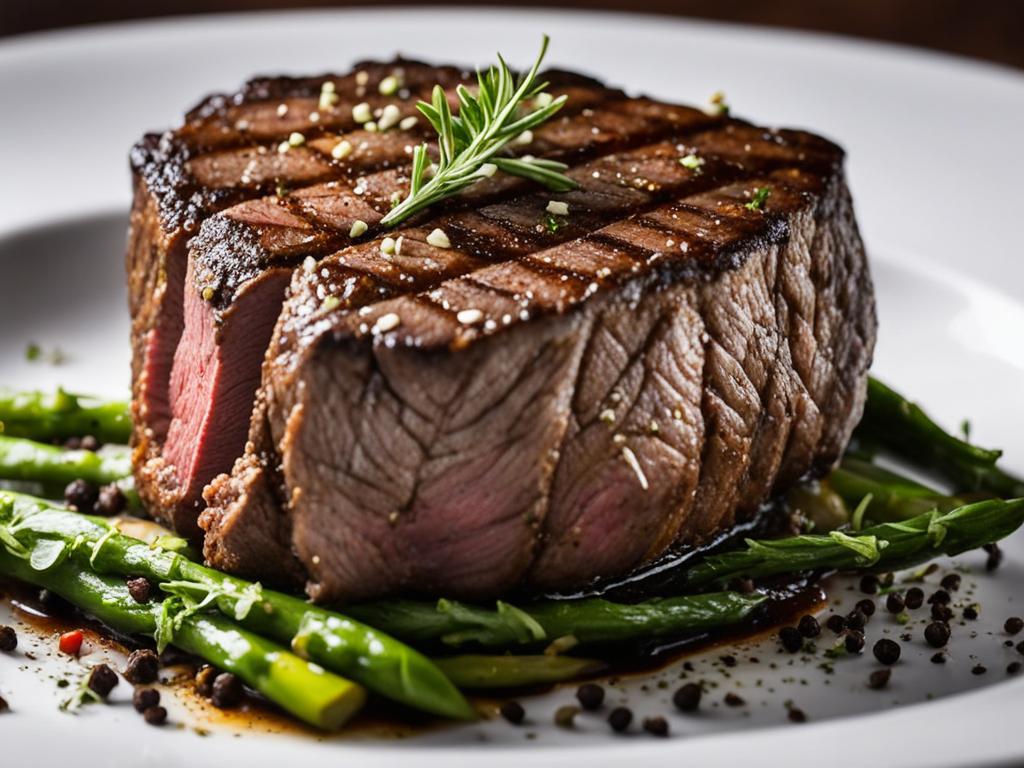
But before you go shoveling spoonfuls of spices onto your filet mignon, remember balance is key. A pinch here and a dash there can elevate your dinner from good to grand, without overwhelming the natural flavors of your top-quality beef. It’s about complementing the steak, respecting the cut while winking at your health. Of course, if you have any dietary restrictions or are managing medical conditions, it’s wise to consult with a healthcare professional about which spices could play nicely with your regimen.
“Cooking with spices is both an art and a science. An art for the palate, and a science for well-being.”
The table below outlines some popular spices and their health benefits:
| Spice | Health Benefit | Flavor Profile |
|---|---|---|
| Turmeric | Anti-inflammatory | Earthy and warm |
| Paprika | Rich in antioxidants | Sweet to smoky |
| Cumin | Aids digestion | Nutty and warming |
| Oregano | Antibacterial properties | Slightly bitter and peppery |
Remember, your choice in spices can transform a simple steak into a sensory and healthful experience. The next time you reach for that nutritious steak seasoning, take a moment to savor not just the taste but also the hidden health potentials nestled within.
Serving Up a Sizzling Success: Presenting Your Filet Mignon
Have you been dreaming of a gourmet steak presentation that could very well turn into the envy of any upscale dining establishment? Achieving that impeccable upscale dining at home is within your reach, and it begins with the way you present your filet mignon. Imagine taking the kitchen stage and performing the closing act—the presentation—with as much skill as the searing and the resting. Time to pull back the curtain!
First, gently lay your masterpiece—the perfectly pan-seared filet mignon—onto a pre-warmed plate, because nobody enjoys a gourmet meal gone cold. The warm plate is crucial; it acts like an embrace, keeping your filet snug and comfortable as it gets ready for the grand reveal.
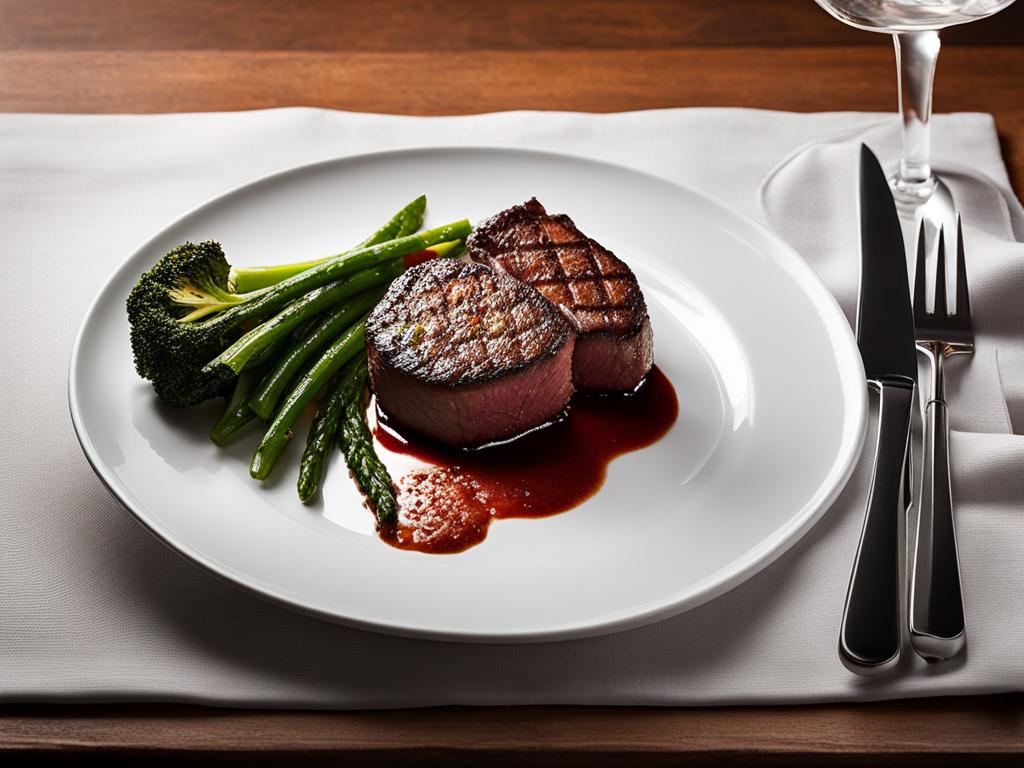
Next, make it rain—but with flavors, not water—spooning those glistening, flavorful juices over your steak. This isn’t just a gratuitous addition; it’s a vital brush stroke in our art of presenting filet mignon. Then, for a pop of color and a whiff of aromatic allure, crown it with a sprig of fresh thyme or rosemary. These herbal notes are more than garnishes; they’re the olfactory overture whetting the appetite.
Remember, the joy of feasting begins with the eyes; a truly gourmet steak presentation sets the stage for the palate to perform a standing ovation.
There you have it. Don’t just serve your filet mignon; present it on a silver platter of pure culinary craftsmanship. Once you’ve seduced the senses with your upscale dining at home, every bite becomes a testament to the love and attention you’ve invested into making this dish—a true sizzling success.
Now, take a moment to admire your work—steeped in elegance yet radiating the warmth of home. You’ve nailed it. So go ahead, make that first cut with confidence, and sink into the symphony of flavors you’ve orchestrated. Bon appétit!
Conclusion
The path to creating pan seared filet mignon perfection is peppered with precision and passion. You’ve been equipped with an arsenal of skills and secrets that morph the ordinary into the extraordinary, marrying the allure of upscale dining with the comfort of your home. This isn’t just about mastering the art of steak; it’s about embracing a culinary steak adventure that tantalizes the senses and beckons acclaim from even the most discerning dining companions.
Your quest for the quintessential sear has led you through a meticulous selection of cuts, the sacred dance of seasoning, and the pivotal moments of heat. It’s a tale of transformation, where each step, from the sizzle of the skillet to the last bite, unfolds with the finesse of a gourmet symphony. Indeed, the filet mignon, once a humble piece of beef, now sits resplendently on your plate—a testament to the culinary journey you’ve embarked upon.
As you slice through the tender threads of a perfectly cooked steak, remember that you’ve ascended to the heights of home-cooked elegance. Whether whisking a loved one away on a romantic flavor excursion or polishing your culinary prowess, your commitment to perfection crafts an experience far beyond the ordinary. Your filet mignon isn’t merely a meal; it’s an adventure, a story of flavor, told by you, the maestro of your kitchen.
FAQ
What makes pan seared filet mignon a staple of upscale dining at home?
The luxurious tenderness and rich flavor achievable through pan searing make filet mignon the epitome of upscale dining, allowing you to recreate that gourmet steak experience right in your kitchen.
Why is filet mignon the go-to choice for romantic steak dinners?
Filet mignon’s reputation for being tender and delectable positions it as an ideal entrée to express affection and make special occasions like Valentine’s Day dinners feel more sophisticated and intimate.
How do I choose the best filet mignon for searing?
Look for a 6 to 8 ounce, 2-inch thick cut that’s lean and requires no trimming. Well-marbled steaks will enhance flavor, and selecting a quality cut ensures a more delicious experience.
Can you suggest the ideal cookware for the perfect sear?
Absolutely! A cast iron skillet is non-negotiable for that even, well-seared crust, and pairing it with an oven-proof sauté pan ensures a seamless transition for finishing in the oven.
What pre-searing preparation steps are crucial for gourmet steak at home?
Don’t skimp on this! Patting the steak dry, allowing it to come to room temperature for about 30 minutes, and seasoning diligently with kosher salt and freshly ground black pepper will elevate the final result immensely.
How does understanding the salt factor affect seasoning filet mignon before searing?
Salt levels vary by type and brand, so knowing how salty your choice is, like Morton, will help you avoid under or over-seasoning, which is essential for a perfect pan seared filet mignon.
What’s the secret to achieving the crave-worthy crust on filet mignon?
Heat your cast iron skillet to “REALLY hot” and sear your steak untouched for 4 precise minutes. The timing is key to obtaining that artisanal crust that’s both beautiful and flavorful.
How do I perform the heat transition technique from pan to oven correctly?
After searing one side, flip the steak and put the skillet directly into a pre-heated 425° Fahrenheit oven. It allows the other side to sear while the inside cooks evenly, blending crust and tenderness perfectly.
Why is resting your steak post-sear so important?
Resting allows the steak’s fibers to relax, ensuring the juices redistribute uniformly. Skipping this means you’ll sacrifice juiciness and end up with a drier steak.
Any tips on choosing sides for my pan-seared filet mignon dinner?
Definitely balance your plate. A light vegetable like grilled baby bok choy offers a refreshing counterpoint to the rich steak, while a decadent dessert such as brownies rounds out the meal nicely, enhancing the overall dining experience.
Are there health benefits to adding spices to my steak seasoning?
Spices can contribute not only depth of flavor but also potential health benefits. Be mindful of their bioactive compounds, but consult a healthcare professional for any medical advice regarding spices.
How do I present my pan seared filet mignon for that upscale dining feel?
Bring out your inner epicure—place that beautiful steak on a warm plate, douse it with the juices, and maybe sprinkle on fresh herbs. A visually appealing dish heightens the anticipation of the sumptuous meal awaiting your taste buds.