
Alright grill aficionados, it’s high time to bring out that inner maestro of the flame because we’re diving deep into the art of grilling filet mignon. Picture this: you’re wielding tongs like a wand, orchestrating a symphony of sizzle and smoke. You’re not just making dinner; you’re crafting an experience. But let’s be real, the quest for the perfect grilled filet mignon has stumped many. It’s about as elusive as a perfectly ripe avocado in a grocery store. Fear not! We’re here to decode those BBQ steak secrets and hand over the grilling meat techniques that will cement your status as the neighborhood grill-master.
Whether it’s a family get-together or a solo treat, the satisfaction of slicing into a beautifully charred, yet succulently pink, filet mignon is unrivaled. With a few tried-and-true grilling filet mignon tips, you’ll be turning out steaks that rival the swankiest of chophouses. So, sharpen those knives and get your aprons ready, because we’re about to embark on a flavorful journey to achieve that steakhouse-worthy perfect grilled filet mignon right in your own backyard.
Key Takeaways
- Eye the prize by choosing high-grade beef with knockout marbling for that melt-in-your-mouth BBQ joy.
- Embrace the salt; a good dry brine can make all the difference in tenderizing and packing your steak with flavor.
- Master the art of 2-zone cooking to deliver a steak that’s cooked through beautifully without resembling a hockey puck.
- Keep your grillables dry and ready to lock in that sear, because soggy steaks are a definite no-go.
- Remember, patience isn’t just a virtue; it’s the secret ingredient in letting your steak rest before serving up that slice of heaven.
Choosing the Best Cut for Your BBQ Filet Mignon
When it comes to mastering the grill, the starting point is always selecting the best beef cuts. It can be daunting to stare at a case full of different options, but with some insider knowledge, you’ll be able to pick the filet mignon that promises unparalleled filet mignon tenderness and is bound to make your BBQ a mouth-watering success.
Understanding Beef Cuts and Tenderness
The rib and loin sections of the steer hold the key to succulence, offering prime choices like ribeyes and tenderloins. Each cut has its own character; filet mignon, known for its buttery texture, sits at the top of the tenderness chart.
The Importance of Marbling for Flavor
A steak’s flavor profile is elevated through steak marbling flavor. This intricate dance of fat within the lean delivers juiciness and taste, setting apart a gourmet experience from an ordinary one.
Selecting the Ideal Thickness for Grilling
Thickness matters when you’re aiming for perfection. A slice too thin and you may end up with a dry, overcooked disappointment. For that coveted sear paired with a juicy, pink center, aim for the ideal steak thickness—somewhere between 1.5″ and 2″.
| Cut | Flavor | Tenderness | Ideal Thickness |
|---|---|---|---|
| Ribeye | Rich and bold | Very tender | 1.5″ – 2″ |
| Porterhouse | Savory and robust | Tender with variance | 1.5″ – 2″ |
| T-bone | Meaty and flavorful | Moderately tender | 1.5″ – 2″ |
| Strip Steak | Beefy and intense | Less tender than ribeye | 1.5″ – 2″ |
| Filet Mignon | Mild and delicate | Supremely tender | 1.5″ – 2″ |
Understanding Beef Grading: Prime vs. Choice vs. Wagyu
Ever stood in a butcher shop, gazing at the lustrous cuts of beef, and found yourself bamboozled by terms like USDA beef grading, prime grade steak, and Wagyu marbling? Well, buckle up, carnivorous companion, because you’re about to embark on a tantalizing tour through the savory world of steak selection.
Imagine a steak so tender and flavorful that it practically melts in your mouth. That’s the hallmark of USDA Prime beef – a title only awarded to the upper echelon of beef with the most abundant marbling. It’s the crème de la crème, often reserved for top-tier restaurants. Think of it as your VIP pass to flavor town.

But wait, there’s a challenger on the horizon: Wagyu beef. With marbling that borders on a work of art, Wagyu is substance and style on a plate. Its rich flavor profile sets the stage for a culinary experience that is nothing short of divine.
Pro tip: When you’re after that zenith of taste and texture, Kobe beef – a type of Wagyu originating from Japan – represents the pinnacle of palate-pleasing opulence. Be prepared; however, for a price tag that reflects its luxuriousness.
Don’t let this dismay you, though, because choice quality beef could very well be your gateway to gastronomic pleasure. Found in the friendly confines of your local grocery store, USDA Choice is more than a consolation prize; with the right eye for quality, you could be grilling a steak that’ll have your taste buds singing.
| Beef Grade | Marbling Quality | Typical Availability |
|---|---|---|
| USDA Prime | Extensive Marbling | Restaurants, Specialty Butchers |
| USDA Choice | Moderate Marbling | Grocery Stores, Butchers |
| Wagyu | Exceptional Marbling | High-End Retailers, Select Restaurants |
| Kobe | Exquisite Marbling | Specialty Retailers, Fine Dining Establishments |
Whether it’s the allure of USDA Prime, the exotic charm of Wagyu, or the humble elegance of USDA Choice, remember that marbling is your compass for quality. It’s the secret ingredient for that sought-after juicy, flavorful steak that’ll make your next BBQ a sizzling success.
- Consult with a skilled butcher to help navigate the nuances of beef grades.
- USDA Prime for an exceptional meal that’ll dazzle your guests.
- Wagyu if you’re aiming to indulge in the epitome of beef luxury.
- USDA Choice for a reliably delicious steak that won’t break the bank.
So, there you have it – a snapshot of the steak spectrum that should empower you to make informed decisions the next time you’re on the prowl for the perfect steak. Go ahead, be choosy – your grill and your palate deserve it.
Prepping Your Steak for the Grill
Imagine an orchestra where every instrument contributes to a symphonic culinary masterpiece. That’s your BBQ, and yours truly – the steak – is the star performer. Steak preparation isn’t just about slapping meat on fire; it’s an artful process that begins way before the grates get hot. One of the secret headliners in this process? Dry brining. And let’s not sweep the steak resting temperature debate under the rug either. Shall we?

The Advantages of Dry Brining
So you’ve picked your warrior, and it’s time to armor up. Dry brining benefits our beloved steak by donning it with a touch of salinity, at least an hour before battle… I mean, grilling prep. Dry brining is like treating your steak to a spa session, where salt draws out moisture, dissolves, and then whooshes back into the steak with tenderizing might.
Room Temperature Rest: Fact or Fiction?
Let’s cut to the chase about letting your steak rest at room temperature. Some culinary veterans stand by this practice like it’s the holy grail of steak resting temperature, while others label it as just an old wives’ tale. The core argument? It ensures your steak cooks evenly. But, proceed with caution, as it’s a fine line between achieving the perfect pre-grill temp and turning your steak into a bacteria bash.
The Art of 2-Zone Cooking on Your Grill
Ever heard of the 2-zone grilling method? It’s the unsung hero of the BBQ world, your best bet for nailing that restaurant-quality steak right in your backyard. All you need is a crash course in grill setup and a bit of patience—you’re about to become the Picasso of the grilling world. So, let’s get to it!
Setting Up Your Grill for Indirect Heat
Imagine your grill is a stage, and your steak is the star of the show. You wouldn’t want to put your lead actor under a spotlight that’s too hot, right? Let’s get the settings right. You’re about to create two distinct zones: one for direct, high heat where your steak starts its performance, and a cooler, indirect heat zone where it finishes in style. Grab some charcoal for the main act because, with indirect heat cooking, even the thick sirloins and robust porterhouses will exit stage left, looking evenly cooked and tasting divine.
Why 2-Zone Cooking Yields Perfect Results
Why does this even cooking technique deserve a standing ovation? Thick cuts of steak are prone to drama—they can be burnt outside yet uncooked inside if exposed to intense heat for too long. But with the 2-zone method, your steak gently cooks through indirect heat, avoiding the Shakespearean tragedy of a tough, overcooked meal. Ready for the final curtain? Sear your star on the hot side for a crust with all the right crunch. The 2-zone grilling method isn’t just a technique; it’s an art form where your steak is the masterpiece.
So there you have it, your foray into the 2-zone grilling method that leads to grilled perfection every time. Remember, practice makes perfect, and perfect practice makes the perfect steak. Now go forth and show that grill what you’re made of!
Maestro of the Grill: Achieving the Perfect Sear
When it comes to grilling, the spotlight is on the perfect steak sear. There’s artistry in achieving that crispy steak crust, and as the maestro of your outdoor kitchen, it’s your symphony to conduct. Picture this: golden-brown edges that crackle with every slice, a testament to your prowess with a pair of tongs and a flaming grill. To make this a reality, it takes more than just slapping a steak on the heat—you’re preparing steak for searing, an act that demands finesse and timing.

Pat It Dry: The Secret to a Crisp Crust
To start, the crucial prep work of patting your steak dry cannot be overstated. This step dismisses any unwanted moisture that is averse to your grill searing technique. It’s easy to overlook, yet it’s the bedrock of a well-seared steak. Remember, water is the enemy of crispness—the drier your steak, the crispier the result.
Oil vs. Butter: Best Practices for Searing
Now, let’s talk lubrication—and no, it’s not a detour into the world of machinery, but a dive into the ocean of flavors. Your choices here? Rendered beef fat for that unadulterated bovine savor, vegetable oil for its high smoke point, or clarified butter for a hint of richness. Each brings something unique to the grill, and the decision will sculpt the flavor profile of your seared masterpiece.
Here’s a tip: Never rush to the main event without preparing your stage. The grill needs to be hotter than a midsummer pavement, ready to embrace the steak and form that enviable sear.
The technique you’ve been sharpening? The aggressive grill searing technique. An open lid, an audience of famished onlookers—this is where steak meets flame. Time it well—three to five minutes should be enough to singe a winsome crust without torching the entire effort. It’s a delicate ballet between meat and heat, and you’re poised to deliver a movement that ends in a standing ovation.
| Method | Heat Level | Flavor Profile | Searing Duration |
|---|---|---|---|
| Rendered Beef Fat | Very High | Rich, Beefy | 3-5 Minutes |
| Vegetable Oil | High | Neutral | 3-5 Minutes |
| Clarified Butter | Medium-High | Decadently Buttery | 3 Minutes |
Let’s not kid ourselves; the quest for the perfect steak sear isn’t about showing off—it’s about respect. Respect for the meat, the method, and the moment when taste transcends. So next time you fire up the grill, remember: you’re not just cooking; you’re crafting a crust worthy of legend.
Flipping and Finishing: Temperature Tips for Steak Perfection
Let’s turn up the heat and talk about steak cooking temperature. Your quest for the perfect doneness hinges on precision, with a trusty thermometer being your sidekick. Now, don’t just stand there! When the internal temperature hits the sweet spot of around 95°F, it’s time for the delightful flipping steak on grill dance. And no, you don’t need laser-like precision, but do aim for that ballpark figure.
What comes next? As your steak sizzles its way to roughly 115°F on the inside, prepare for the grand finale: a sizzling sear. That’s when you whisk it away to the grill’s scorching hot section – it’s showtime for those grill marks. And remember, it’s a balancing act—flipping your steak is less about pomp and circumstance and more about that ideal crust formation.
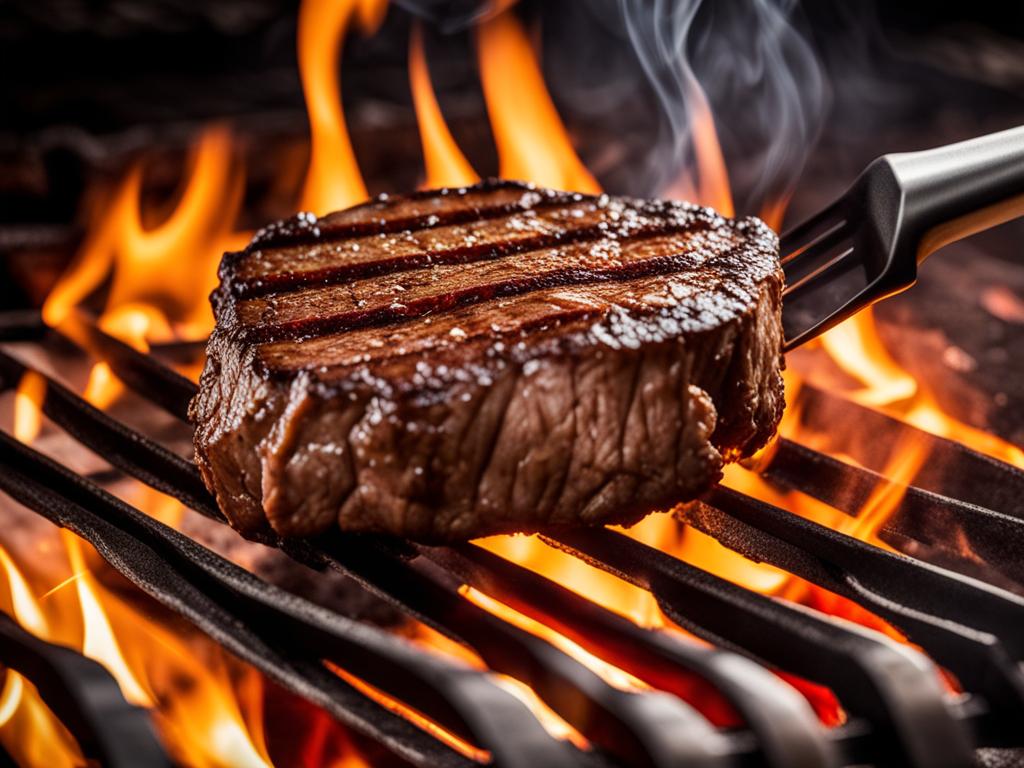
But hold your horses—don’t even think about adding black pepper until after the sizzle. Toss it on post-sear, unless you fancy the bitter taste of pepper with a burn. Who would want that? Now, here are some filet mignon tips served up in a handy table to keep you on track:
| Temperature Milestone | Action |
|---|---|
| 95°F internal temperature | Ready for flipping |
| 115°F internal temperature | Time to sear |
| Post-sear | Season with black pepper |
| Resting time | A few minutes on a wire rack (optional) |
And there you have it! Follow these steps, and you’ll be a grill master sporting a proud apron of expertise. Each time you flip that steak, you’ll be flipping hearts at the dining table too. Now go forth and grill with confidence, my friend!
Resting Your Steak: Myth Debusting and Best Practices
Ever heard the one about the steak resting period? Of course, you have—you’re a savvy griller with an eye for detail and a thirst for the truth. A curtain of smoke and folklore has long shrouded the idea of the steak resting period. This mythical time span, sacred to some backyard chefs, is said to be the golden hour where your steak transforms from just grilled to epicurean delight.
But let’s slice through the myth, shall we? Some culinary mavericks claim that the meat resting myth belongs in the same tall-tale bin as finding the end of a rainbow. “Serve it sizzling,” they chant, pushing this age-old pondering off the table. And heaven forbid your impeccably seared crust turns soggy—now that would be a true steak tragedy. Still, if you’re among the restive resters, consider a brief repose for your steak on a wire rack, avoiding the dreaded steamy underside.

- If you’re thinking of letting your steak take a nap, make it short, and make it count. A little wire rack siesta keeps that crispness in check.
- Are you a no-rest renegade? Then from grill to plate, make that transition swift, and watch your guests marvel at the sizzle and the perfect temperature.
- There’s a world of grilled steak tips at your fingertips, so whether you let your meat lounge a little or slice it up pronto, own it like the grillmaster you truly are.
Think of it this way: the steak resting period is your palette. You’ve already mastered the brushstrokes with your grilling escapades, and now, the finishing touch is up to your own taste—literally.
“To rest or not to rest? That is a question for your taste buds to decide.”
Simple Yet Stellar: Plating Your Filet Mignon
When it comes to your filet mignon presentation, think of your plate as a canvas celebrating the art of the grill. You’ve mastered the marinade and conquered the coals to create a standout steak that begs not to be upstaged. So, here’s your insider cue: embrace simplicity. By opting for simple steak plating, you let that perfectly-grilled beef take the spotlight—it’s what your guests are here for, after all. Imagine the cuts of your filet mignon as the bold strokes of flavor, with every slice a testament to your grilling prowess.
When Less Is More: The Case Against Over-Dressing
You know that dressing up can sometimes mean just a pocket square or a single string of pearls – anything more and it’s overkill. The same styling wisdom applies when laying out your delectable dish. Steer clear of overwhelming your steak with an avalanche of garnishes; instead, take the minimalist route that whispers elegance. Your filet mignon didn’t toil over flames for hours only to be draped in an excessive array of toppings that mask its innate deliciousness. Keep it understated and let the flavors do the talking—or, should we say, the dazzling.
Board Dressings and Sauces That Complement the Star
Still feel like your filet could use a little something extra? Enter the board sauce: your stealthy sidekick in amplifying taste without overshadowing the main event. This is where your complementing steak flavors come into play. Whisk together herbs, spices, and perhaps a splash of good quality olive oil right on the cutting board to create a subtle yet succulent accent that kisses each slice as you cut. Team up your steak with classic sides like a warm French potato salad or snappy green beans, plucked at the perfect pitch of crunch. Together with a sip of deep red wine, you’ve got a harmony of flavors that elevates your dish to a symphony of culinary delight. Delightful, isn’t it?
FAQ
What are the most important tips for grilling filet mignon to perfection?
To achieve the perfect grilled filet mignon, choose high-grade beef with marbling, aim for a thick cut, dry brine with salt, and practice 2-zone cooking on your grill. Pat the steak dry and use the right oil before searing for a crispy crust. Let the steak’s natural flavors be the star of the show when serving.
How do I choose the best beef cut for my BBQ filet mignon?
For the ultimate tenderness and flavor, select cuts from the rib and loin areas of the steer, with filet mignon being a top choice. Look for a high level of marbling and choose a cut that’s ideally 1.5″ to 2″ thick to ensure even cooking and a juicy steak.
What difference does marbling make in a steak’s flavor?
Marbling refers to the fat found within the beef, and it’s essential for a flavorful steak experience. The presence of fat enhances the beef’s flavor profile, ensuring a richer and more succulent steak when grilled.
Why is steak thickness important when grilling?
Opting for a steak that is thick enough, particularly 1.5″ to 2″, allows for an optimal grilling experience. It helps in achieving a delicious char on the outside while maintaining a juicy, tender interior without overcooking.
What’s the significance of USDA beef grading, and how do Prime, Choice, and Wagyu grades differ?
USDA beef grading signifies quality. USDA Prime is the highest grade with abundant marbling, primarily served at restaurants, while Choice is more variable and widely available in stores. Wagyu beef, often higher in quality than USDA Prime, has exceptional marbling and richness. Each step up in grading generally indicates more marbling and, as a result, more flavor and tenderness.
How does dry brining benefit steak preparation?
Dry brining helps by salting the steak in advance, which tenderizes the meat and enhances its flavor. The process involves moisture being drawn out, dissolving the salt, and then reabsorbing into the steak, resulting in a juicier grilled steak.
Is it necessary to bring steak to room temperature before grilling?
While some chefs recommend letting steak rest at room temperature to ensure even cooking, others argue it makes minimal difference and could increase the risk of bacterial growth. This step is debatable and may be based on personal preference and safe handling practices.
What is 2-Zone cooking and why is it beneficial for grilling steak?
2-Zone cooking creates two distinct areas on your grill, one very hot for searing and one with indirect heat for more gentle cooking. This technique is beneficial for thicker steaks, allowing the inside to cook to the desired doneness without overcooking and toughening the exterior, and can also infuse additional smoke flavor.
How do I achieve the perfect sear on my steak?
To attain that delectable sear, start by patting your steak dry to remove excess moisture. Then, use a high-smoke-point oil to prevent sticking and create a flavorful, crispy crust on a very hot grill. Searing should be done with the lid open to focus the heat.
When flipping a steak, what temperature should I aim for to ensure perfect doneness?
For a medium-rare steak, begin flipping when the internal temperature reaches about 95°F. After searing, finish cooking the steak until it reaches 115°F internally before giving it a final sear on an even hotter section of the grill for the perfect crust.
Do I need to rest my steak after grilling, or can I serve it immediately?
Resting steak is traditionally recommended to allow juices to redistribute, but some techniques suggest this isn’t necessary if cooked correctly and to avoid losing the crispness of the crust. If you choose to rest your steak, do so briefly and on a wire rack.
What’s the best way to serve a BBQ filet mignon?
Serve your BBQ filet mignon with minimal dressing to let the steak’s flavors shine. A simple Board Sauce can add a complementary touch without overpowering, and pair with sides that highlight rather than overshadow the steak’s rich taste.
Can I use butter or oil for searing steak, and which is better?
Both butter and oils like vegetable or canola can be used for searing. Butter adds flavor but can burn at high temperatures, while oils with a high smoke point prevent sticking and are better for achieving a perfect crust without burning.
What sides and sauces pair well with a grilled filet mignon?
Pair your grilled filet mignon with sides that complement its flavors, such as a warm French potato salad or crunchy green beans. For sauces, opt for a simple Board Sauce or let the steak’s natural flavors take center stage without a heavy sauce.