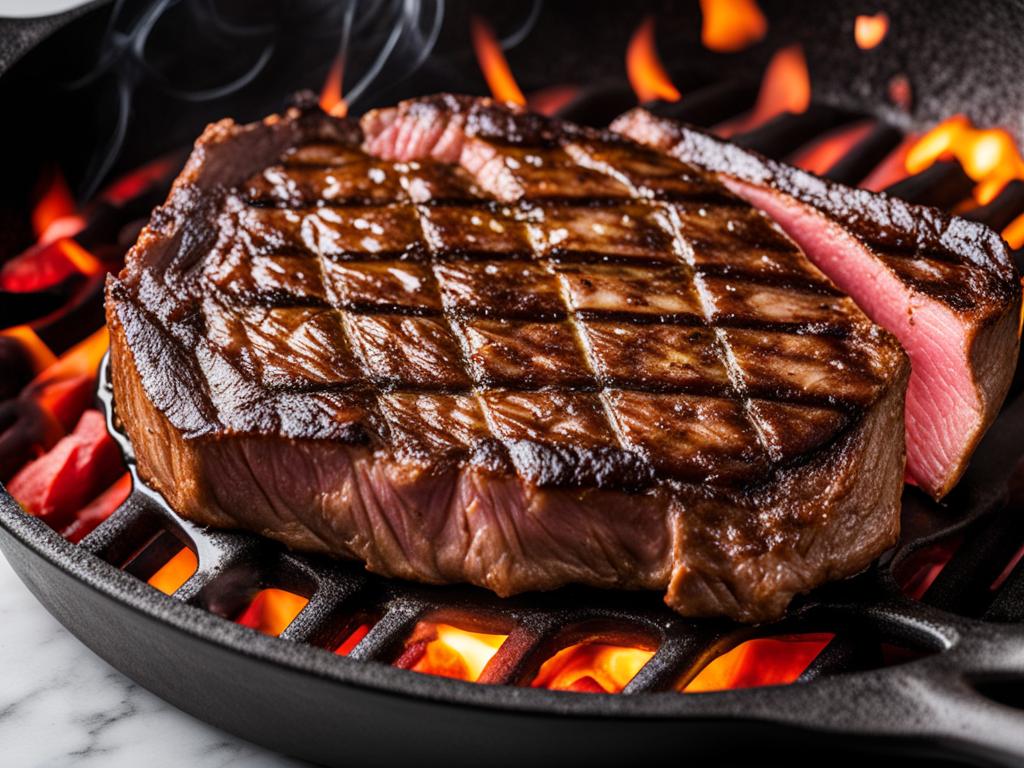
Picture this: it’s a typical evening, and you’re yearning to escalate a humdrum dinner into a culinary concert. Why not turn up the heat and amuse your taste buds with a perfect cast iron New York strip steak? Imagine a tender, juicy piece of beef with a crust so sensational, it sings of a smoky char with each bite. Cooking a New York strip in a cast iron skillet is the game-changer you’ve been waiting for – it’s where stovetop prowess meets the magic of old-school kitchen tools. And you, my friend, are about to master it.
With a little touch of the exquisite Hardcore Carnivore black seasoning, a splash of high-heat Sizzle olive oil, and a sprig of rosemary infused in a buttery cascade, you’ll morph your steak into a succulent escape from the everyday. Don’t just cook; animate your palate with an orchestra of flavors. That sensuous bite after a calculated rest — that’s not just a meal; that’s a reverie wrapped in a juicy New York strip steak recipe, ready in a swift 20 minutes.
Key Takeaways
- Unlock the secret to a restaurant-level crust with cast iron magic.
- Flavor rules! Score with Hardcore Carnivore seasoning and rosemary-butter infusion.
- A juicy and tender steak is just 20 minutes away from turning a regular night into steak night.
- Cooking with a cast iron skillet isn’t just tradition; it’s a pathway to elevating your meat mastery.
- Remember, patience rewards you with perfection—let that steak rest!
- Cast iron skillets are your culinary co-pilots; take care of them, and they’ll make sure your steaks soar high!
Why Cast Iron Cookware Elevates Your Steak Game
As you delve into the art of the steak, you’re about to uncover a secret so impactful, it might just change your culinary life: the unmatched cast iron cookware benefits. This isn’t just about cooking; this is about elevating your kitchen prowess to enshrine your status as a steak whisperer.
The Magic of Even Heat Distribution
No more playing dice with hot spots or uneven cooking temperatures—cast iron cookware is your knight in shining armor. With its exceptional heat retention, you’ll wield the power of even cooking temperature, ensuring your New York strip steak is a masterpiece of flavor and texture. The consistent heat is your ticket to that coveted, evenly distributed char known as the optimal steak searing experience. It’s not just cooking, it’s culinary alchemy.
Durable Cookware for a Lifetime of Searing
Imagine a kitchen ally that only gets better with age. This is the cast iron cookware promise: a companion so durable that it turns each steak searing session into a rite of passage. Each use not only builds character in your cookware, but also enhances your finesse in achieving that perfect crust. You’re not just cooking; you’re forging a legacy, one sear at a time.
Selecting the Perfect New York Strip Steak
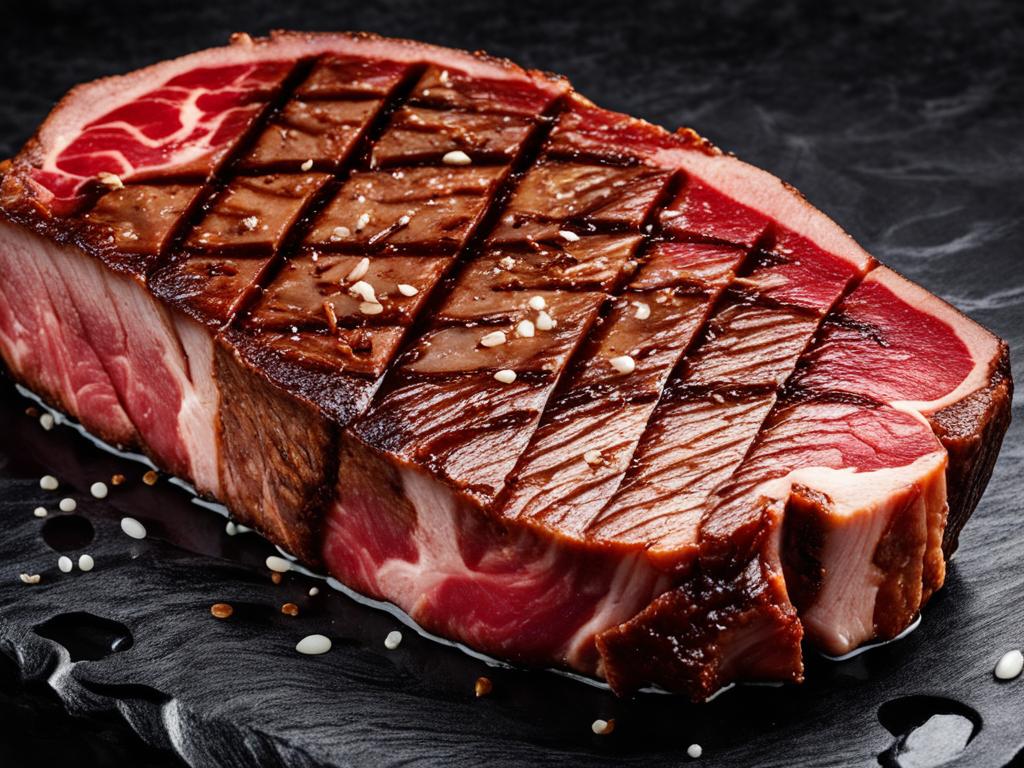
Step into the world of beef connoisseurship, my culinary adventurer! To start you off on the right hoof, let’s talk marbled New York strip steak. You want it decadent, you want it tender, and by all means, you need that marbling that whispers sweet nothings to your taste buds. Marbling is that intricate webbing of fat throughout the meat which, believe it or not, is a VIP at your steak soirée, mingling with the muscle fibers to create juiciness and flavor that’s simply incomparable.
Understanding Marbling and Tenderness
A top-shelf New York strip steak features a balanced marbling score, and knowing this can elevate your steak game from amateur to seasoned grill master. Think of marbling as your meat’s flavor passport, offering a one-way ticket to Tasty Town.
Tips from the Butcher: Choosing Quality Beef
Now, let’s slice into the butcher’s advice on beef selection. Rounding up top-notch beef isn’t a wild goose chase. March straight up to your local butcher and let them in on your quest for that prime cut. Steak quality criteria aren’t just academic; it’s practical, hands-on knowledge that’ll ensure you don’t end up with a piece that’s as tough as old boots.
| Criteria | Good Choice | Choice to Avoid |
|---|---|---|
| Marbling | Rich, even pattern throughout | Scarce or very uneven marbling |
| Color | Bright, cherry-red | Dull or brown-tinged |
| Texture | Fine-grained and smooth | Coarse-grained or with visible tough collagen |
| Fat Edges | Creamy white and moderate | Yellowish and excessive |
| Professionals input | Butcher’s personalized advice | Pre-packaged with no expert guidance |
Pro tip: Treat your steak selection like dating – take your time, keep your standards high, and don’t settle for a cut that doesn’t make your heart sing (and your stomach growl). Give it some room to breathe before the date with destiny on your cast iron. Allowing your marbled New York strip steak to come to room temperature before sizzling it up is like a pre-dinner toast—it sets everything up for a more delectable experience.
Cooking Times and Temperatures for the Ideal Sear
Picture this, you’re at the helm of your kitchen, cast iron skillet in hand, ready to tackle the New York strip steak. Now, to achieve the perfect sear cooking times and nail that cast iron steak temperature, it’s all about precision. And don’t forget, you’re aiming for that sweet spot of New York strip doneness that could rival any steakhouse’s prowess. Let me guide you through it.
The key to a sublime steak lies in a hot skillet and timing—a dynamic duo of culinary skills. Here’s a hack for you: start with the skillet screaming hot, I mean just shy of setting off your smoke alarm! For that crisp, caramelized exterior, sear your steak for exactly 2 to 2.5 minutes each side. Trust me, your taste buds will thank you.
| Doneness | Internal Temp | Touch Test | Searing Time |
|---|---|---|---|
| Rare | 125°F (52°C) | Soft & spongy | 2 mins per side |
| Medium-Rare | 135°F (57°C) | Slightly springy | 2 – 2.5 mins per side |
| Medium | 145°F (63°C) | Firm yet yielding | 2.5 – 3 mins per side |
| Well-Done | 160°F (71°C) and above | Very firm | 4 mins per side |
Now, once both sides of your steak have that delicious crust, it’s showtime! Transfer it to a preheated oven to finish the interior to your liking. Remember, each oven has its unique flair, like a quirky friend, so get to know yours to avoid the guessing game.
- Preheat your oven to 400°F (205°C).
- Pop the skillet with steak inside for 3-8 minutes, depending on your desired doneness.
- Use a meat thermometer to avoid mishaps; your future self will be grateful.
Be the maestro of your kitchen concert, conducting the perfect symphony of timing and temperatures. That first cut into your impeccable New York strip steak, with juices flowing and invitees in awe, will be your standing ovation. Fire up that skillet and let’s sizzle!
Seasoning Your Steak: Bringing Out Bold Flavors
Let’s face it, you’re not just cooking a steak; you’re crafting an experience. And the secret that lifts your searing game from “just another meal” to culinary legend rests within the seasoning. We’re talking a transformation that promises to leave your taste buds in a standing ovation. Get ready to enhance your New York strip with flavors so bold, they’re borderline audacious.
Hardcore Carnivore Black Seasoning: A Secret Weapon
When it comes to blackening spices for steak, consider the Hardcore Carnivore Black seasoning your culinary clandestine arsenal. This specially crafted blend not only adds a depth of flavor but also gifts your steak with a visually striking blackened crust. A symphony of garlic, onions, and a hint of umami complexity dances over the surface of your New York strip, forming an irresistible layer complementing its succulent meatiness.
Herb Infusions: Elevating Taste with Rosemary and More
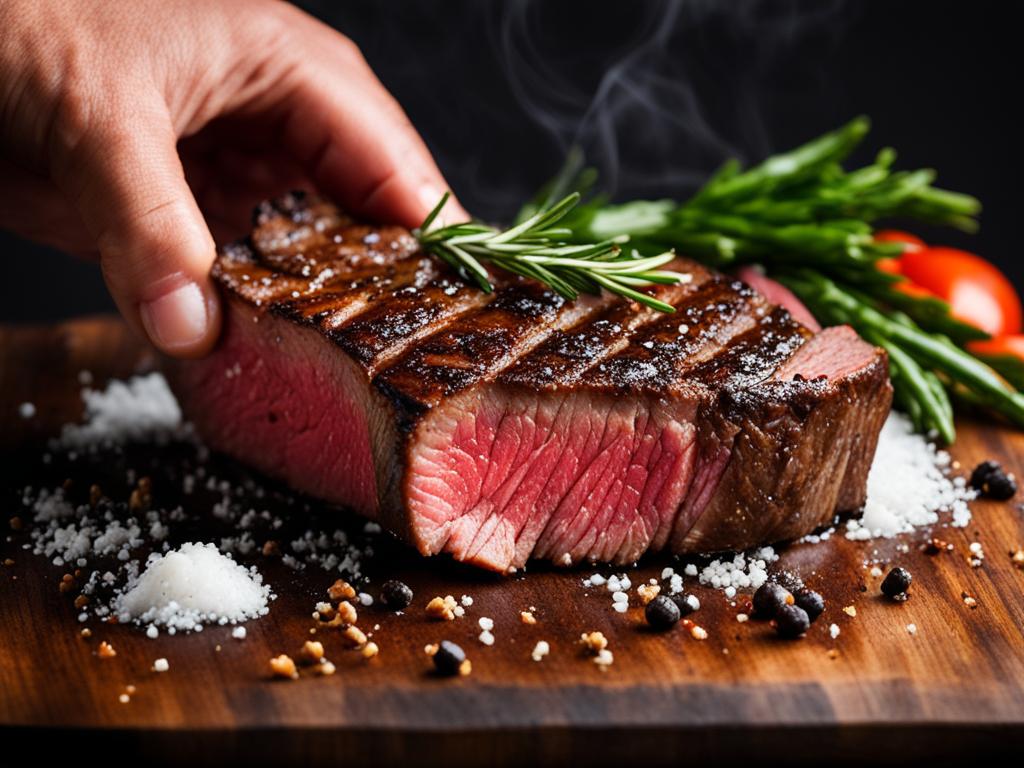
And now, let’s interlude to the subtle art of herb infusion. Picture fresh rosemary, in harmony with sizzling butter, permeating every pore of your steak and elevating it to a realm of flavor you might’ve thought was reserved for Michelin-starred maestros. The earthiness of the rosemary melds flawlessly with your steak, enhancing its steak flavor to an outright masterpiece status.
| Seasoning Technique | Flavor Note | Best Used With | Visual Appeal |
|---|---|---|---|
| Hardcore Carnivore Black Seasoning | Robust with a smoky undertone | Beef, Game, Lamb | Striking blackened crust |
| Herb Butter Infusion | Herbaceous with a buttery richness | Steaks, Roasts, Poultry | Glossy, herb-flecked sheen |
| Dry Brine with Salt | Enhanced natural flavors, juicy texture | Most meats, especially thick cuts | Glistening, tender surface |
| Spritz of Citrus | Bright, acidic lift | Seafood, Chicken, Pork | Shiny with a hint of zest |
Remember, whether you’re in the mood for the bold kick of blackening spices or the aromatic caress of rosemary and butter, seasoning your New York strip is your ticket to an unforgettable flavor journey. Go ahead, make every meal a moment to remember. Because, frankly my dear, with a steak this good, they won’t just want seconds; they’ll want the recipe.
Cast Iron New York Strip
Ah, the quest for the perfect New York strip steak—it’s like finding the holy grail of carnivorous pleasures. If the urban jungle of steakhouse options has you lost, fear not! Cooking a New York strip in your cast iron at home not only is possible but can lead to illustrious results that rival those of any high-end New York steakhouse. You just need a good cast iron skillet and the right steak techniques up your sleeve.
Imagine this: a hefty New York strip laying on your countertop, awaiting the searing embrace of your skillet. You’ve been perfecting your cast iron skillet steak techniques, and now it’s time to put them to the test. Gently lay your steak in the pre-heated, consistently warm pan and listen to that satisfying sizzle. The beauty of cooking New York strip in cast iron is the promise of that evenly crisp crust enveloping a tender rosy center. Patience and precision are your confidants in this culinary dance.
Now, the pressing question: How long do you cook each side to achieve such magnificence? Allow us to present a method as timeless as the cast iron itself. Here’s a simple breakdown to guide you:
- Preheat your skillet over high heat until barely smoking.
- Season your steak generously; you want to create a symphony of flavors after all.
- Place the steak in the skillet and cook for about 2 to 3 minutes on each side. We’re looking for that golden-brown sear, a testament to the Maillard reaction in all its glory.
- Once seared, lower the heat slightly and continue to cook to your preferred level of doneness (because your taste is law here).
- Let your steak rest! This is non-negotiable for retaining all those precious juices.
- Carve, serve, and watch as your guests marvel at what is undoubtedly the perfect steak.
So there you have it, a feast for the senses, all thanks to the wondrous alchemy of cooking New York strip in cast iron. Abandon the notion that steak perfection lies beyond your reach. With a trusty skillet, a glorious cut of meat, and the guts to wield searing heat, you too can cast a spell that conjures the most sumptuous, perfect New York strip steak. Bon appétit!
From Stovetop to Oven: The Dual Cooking Technique
Ready to up the ante on your steak game? Your cast iron skillet is more than just a pan—it’s a portal to flavor town when you employ the dual cooking method for steak. You begin with a stovetop sear that would make a chef weep and then gently transition your steak to the oven to finish with a heat transfer so even, you’ll think it’s magic.
Mastering the Art of Heat Transfer
The genius of the dual cooking method lies in its mastery of heat transfer in steak cooking. Searing on the stovetop provides that coveted crust bursting with complex flavors. But, don’t stop there—by moving the skillet to the oven, you ensure the inside of the steak is just as impressive as the outside. The gentle, all-encompassing oven heat finishes cooking your steak to the desired doneness without the harsh exterior heat of the stovetop.
The Role of Butter in Creating a Delicious Crust
As the steak basks in the oven’s ambient warmth, it’s time for a butter bath. The act of butter-basting in cast iron bestows upon your steak a culinary crowning glory. The warm butter infuses the meat, mingling with the juices to create a drool-worthy crust that’s both rich and deeply satisfying.
| Component | Stovetop | Oven |
|---|---|---|
| Heat Intensity | High for searing | Low to moderate for even cooking |
| Cooking Stage | External crust development | Internal doneness and texture |
| Butter Usage | Started just before transferring | Continued for flavor infusion and crust formation |
You’ve now been inducted into the secrets of steak supremacy. Go forth and create the kind of meals that sings songs of flavor you once thought impossible. Trust the dual cooking method—you and your cast iron skillet are about to become legends.
Resting Your Steak: A Crucial Step for Juiciness
You’ve brandished your tongs, and your New York strip steak is seared to a tantalizing crispness – but hold that carving knife! The step that stands between your steak and the pinnacle of succulence is the steak resting time. By allowing your steak to rest, you’re not just biding time; you’re engaging in an essential steak resting ritual that’s key to retaining steak juices.

Unlock the Importance of Patience
Imagine slicing into your steak too soon—watching precious juices pool on the cutting board is akin to a culinary tragedy. Let’s not commit that crime. Instead, we wait. Why? Because science told us so. Heat causes muscle fibers to contract, pushing juices outwards. As it rests, the fibers relax, and those delectable juices distribute evenly. Patience, dear chef, makes your New York strip steak a formidable force in the world of fine dining.
Pro Techniques for Optimal Resting Time
What’s the magical number for an ideal resting time, you wonder? The precious minutes can vary, but five is generally your golden number. Below is a table with a few tips to ensure your steak’s rest time makes it a cut above the rest.
| Steak Size | Resting Time | Under Foil | Room Temperature |
|---|---|---|---|
| 1-inch New York Strip | 5 minutes | Yes | Before cooking |
| 1.5-inch New York Strip | 7 minutes | Yes | Before cooking |
| 2-inch New York Strip | 10 minutes | Yes | Before cooking |
Remember, your steak is like a fine wine—it simply gets better with a little time. And let’s face it, after perfectly searing that glorious piece of beef, it deserves a moment of silence. So, go on, give your steak the rest it requires and make those steak resting times count!
Accessorizing Your New York Strip: Complements and Sides
Think of your New York strip steak as the lead actor in a blockbuster movie—it needs a stellar supporting cast to truly shine. The right New York strip steak pairings can turn a simple meal into a culinary event. And we’re here to ensure your dinner is not just food, but a conversation starter. So let’s talk about side dishes for steak and the complementary steak garnishes that can take your meal from satisfying to sublime.
Sure, you could go the traditional route and serve up a baked potato—always a safe bet. But why not get adventurous and pair your steak with some roasted root vegetables infused with thyme and a splash of balsamic? The earthiness of the vegetables married with the slightly sweet, tangy glaze can make each bite of steak a journey to remember.
- Garlic Butter Mushrooms – their rich flavor complements the boldness of the steak
- Creamy Spinach – offering a smooth texture contrast
- Crispy Parmesan Asparagus – adding a cheesy crunch
Or how about trying something green? A crisp arugula salad dressed in a light lemon vinaigrette could be the palate cleanser you never knew you needed. It’ll make each mouthful of that New York strip feel like the first—all over again.

Don’t forget those fun little garnishes either! A sprinkling of flaky sea salt just before serving adds not just a punch of flavor but also a delightfully crunchy texture. And a handful of fresh herbs can bring a pop of color and a burst of freshness that rounds out the dish.
Remember, whether you’re a steakhouse aficionado or a home kitchen warrior, the sides you select are not just accessories, they’re part of the main event. Elevate your New York strip steak with sides that complement and contrast for an unforgettable dining experience.
Conclusion
As your sumptuous cast iron New York strip steak rests and you bask in the glory of a meal well-executed, let’s not forget the unsung hero of today’s culinary adventure – your trusty cast iron skillet. Its contribution to your kitchen prowess is immeasurable, transforming the simple act of cooking into an artistic ritual. As you embark on this gastronomic journey, remember: the lifetime companion that is your skillet demands respect and care. By keeping it well-seasoned and clean, you’ll ensure many more performances to come in the savory ballets of ultimate steak preparation.
Moving Beyond the Steak: Cast Iron Care Tips
Masterful caring for cast iron cookware secures a future of countless delightful dinners and enviable crusts on steaks to come. It’s simple, really – avoid soap, keep it dry, and occasionally re-season. Your skillet’s adherence to tradition and quality will be steadfast only if its maintenance echoes the same. Learning the ropes of caring for your cookware means you’re not just cooking; you’re cultivating a legacy.
Your Ultimate Cast Iron New York Strip Steak Experience
The steak, aromatic and glistening under the kitchen lights, is more than just a meal; it’s the zenith of your culinary journey with cast iron. The exquisite char you’ve achieved whispers tales of high heat and unwavering attention to timing and technique. Embrace those nuances—the right heat, the perfect seasoning, the patient rest—and the tapestry of flavors will dazzle your palate every single time. As the last slice disappears, rest assured, this isn’t the end. It’s an invitation. An invitation to keep exploring, sizzling, and savoring every moment, one unforgettable steak at a time.
FAQ
What makes cooking a New York strip steak in a cast iron skillet superior?
Oh, darling, it’s all about that even heat distribution and retention. Cast iron is a maestro at retaining high heat, giving your steak a consistent sear and locking in those delightful juices for a perfect cast iron New York strip steak every time.
What should I look for when selecting a marbled New York strip steak?
Aim for rich marbling, my friend. That beautiful web of fat ensures a juicy, flavorful steak. Avoid any cuts with more chords than a rock ballad – tough collagen or silver skin just won’t do.
How long should you sear a steak on each side to achieve the perfect crust?
For that enviable crisp, aim for 2 to 2.5 minutes per side over a smoky high heat. Timing is an art – and you’re the artist here, creating a caramelized masterpiece with your perfect sear cooking times.
Is there a secret seasoning for the ultimate New York strip steak flavor?
Ah, enter Hardcore Carnivore black seasoning – a gastronomic secret that elevates your steak game. Combine with an herb infusion like rosemary for a symphony of flavors that’ll knock your socks off (metaphorically and flavorfully).
What are the benefits of using dual cooking methods with cast iron?
The dual cooking technique plays a symphony on your taste buds. Searing on the stovetop gives you the crusty overture, while oven-finishing lets the steak perform its juicy concerto, all with the help of a cast iron’s even cooking temperature.
Why is resting the steak just as vital as the cooking process?
Hold your horses after the sizzle! Letting your steak rest is like the intermission in a play, allowing the juices to dance back through the meat and ensuring a standing ovation for flavor when you finally cut into it.
Can you recommend side dishes that go well with a New York strip steak?
Ah, sides are the steak’s supporting actors, ready to shine without upstaging the lead. Think golden potatoes or a sizzling pan of veggies. Or go classic with a green salad – they’re the Fred Astaire to your steak’s Ginger Rogers.
How do I ensure my cast iron skillet stays in top shape after cooking steaks?
Love and care, my culinary compadre. Clean your cast iron after each use, dry thoroughly, and give it a light coat of oil. Treat it right, and it’ll be your loyal cooking companion on many culinary journeys.