
This post may contain affiliate links so we may receive compensation if you sign up for or purchase products linked to below. As an Amazon Associate, I can earn from qualifying purchases
Craving a delicious, comforting meal but short on time? Look no further than this homemade chicken curry recipe that’s perfect for a quick dinner on a busy weeknight. With easy-to-follow instructions and a focus on bold, aromatic flavors, this dish will soon become a go-to favorite in your cooking repertoire. Enjoy the warmth and satisfaction that a good curry recipe brings to the table, all without spending hours in the kitchen or relying on store-bought shortcuts.
Read on to discover how simple it is to prepare your own homemade curry featuring juicy, tender chicken that’s cooked to perfection and enveloped in a rich, creamy sauce. Pair this mouth-watering dish with rice, bread, or your favorite side for a complete, satisfying meal that’s sure to impress your taste buds and leave you craving more.
Introduction to Homemade Chicken Curry

A homemade chicken curry is a comforting and spice-filled meal that can elevate your dinner routine. This introduction will explore the basic components and the surprisingly simple process of making a curry from scratch, ensuring that you can relish the rich, aromatic flavors of traditional Indian cuisine within the comfort of your home, no matter how busy your schedule might be.
Chicken curry is a classic dish that brings a new level of excitement to your kitchen, allowing you to spice up dinner and create a delicious homemade meal that your family and friends will love. Whether you are a novice cook or a seasoned chef, mastering the fundamentals of chicken curry will provide you with a versatile and flavorful addition to your culinary repertoire.
- Start with fresh ingredients: Fresh vegetables, spices, and proteins are essential to create a high-quality curry.
- Experiment with spices: Don’t be afraid to mix and match different spices to find the perfect combination for your taste buds.
- Adjust the heat: Customize the level of spiciness to your personal preference by adding more or less chili peppers.
- Personalize your curry: Incorporate your favorite vegetables, proteins, or even fruits to create a unique dish.
With just a few simple steps, you can transform everyday ingredients into a mouthwatering and fragrant curry that will become a staple in your kitchen. Stay tuned as we dive deeper into the essence of a great chicken curry, providing you with essential tips and tricks to achieve the ultimate homemade curry experience.
The Essence of a Great Chicken Curry
At the heart of every great chicken curry lies a harmonious blend of spices and herbs, coming together to create a rich, complex flavor profile. A truly exceptional curry not only exudes authentic flavors and pays homage to centuries-old cooking traditions but also offers ample room for personal touches or ingredient substitutions.
Across cultures, “Oprah-style” distribution of curry variations has birthed numerous adaptations, each boasting unique characteristics and flavors. This flexibility ensures that your homemade chicken curry can retain its essence while accommodating your taste preferences and dietary requirements.

Throughout the process of crafting your perfect chicken curry, keep in mind the importance of balance. Incorporating different spices, aromatics, and textures is essential to achieving a depth of flavor that will keep everyone craving more. Remember that moderation and experimentation are key components in the pursuit of culinary excellence, so don’t hesitate to explore new combinations that speak to your palate and elevate your cooking game.
Ultimately, a great chicken curry is about more than just taste alone. It’s about embracing the vibrant, time-tested culinary heritage, uniting our senses, and creating memorable meals that nourish both body and soul.
Key Ingredients for the Ultimate Chicken Curry
A great chicken curry recipe relies on three main factors: the right chicken cut, a blend of flavorful spices, and a creamy texture. In this section, you’ll learn how these essential elements work together to create rich, delicious, and irresistible chicken curry dishes.

Choosing the Right Chicken Cut for Your Curry
The choice between chicken breasts, known for their leanness, and chicken thighs, favored for their juiciness and flavor, is a matter of personal preference. Some might prefer the healthier option of chicken breasts, while others might opt for the more tender and succulent chicken thighs. Ultimately, the decision comes down to what works best for your taste buds or what you have readily available in your freezer.
Spices That Make a Difference
Two essential spices in Indian curry recipes are yellow curry powder and garam masala. Yellow curry powder typically consists of cumin, coriander, turmeric, fenugreek, and garlic, providing an array of flavors that will delight your taste buds. Garam masala, on the other hand, is a spice mix with warming, earthy, and slightly sweet notes from ingredients like cinnamon, pepper, cardamom, and mace.
To make the most out of these spices and enhance their flavor profiles, an essential technique is toasting them in a dry pan before adding them to your curry. This simple step releases the spices’ aromatic qualities and ensures that your chicken curry has the perfect balance of warm, spicy flavors.
Creating a Creamy Texture with Greek Yogurt
Greek yogurt can be an excellent healthy alternative to impart a creamy texture to your curry by substituting it for coconut milk or cream. When incorporated towards the end of the cooking process, it provides a rich and smooth consistency without the risk of curdling. Not only does this addition contribute to the perfect texture in your chicken curry, but it also adds a subtle tangy note, which works marvelously with the other flavors in the dish.
By understanding the impact of different chicken cuts, the role of spices, and the use of Greek yogurt for a creamy finish, you can create mouthwatering chicken curry recipes that will tantalize your taste buds and leave you craving more.
Preparing Your Chicken for a Flavorful Curry Experience
To create the perfect chicken curry, it is essential to pay attention to two crucial steps: marinating the chicken and sautéing the aromatics. When done correctly, these techniques can elevate your curry and deliver a truly mouthwatering and flavorful experience.

How to Marinate Chicken
Marinating the chicken is key to infusing the meat with rich and aromatic flavors. A spice marinade consisting of a combination of spices and coconut milk can significantly enhance the depth of flavor in the curry. Allow the chicken to marinate for at least 30 minutes or, for optimal flavor infusion, overnight in the refrigerator. This technique enables the meat to absorb the aromatic qualities of the spices, which will then be released upon cooking, transforming the entire dish into a sumptuous and rich chicken curry.
Tips for Sautéing to Perfection
Sautéing the chicken and aromatics is a fundamental cooking technique that aids in building a flavorful foundation for your curry. Start by softening onions in a large pan, then add minced garlic and ginger. Cook these ingredients together for a few minutes until fragrant, allowing the flavors to meld and create a solid base for your curry. Once this is achieved, add the marinated chicken to the pan, ensuring to not overcrowd it. Be mindful of not overcooking the chicken, as it should remain tender within the sauce, contributing to that perfect chicken curry experience.
Cooking Techniques for a Quick Chicken Curry
Incorporating quick cooking techniques and dinner shortcuts into your culinary repertoire can save time and make a flavorful, fast curry attainable, even on busy weeknights. By using efficient cooking methods and focusing on seamless spice integration, you will master the art of building flavor layers in a chicken curry in no time.
Shortcuts to Reduce Cooking Time
There are several strategies you can employ to speed up your chicken curry cooking process. Opt for precooked or rotisserie chicken to save time on chicken preparation. Use quick-cooking ingredients like frozen vegetables or canned legumes that can be easily integrated into your curry. To further reduce cook time, consider preparing side dishes like rice or potatoes using faster methods such as microwaving or using an Instant Pot.
Building Layers of Flavor Efficiently
To create a rich, flavorful curry in a time-efficient manner, follow these steps:
- Toast your spices – Begin by toasting your spices in a dry skillet to enhance their flavor. This includes spices like curry powder, garam masala, and cumin.
- Sauté your aromatics – Sauté onions, garlic, and ginger before adding the toasted spices to your skillet. This helps meld the flavors and form the base of your curry.
- Add your liquids – Introduce liquids such as chicken broth and coconut milk to the skillet, incorporating them with the aromatic and spice mixture.
Another tip to build layers of flavor efficiently is to marinate your chicken in spices and coconut milk for at least 30 minutes before cooking. This can be prepared ahead of time, and once added to the curry, it will contribute to a deeper, more complex flavor in your dish.
Savor the Aromatic Spices: Toasting for Enhanced Flavor
When it comes to unlocking the full potential of the spices in your chicken curry, there’s a simple step that can make a world of difference: toasting spices. By briefly heating your spices in a dry pan before adding them to the dish, you’ll awaken dormant flavors within the spices and create a more potent and aromatic curry base.

Toasting your spices doesn’t take much time, but it delivers an enhanced flavor that will be well worth the effort. Follow these easy steps to toast your spices:
- Preheat a dry pan on medium heat for a minute or two.
- Place the curry powder and garam masala in the pan, spreading them evenly to ensure they toast properly.
- Keep an eye on the spices, and give them an occasional stir to make sure they don’t burn. In about a minute, you’ll start to notice their aroma becoming more pronounced.
- Once you detect that warm, nutty aroma, it’s time to remove the spices from the pan. Transfer them to a bowl or plate to prevent them from continuing to cook in the hot pan.
Toasting the spices may seem like a small step, but it’s a key way to emphasize the essential flavors and enhance the taste of your chicken curry. Incorporating this technique into your curry-making process will bring out the best in your dish, resulting in an unforgettable meal.
Chicken Curry
Chicken curry, as a culinary staple, is celebrated for its simplicity and yet remains a flavor-packed meal. Though the recipe provided is not intended to be entirely traditional, its focus on bold taste, time-saving tricks, and ingredient versatility ensures that it’s accessible to anyone looking to prepare a satisfying and delicious curry at home.

Creating the perfect Chicken Curry recipe does not have to be complicated. This simple curry comes together quickly, making it an ideal choice for those busy weeknights when you still want to indulge in a delightful homemade meal. By following the guide and employing some of the cooking techniques shared, you can master chicken curry and impress your family and friends with your culinary prowess.
- Choose your preferred chicken cuts – be it breast or thighs – to suit your taste and bring a personal touch.
- Experiment with different spices, including curry powders and garam masala, to achieve the desired flavor profile.
- Use Greek yogurt as an alternative for a creamy texture that’s both delicious and healthy.
In conclusion, a homemade chicken curry can be an absolute delight to your taste buds. By embracing the simple curry approach, you can create a flavor-packed meal that will surely make for a satisfying and delicious dining experience.
Serving Suggestions: Pairing Your Chicken Curry
After preparing the delicious chicken curry, it’s time to consider its accompaniments to complete and balance the meal. Here are some classic pairing suggestions and nutritious options that will allow you to enjoy the full burst of flavors in your homemade curry.
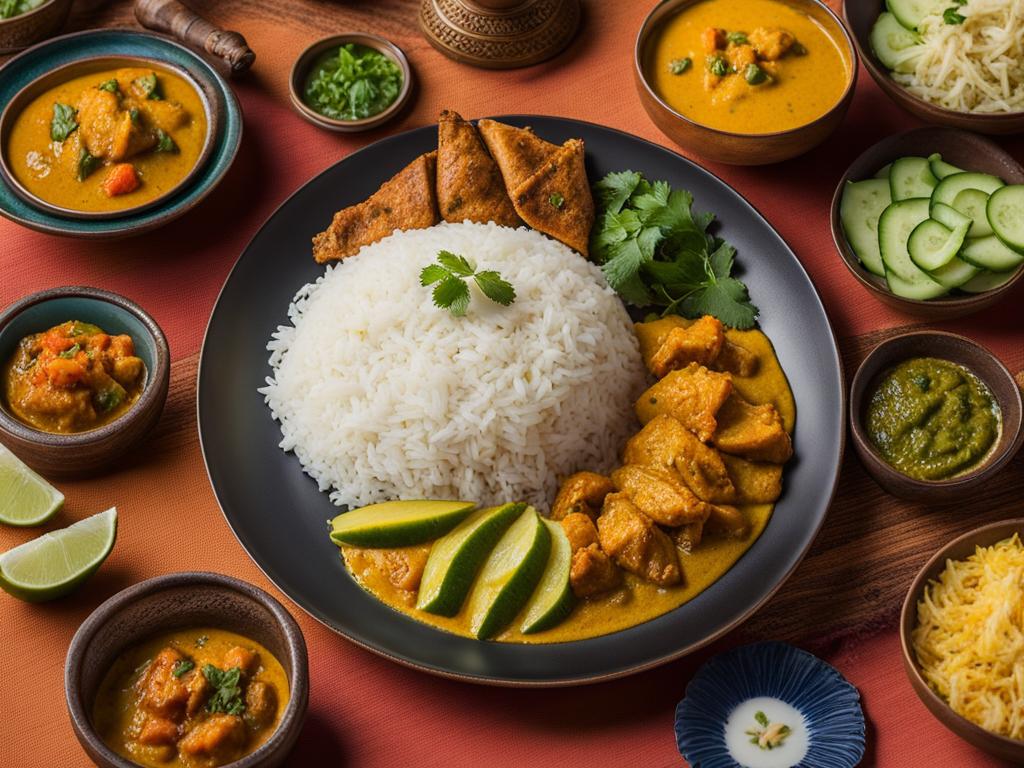
The Classic: Rice and Chicken Curry
The classic pairing for chicken curry is rice, whether you opt for steamed brown rice or a more aromatic basmati version. To elevate this combination, consider mixing in golden raisins and seasoning the rice with salt and pepper. This adds textural and flavor contrasts to complement the rich curry and enhance the overall culinary experience.
Vegetable Sides to Balance the Meal
Integrating vegetable sides into your chicken curry meal is an excellent way to achieve balance and add nutritious accompaniments. Simple options like warmed frozen peas, steamed broccoli, or a crisp side salad will complement the richness of the curry while providing a necessary boost of nutrition to round off the meal perfectly.
Bread Options for the Curry
Traditional flatbreads, such as naan or roti, can be a delightful addition to your chicken curry, enabling you to savor every last bit of the flavorful sauce. Preparing these breads freshly at home brings an authentic touch and elevates the overall enjoyment of your meal. So, grab a piece of naan or roti and indulge in all the delicious flavors of your homemade chicken curry!
Adjusting the Chicken Curry to Suit Your Taste Buds
Creating a personalized curry to cater to your unique taste preferences is easy with a few simple adjustments. By varying spice levels and incorporating different ingredients, you can achieve the perfect balance of flavors your taste buds will thank you for. Here are some ideas on how to tailor your chicken curry:
- Taste adjustment: Modify the amount of cayenne pepper or other chili powders according to your tolerance. Start with a smaller quantity and gradually increase to find the spice level you enjoy.
- Spice alternatives: If you prefer a milder curry, consider omitting spicy elements like jalapeño peppers. Instead, experiment with other warming spices such as paprika, cinnamon, or allspice.
- Additional ingredients: Introduce a range of vegetables, such as bell peppers, green peas, or baby corn, to add variety and extra nutrition to the dish. Alternatively, explore protein substitutions like tofu, paneer, or chickpeas to cater to different dietary preferences.
Remember, customizing your chicken curry is all about finding what works best for you. Don’t be afraid to experiment and adjust the flavors until you achieve your ideal homemade curry. With a little creativity and a willingness to explore, your taste buds can be treated to a truly satisfying experience!
Storing and Reheating Your Homemade Chicken Curry
Properly storing and reheating your homemade chicken curry is essential for maintaining its freshness, ensuring food safety, and retaining overall quality. By following best practices for curry storage and reheating leftovers, you can continue to enjoy your homemade curry without compromising on taste and texture.
How to Keep Your Chicken Curry Fresh
After cooking your chicken curry, it’s important to cool it quickly and then store it in an airtight container. This can be done by either refrigerating or freezing the curry, depending on how soon you plan to consume it again. Preserving the freshness of your chicken curry is crucial to prolong its shelf life and keep its flavors intact, making it a great option for meal prep or leftovers that can be savored later.
Best Practices for Reheating Leftovers
When it comes to reheating your chicken curry leftovers, there are a few key steps to follow to ensure both food safety and optimum taste. Begin by slowly warming the curry over medium heat on the stovetop, adding a little water if necessary to help restore its original texture. Be sure to stir the curry occasionally to heat it evenly and prevent it from sticking to the bottom of the pot. It is vital that the curry is piping hot throughout, reaching a safe internal temperature before being served. By adhering to these best practices, you’ll maintain the delicious, rich quality of your homemade chicken curry even when enjoying it as leftovers.
Conclusion
In summary, this chicken curry recipe presents an uncomplicated and efficient approach to savoring a traditionally flavorful and intricate dish. By following the outlined methods for preparation, serving, adjusting to taste preferences, and storing leftovers, you can regularly delight in mouthwatering homemade chicken curry.
Gone are the days of struggling to concoct the perfect blend of spices and ingredients. Instead, this guide ensures meal satisfaction by covering every aspect of making your chicken curry masterpiece. Utilizing these techniques will enable you to consistently create a tasty and appetizing chicken curry wrap-up that will be a memorable part of your dining experience.
With this accessible and reliable chicken curry recipe, you’re set to elevate everyday meals or impress your friends and family with an unforgettable culinary creation. Carry forward the expertise gained from this resource to craft an enriching and satisfying homemade chicken curry that becomes a staple in your kitchen.
FAQ
What are the key spices for a flavorful chicken curry?
Yellow curry powder and garam masala are both significant spices in Indian curries. Toasting these spices before using them in the recipe can enhance their flavors.
How can I create a creamy texture without using coconut milk or cream?
Greek yogurt can be used as a healthier alternative to impart a creamy texture to your chicken curry. Stir it in towards the end of cooking to prevent curdling.
What are some short cuts to reduce the overall cooking time for chicken curry?
You can use precooked or rotisserie chicken, use quick-cooking ingredients, or prepare some elements such as rice or potatoes using faster methods like microwaving.
How can I adjust the spice level in my chicken curry?
You can alter the amount of cayenne pepper, omit spicy elements like jalapeños, or add more vegetables or protein substitutions to cater to your personal preference or dietary restrictions.
What are the classic accompaniments for chicken curry?
Steamed brown rice or basmati rice, vegetable sides such as peas or broccoli, and traditional flatbreads like naan or roti are perfect accompaniments for chicken curry.
How should I store and reheat leftover chicken curry?
Cool the curry quickly, then store it in an airtight container in the refrigerator or freezer. When reheating, warm it slowly over medium heat and ensure that the curry is piping hot throughout before serving.