
Hey there, culinary enthusiast! Are you ready to elevate your home dining experience and learn how to cook filet mignon that rivals the most sumptuous offerings of upscale steakhouses? Wave goodbye to overcooked or underwhelming steak dinners, because the secret to the perfect steak at home is at your fingertips. Grasp the prowess of cooking steak in cast iron, the venerable kitchen warrior that creates a symphony of sizzle, sear, and savory perfection with your prized tenderloin. But before you don your apron, let’s ensure that your cast iron skills are nothing short of top-notch. Prepare to transform your kitchen into a steakhouse sanctuary where the aroma of perfectly cooked filet mignon becomes the stuff of legend. Let’s get that skillet blazing!
Key Takeaways
- Mastering cooking steak in cast iron is the cornerstone of achieving a delectably crusty and evenly cooked filet mignon.
- Understanding the importance of using high smoke point oils will ensure your filet doesn’t turn into a smoky distress signal.
- Getting your filet mignon to room temperature before cooking is crucial for that coveted even doneness.
- Learn to sear with confidence and finesse—timing is everything for that golden-brown allure and succulent interior.
- Embrace the finishing touch in the oven at 415°F, partnering with your trusty meat thermometer to nail your desired level of doneness.
- Never underestimate the power of resting your steak; it’s not just good manners, it’s the key to a juicy, flavorful bite.
Why the Cast Iron Method Triumphs for Filet Mignon
You might be a home cook, but that doesn’t mean you can’t create a steakhouse-quality steak at home. Surprisingly, the heavyweight champion of your kitchen – the cast iron skillet – is your ticket to culinary stardom. Here’s why the most unassuming piece of cookware in your arsenal is the key to perfecting that filet mignon skillet sear.
The Secret to a Flavorful Crust
If you’re dreaming of that divine, golden-brown crust enveloping a tender, perfectly cooked steak, your cast iron skillet is the genie granting that wish. No other cookware does justice to cast iron steak cooking quite like, well, cast iron itself. There’s something about that skillet, with its ability to reach scalding temperatures, which transforms your cut of filet mignon into a crusty canvas that oozes flavor with every cut.
How Cast Iron Ensures Even Cooking
Uneven cooking is a cardinal sin in the realm of steak. Cast iron’s superpower is its unparalleled heat retention and even heat distribution, ensuring that whether you’re in the center or at the edge, your steak cooks evenly, delighting you with the perfect medium-rare from edge to edge. Moreover, a steak without a perfect sear is like a star without shine. Your skillet guarantees you that glistening, irresistible sear that you thought was only possible in a high-end steakhouse.
Why Top Chefs Prefer Cast Iron
There’s a reason why top chefs keep reaching for cast iron for steak. This hefty power player is versatile and dependable, and it delivers consistency. Whether at home or in a Michelin-starred kitchen, cast iron stands as the ultimate sidekick for cooking filet mignon, ensuring a result that’s not just good, but great. So, next time you aim to impress, remember that the secret to a steakhouse-quality steak at home lies within the walls of the cast iron skillet you’ve lovingly seasoned.
Choosing the Best Cut: Selecting Filet Mignon
Hey, you. Yes, you—the culinary connoisseur on the quest for the ultimate steak experience. When picking the best steak for cast iron prowess, it’s all about courtship with the finest filet mignon. But not all steaks are created equal, so let’s embark on a flavor-filled journey to pinpoint that perfect cut!
Identifying High-Quality Beef Filets
Prepare to become a filet mignon sleuth. A true detective of beef knows that selecting quality filet mignon means scoping out steaks with a rich, uniformly deep red hue—color that screams, “I’m fresh and ready for the skillet!” Let’s not overlook a hearty plumpness; after all, no one likes a skinny steak. Keep those lackluster, browning, or suspiciously slimy contenders off your plate; they’re trouble.
Understanding the Importance of Thickness and Color
Thickness is the secret ingredient to your cast iron romance. Whisper sweet nothings to those cuts that boast an ideal thickness for filet steak—right around 2 inches. Why? Because that is the sweet spot for a dreamy, evenly cooked steak that melts in your mouth. Thinner and you might overcook your love affair into a tragedy; thicker and you could be waiting until the next season of your favorite show before it’s done.
- Look for uniform thickness to ensure even cooking time
- Observe the steak’s color for freshness and quality
- Avoid steaks with excessive gristle or fat – it’s not the luxury you’re paying for
Remember: a superb filet mignon is a crossroad where thickness meets freshness. Don your apron, brandish your skillet, and get ready to grace your cast iron with the steak it deserves!
Essential Ingredients for the Perfect Seared Filet Mignon
Let’s talk about the secret saucery to elevate your filet mignon from just good to great. It’s all about the ingredients, and not just any will do. For that impeccable sear that whispers ‘steakhouse’, you need to be strategic with your choice of oils and flavors. You’re aiming for a golden crust with a juicy, tender heart, right?
Oils with High Smoke Points
When it comes to selecting the best oils for searing steak, think high smoke point. You’re going to want an oil that can take the heat without morphing into a smoky mess. Vegetable and canola oils are your kitchen allies here. A high smoke point oil ensures your steak gets that perfect crusty sear without any burnt oil bitterness.
Herbs and Spices to Enhance Flavor
Your filet mignon is dressed to impress, and nothing accentuates it quite like a dollop of fragrant herb butter for steak. Imagine it melting over the warm, seared surface, infusing the meat with aromatic herbs like rosemary and tarragon. Don’t forget the spice rub—whether it’s a simple salt and pepper mix or an intricate spice rub for filet mignon, patting your steak with the right seasonings can do wonders.
Pro tip: an hour before the steak hits the pan, give it a friendly pat with coarse sea salt or kosher salt and a crackling of pepper. This dry brine technique leads to better crusting and, ultimately, a more succulent steak. Once you try this, you’ll know those premium cuts didn’t go to waste!
So there you have it: to dazzle your palate, start with the right foundation. Heat-tolerant oil for the sear, and an ensemble of herb butter and spices for that gourmet finish. Trust us, your taste buds will be giving you a standing ovation.
Prepping Your Steak: The Path to Perfection
Imagine the sizzle as your steak hits the hot pan, the aroma that fills your kitchen, and the burst of flavor with every bite. That dream begins well before the heat is on—it starts with proper steak preparation techniques. The road to the perfect steak asks for attention to detail, especially when it comes to bringing your steak to room temperature and understanding the benefits of dry brining.

The Art of Bringing Meat to Room Temperature
Why start with a room temperature steak? Because you are a perfectionist in the making. Allow your steak about an hour out of the chill zone (your fridge) to come to room temperature. This little pause before the pan ensures a more evenly cooked masterpiece, rather than an overcooked exterior with a cold, underdone middle. It’s like letting your steak wake up and stretch before the big event—you want it ready for action.
Dry Brining Vs. Seasoning: What You Need to Know
If you’re weaving this journey at the crossroads of flavor town, dry brining could be the spice of life you’re looking for. Adding salt to your steak and letting it rest can elevate your standard issue meat into a savory tale of tenderness and taste. Think of it—salt pulling double duty, drawing out moisture to bid adieu to blandness, while also inviting those juices back into the meat post-rest for a performance you can’t help but applaud with your palate. Here’s a table to summarize the showdown between dry brining and simple seasoning:
| Technique | Process | Benefits |
|---|---|---|
| Dry Brining | Generously salt the steak and refrigerate uncovered for 8-24 hours. | Enhances flavor, improves texture, and optimizes juice retention for an impeccable crust when seared. |
| Standard Seasoning | Pat steak dry, season with salt and pepper just before cooking. | Decent flavor enhancement with a quicker prep time for those spur-of-the-moment steak cravings. |
Whether you choose to dry brine or season on the spot, both roads lead to flavor country. It’s all about your personal game plan for that unmatched culinary touchdown. So arm yourself with these steak preparation techniques, and let the grilling begin!
Mastering the Sear: Filet Mignon Cast Iron Technique
You’re on a quest for the ultimate filet mignon, and the path to glory is forged in cast iron. Recognize the skillet as your ally in this culinary conquest, a venerable tool of the trade that champions the high-stakes task of searing steak in cast iron. This platform of seasoned metal is central to the alchemy that transforms your steak into a crusty charred treasure.
High-Heat Searing for the Perfect Crust
Embark on the high-heat hustle by cranking your burner to its fiery peak. With a cast iron skillet slicked with oil, and your patience lathered in anticipation, lay the steak down into the iron embrace. The symphony of sizzle that follows is your steak asserting its intention to soon be sublime. Maintain this searing spree for a strict 120 seconds on each flank. The goal? To attain that sought-after, divine steak crust that’s the talk and envy of every town.
Transitioning from Stovetop to Oven
Upon achieving a sear that heralds acclaim, move swiftly—no dallying now—for your cast iron laden with glorious meat must undertake a journey into the oven’s clutches. The oven-finishing technique, a pivotal plot twist in this saga, involves an oven preheated to 415°F. It’s in this fiery chasm where the steak’s fate will be sealed; ensconced in heat, finishing its journey to medium-rare perfection over the span of 5 to 6 spellbinding minutes.

Employ vigilance! For an even crust, your steak must remain undisturbed, settling into the skillet’s searscape—be it sea or land—unmoved by the tremble of trepidation. Take heed, the moment of transition carries the omen of overcooking, should your steak overstay in the cast iron’s clasp.
Now, bequeath a brief silence, serving as witness to your victory in culinary craft. With the perfect filet mignon before you, remember—each bite is a testament to the technique you’ve mastered. Yours is the hand that cast the iron, seared the steak, and claimed the crust.
The Crucial Role of Temperature in Cooking Filet Mignon
Let’s turn on the heat on precision cooking with thermometers, because when it comes to steak doneness temperatures, it’s more than just rare, medium, or well-done. The magic of the perfectly cooked filet mignon is all in the internal temperature for steak, ensuring that every bite is a testament to your culinary prowess.
Remember what the legendary chef Anthony Bourdain said about letting your steak rest? The discipline of patience rewards you with the juiciest slice, so resist the urge to dive right in and allow the steak those precious post-oven moments to truly shine.
Understanding Doneness Levels
Ever wonder what the secret is for those mesmerizing steak photos that make you want to reach through the screen? It’s not just the filters—it’s knowing exactly what level of doneness unlocks the true potential of your filet mignon. Here’s where a dependable meat thermometer becomes your best friend in the kitchen.
Using a Meat Thermometer Accurately
Forget the guesswork and welcome precision cooking with thermometers. Insert the probe right into the center of your steak, since that’s the spot that really decides whether you’re dining with the gods or just having a regular meal. Armed with these tactics, every steak becomes a work of art.
| Doneness | Internal Temp | Touch & Color Test | Resting Time |
|---|---|---|---|
| Rare | 120-130°F | Cool red center; soft to touch | 5-7 mins |
| Medium Rare | 130-135°F | Warm red center; firmer | 5-7 mins |
| Medium | 135-145°F | Warm pink center; slightly firm | 5-7 mins |
| Medium Well | 145-155°F | Some pink; firm to touch | 5-7 mins |
| Well Done | 155-165°F | Little to no pink; very firm | 5-7 mins |
No more rolling the dice and hoping for the best—strike gold every time by following this comprehensive chart. Because remember, the internal temperature for steak won’t lie, ensuring that you always hit your target doneness. Now, let that steak rest—you’ve both earned it. Bon appétit!
Enhancing Your Filet Mignon with Flavorful Additions
When you’re aiming to elevate your garlic butter steak from merely tasty to truly gourmet, the right toppings can make a world of difference. Let’s talk about infusing butters and adding that chef’s kiss to your dish with herb-infused butter and other gourmet steak toppings. Your taste buds will thank you!
Creating Compound Butters
The art of crafting compound butter might sound fancy, but it’s as simple as mixing finely chopped herbs and garlic into softened butter. The mixture then sets in the refrigerator, marrying the flavors together, to create a luxurious topping that melts into your perfectly cooked steak, intensifying every bite with its rich flavor profile.
Herbs and Garlic: A Classic Pairing
Garlic and herbs are the dynamic duo of the culinary world, especially when paired with steak. Incorporating them into a butter creates a garlic butter steak experience that’s hard to beat. As you add this concoction to your sizzling filet mignon, the aroma alone will be enough to know you’re about to indulge in something special.

Take the time to explore and savor various herb combinations and discover the symphony of flavors that best suits your palate. The following table showcases a selection of ingredients that can be mixed into your compound butter, promising to transform your filet mignon into a gourmet delight.
| Herb | Pairing Flavor | Butter Ratio |
|---|---|---|
| Rosemary | Earthy, Piney | 1 Tbsp per 1/2 cup |
| Tarragon | Sweet licorice | 1 Tbsp per 1/2 cup |
| Thyme | Slightly minty, lemony | 1 Tbsp per 1/2 cup |
| Oregano | Pungent, Peppery | 1 Tbsp per 1/2 cup |
| Garlic (minced) | Pungent, Spicy | 2 cloves per 1/2 cup |
Remember, the secret lies not just in the quality of your herb-infused butter, but in how you use it. Lather a generous dollop atop your steak right after it comes out of the oven, and let it cascade down the sides. The heat will cause the butter to melt, pooling around the steak in a halo of flavor that’s irresistible. Happy feasting!
Recommended Side Dishes to Complement Your Filet Mignon
Nothing elevates a beautifully seared filet mignon like the right accompaniments. Opt for steak side dishes that harmonize with the rich flavor of your steak, ensuring each bite is as memorable as the last. It’s about building a symphony on your plate, where every element hits the right note.
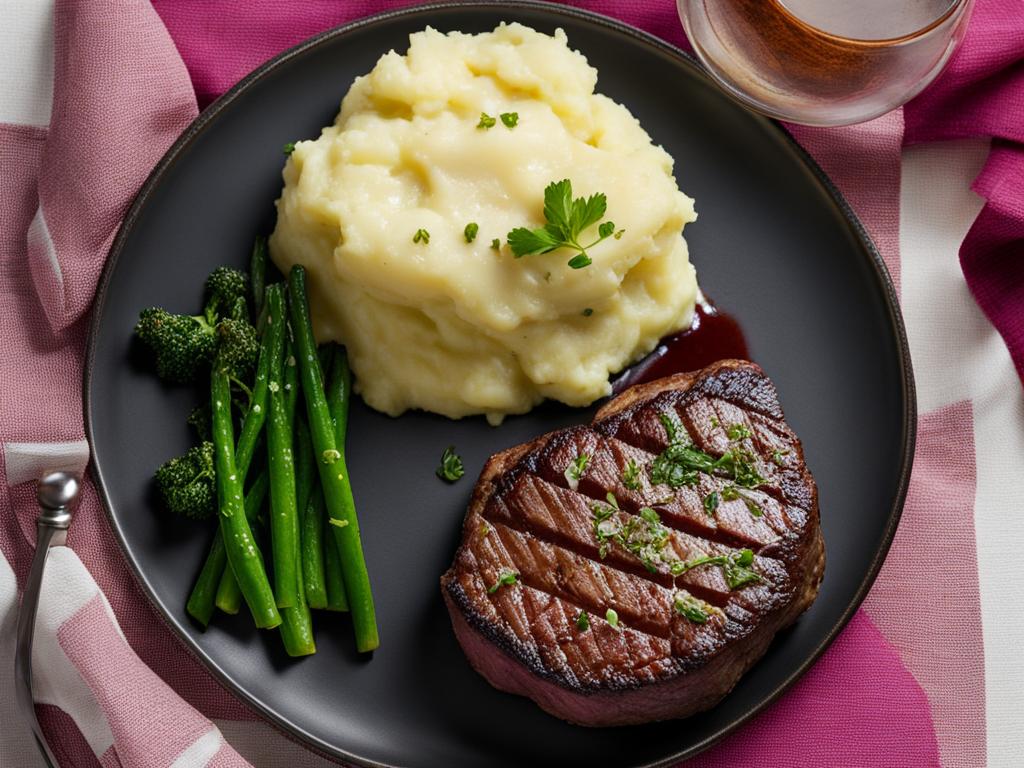
Classic Potato Pairings
Let’s talk potatoes, a timeless choice that beautifully complements the succulence of filet mignon. Imagine the creamy delight of garlic mashed potatoes, their smooth texture, and robust flavor pairing with each slice of your steak, creating a mélange of tastes that’s nothing short of divine.
Vegetable Sides for a Balanced Plate
And what’s a feast without the vibrant hues and crisp freshness of vegetables? Roasted, sautéed, or steamed – choose your fighter. Imagine roasted vegetables with steak; their smoky char adds a rustic edge to your plate, mingling gorgeously with the robust flavors of the filet mignon. A wholesome, yet undeniably indulgent, experience awaits your palate.
- Garlic Mashed Potatoes – The creamy counterpart to your filet
- Rosemary Roasted Potatoes – Crisp outside, fluffy inside, full on flavor
- Roasted Asparagus with Parmesan – A crunchy, cheesy delight
- Glazed Carrots – A touch of sweetness to balance the savory steak
With these pairings, your filet mignon isn’t just another meal; it’s a celebration on a plate, ready to tantalize your taste buds and leave you reveling in the joys of a well-matched feast.
Conclusion
As we wrap up our culinary journey, it’s clear that mastering the art of perfecting cast iron steak is within your grasp. Your skillet isn’t just a cooking tool; it’s your ticket to creating that steakhouse quality meal in the comfort of your own home. Whether you’ve been flipping steaks for years or are just starting out, there’s always room to refine your technique and indulge in the satisfaction of a job well done—and a steak perfectly cooked.
Rounding Up the Cast Iron Journey
While it might seem like a lot to take in, the path to a flawless filet mignon is paved with the wisdom of countless chefs before you. Take pride in selecting the best cut, seasoning it with care, and searing it to golden perfection. Remember, understanding the synergy between temperature, timing, and tenderness is crucial. Armed with these insights and a dash of patience, you’ll consistently impress yourself and your guests with sublime steaks, course after course.
Additional Tips for Next-Level Filet Mignon
Now that you’re nearing the peak of your ultimate steak guide, consider this your secret arsenal of filet mignon finishing touches. Guard the rest period of your steak as fervently as you would your favorite spatula—this unsung hero is vital to a juicy outcome. Trust in your meat thermometer like a faithful sous-chef. It’s the guiding hand that will whisper to you when your steak has reached its moment of perfection. Lastly, adjusting your approach based on the steak’s weight and thickness means you’re not just following a recipe; you’re crafting an experience. Go ahead, take a bow—you’ve earned it.
FAQ
How do you achieve that coveted steakhouse-quality crust on filet mignon at home?
Sear your seasoned filet mignon in a scorching hot cast iron skillet using oils with a high smoke point to form that enviable, golden-brown crust. Voilà, restaurant magic in your kitchen!
Why do chefs worship the ground cast iron walks on for cooking steaks?
It’s all about the even heat distribution and unparalleled heat retention, which gives your steak a consistent and fetching sear that could make a grown chef weep with joy.
What’s the scoop on selecting the best filet mignon for a cast iron sear?
Focus on steaks with a plump, 2-inch thickness and a vibrant red color—avoiding ones that seem to have taken a wrong turn at brown town. Quality and cut clarity are your success keys here.
What Avengers assemble on your countertop for the perfect seared filet mignon?
Your heroes are high smoke point oils (like canola or vegetable oil), coarse salt and fresh-ground pepper, and if you’re feeling fancy, herb compound butters. They’ll ensure your steak’s flavor packs the ultimate punch.
To brine or not to brine before searing steak, that is the question. What’s the answer?
Dry brine your meat if you dream of a juicier, more flavorful steak. Sprinkle salt and let it sit, preferably overnight. If you’re crunched for time, at least bring your steak to room temperature to avoid a cold-hearted cook.
How do you get that professional-grade crust using a cast iron skillet?
Heat your skillet to the surface-of-the-sun levels, lay your steak down gently, and don’t you dare move it for 2 minutes. Flip once for symmetry and beauty, and then pop that skillet into a 415°F oven for the final touch.
At what temperature do you stop cooking your steak if you want it medium-rare, and how long should you let it rest?
Aim for an internal temp of 130-135°F, then let your work of art rest like a steakhouse diva for 5-7 minutes. It’s not being lazy; it’s allowing the juices to redistribute, which equals steak nirvana.
How can you turn your filet mignon into a flavor bomb?
Infuse it with love, aka herb-butters loaded with garlic, rosemary, and tarragon. Let those flavors marry the steak as it cooks, and you’ll pronounce it delicious with every bite.
What sidekicks should accompany your filet mignon on the plate?
Pairing your filet with a cohort like parmesan roasted potatoes or some well-dressed greens balances the richness and brings harmony to your palate. It’s like picking the perfect date for steak prom.
Any insider tips for making sure your filet mignon is more ‘wow’ than ‘ugh’ when cooked in cast iron?
Patience is a virtue—let that steak rest! Trust a meat thermometer more than your poker buddies, and consider the thickness and weight for cooking that’s as precise as a Swiss watch.