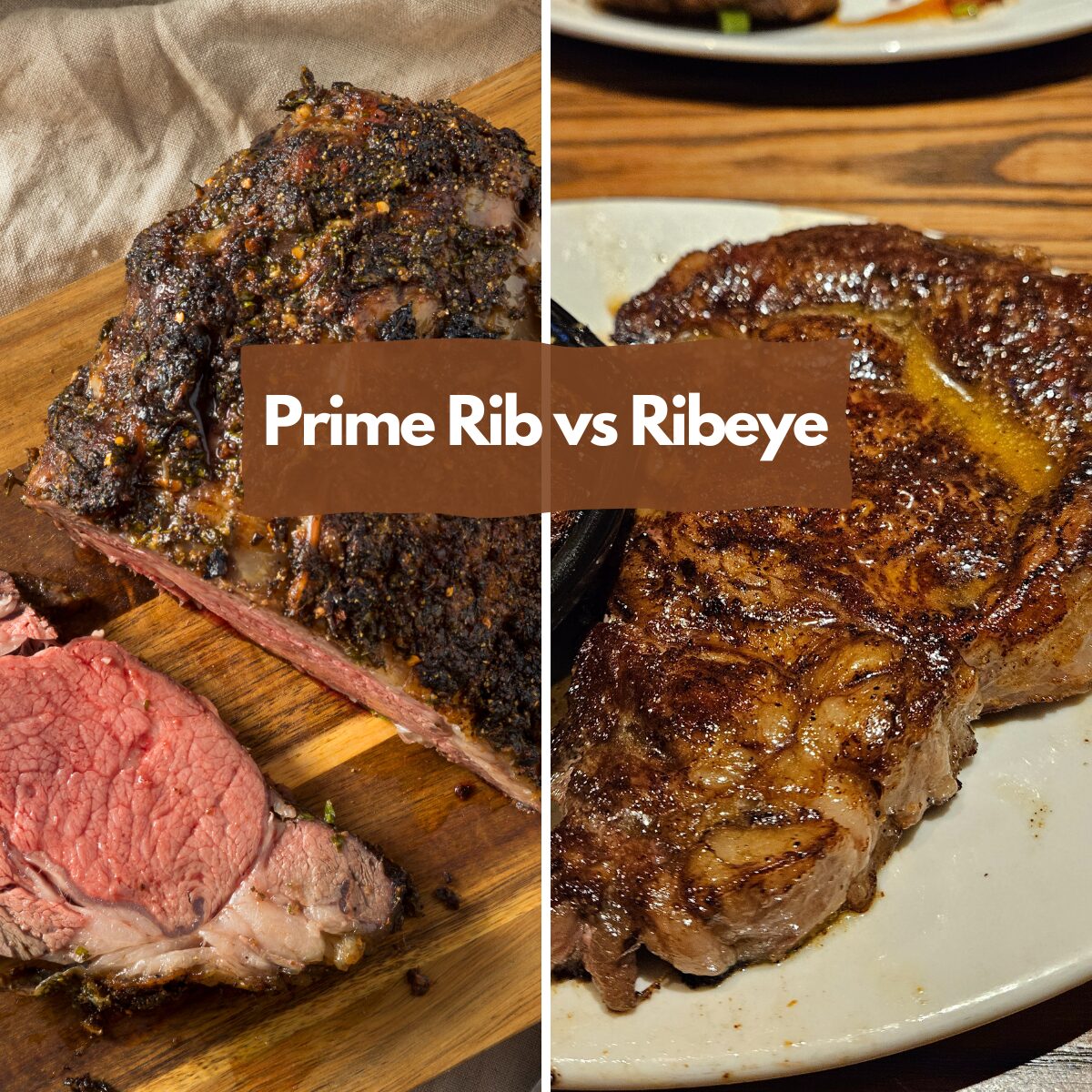
When it comes to choosing between Prime Rib vs Ribeye, both cuts offer rich flavor and tender texture, but they shine in different ways. Prime rib is a show-stopping roast, perfect for special occasions, while ribeye is a flavorful steak that can be grilled or seared to perfection.
Knowing the differences between these two cuts can help you decide which one suits your meal and cooking style best.
As we dive deeper into the differences, from cooking techniques to flavor profiles, you’ll see why these cuts are both beloved by steak lovers. Keep reading to discover which cut works best for your next meal.
What is Prime Rib?
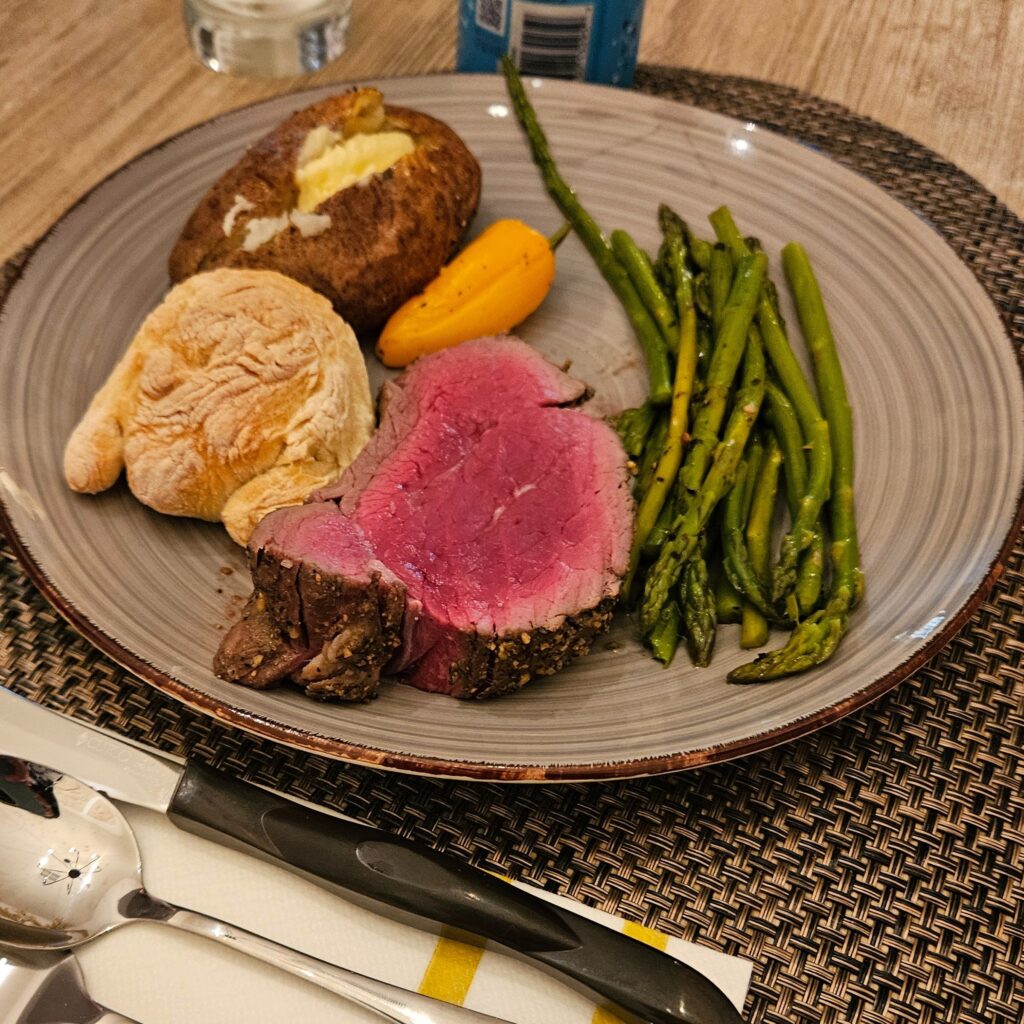
Prime rib, also known as a standing rib roast, is a large, tender cut of beef that’s typically reserved for special occasions. Sourced from the same rib section as ribeye, it offers a more substantial serving size, often cooked as a roast.
The slow roasting process enhances its natural taste, while the marbled fat melts to create a tender, succulent meat. Prime rib is perfect for gatherings, as it’s typically carved at the table, making it both a feast for the eyes and the taste buds. Its rich, juicy flavor and impressive presentation make it a popular choice for holidays or celebrations.
What is Ribeye Steak?

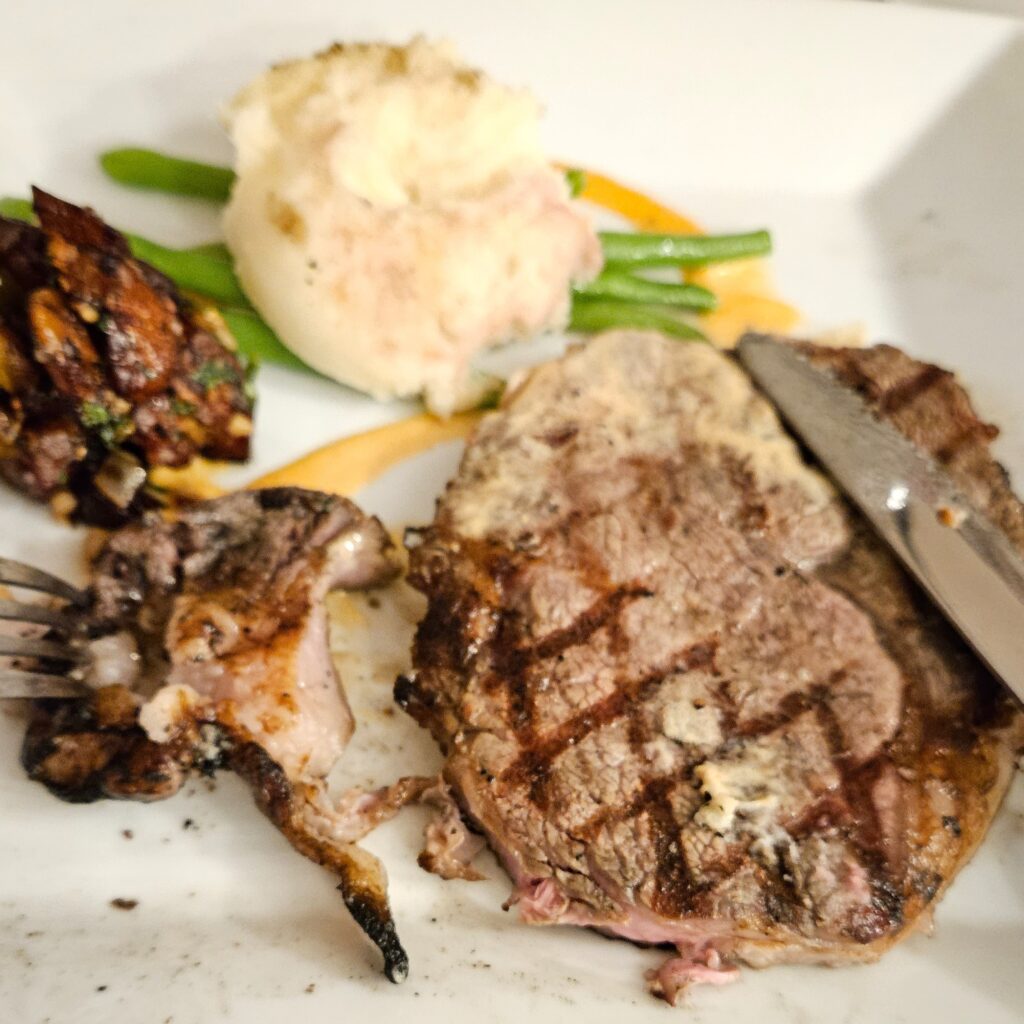
Ribeye steak is a popular and flavorful cut of beef known for its tenderness and rich marbling. Sourced from the rib section of the cow, the ribeye boasts layers of fat that melt during cooking, creating a juicy and mouthwatering experience. It’s often grilled or seared to perfection, delivering bold flavors in every bite.
Ribeye is a steak lover’s dream—ideal for a quick, indulgent meal that doesn’t require much prep but still satisfies with its juicy, beefy taste. Whether cooked on the grill or in a cast iron skillet, this steak is all about savoring rich, marbled meat.
Related Article: If you’re curious about how ribeye compares to other popular cuts, be sure to check out our articles on Sirloin vs Ribeye, Porterhouse vs Ribeye, and Filet Mignon vs Ribeye for more insights.
Prime Rib vs Ribeye: Flavor Profile
When deciding between prime rib and ribeye, it’s all about understanding how marbling, texture, and taste come together to create two unique beef experiences. Both cuts offer rich, mouthwatering flavors, but they shine in different ways depending on how they’re cooked and the level of marbling.
Marbling: How Fat Affects Flavor

Marbling refers to the streaks of fat running through the meat, and it’s key to the rich, juicy flavor both cuts offer. Ribeye steaks are known for their excellent marbling, which melts during cooking, infusing the meat with a deep, buttery taste.
Prime rib also has impressive marbling, especially when slow-roasted, allowing the fat to slowly melt and soak into the meat, making every bite tender and flavorful.
Texture: Tender vs Juicy
Ribeye steaks have a balance of a seared, slightly crispy outer layer and a juicy, tender interior. It’s a steak for those who love a bold, quick-cooked experience.
On the other hand, prime rib’s texture is all about slow-roasted luxury. The meat is velvety soft and slices easily, perfect for those who want a melt-in-your-mouth experience.
Taste: Bold vs Rich
Both cuts offer incredible flavor, but in different ways. Ribeye delivers a robust, beefy taste, perfect for steak lovers who appreciate a charred crust. Prime rib, with its slow cooking process, creates a milder, more nuanced taste, with each bite offering a rich, almost creamy taste.
Prime Rib vs Ribeye: Cost Comparison
When it comes to cost, prime ribs usually cost more due to their size and ability to serve multiple people, making them a favorite for special occasions. Though it may seem like a splurge, you’re getting a large, luxurious cut that can feed a crowd, making it worth the investment.
On the other hand, ribeye steaks can also be pricey, but they offer a more individual experience. Every bite of ribeye is packed with rich flavor, and while the price per pound might be lower than prime rib, ribeye is typically served as a single portion.
Here’s a quick breakdown:
| Beef Cut | Average Cost | Feeds Approx. | Cost Per Serving |
|---|---|---|---|
| Prime Rib | $17.99/lb | 8 people | $2.25 |
| Ribeye Steak | $15.99/lb | 1 person | $15.99 |
When shopping for these cuts, look for labels like “USDA Prime” for top-tier quality. However, more affordable options like “Choice” or “Select” cuts can still deliver great flavor.
In the end, it comes down to your needs: prime rib for grand gatherings or ribeye for a personal steak experience. Either way, you’re choosing quality that’s worth every penny.
Cooking Techniques for Prime Rib and Ribeye

Whether you’re a home cook or just love great food, learning how to cook prime rib and ribeye can take your meals to the next level. Let’s explore the simple but delicious methods of slow-roasting prime rib and grilling ribeye that will make any dinner special.
The Art of Slow-Roasting Prime Rib
Slow-roasting is the key to a tender, flavorful prime rib. The slow heat allows the meat to become perfectly juicy, with a crispy, flavorful crust on the outside.
Picture your prime rib, slowly cooked with herbs and spices, emerging from the oven with a golden-brown exterior and a pink, tender interior that melts in your mouth. It’s a perfect choice for a special occasion meal.
Savor the Sizzle: Grilling the Perfect Ribeye
Grilling ribeye is all about using high heat to sear the outside while keeping the inside juicy. With just a sprinkle of salt and pepper, your ribeye hits the grill, creating a charred crust that locks in the flavor.
After grilling to your desired doneness, let the ribeye rest to allow the juices to evenly distribute. The result? A steak that’s full of rich, beefy flavor with every bite.
Perfect Pairings for Prime Rib and Ribeye
When pairing wine and side dishes with prime rib or ribeye, the right choices can truly enhance your meal. Whether you’re going for a bold red wine or a classic side, these options will elevate the flavors of your steak and create a memorable dining experience. Here are some perfect pairings to consider:
Wine Pairing
- Cabernet Sauvignon: A full-bodied red wine that pairs perfectly with the rich, juicy flavors of prime rib.
- Merlot: Smooth and slightly sweet, ideal for balancing the marbling and fat in a ribeye steak.
- Syrah: A bold, spicy choice that pairs well with heavily seasoned or spiced prime rib or ribeye.
- Zinfandel: Fruity with smoky undertones, making it a great match for grilled ribeye or prime rib.
Side Dishes
- Garlic Mashed Potatoes: Creamy and savory, perfect for balancing the richness of prime rib.
- Baked Sweet Potatoes: A healthier, slightly sweet option that complements the savory ribeye.
- Grilled Asparagus: Smoky, charred flavor that adds a nice crunch to ribeye steak.
- Glazed Carrots: Sweet and tender, they provide a balanced contrast to the bold flavors of prime rib.
- Creamed Spinach: Rich and velvety, pairs wonderfully with both prime rib and ribeye for an indulgent touch.
- Crispy Onion Rings: Add crunch and a touch of indulgence, ideal as a side for ribeye.
These wine and side pairings will enhance the flavors of your prime rib or ribeye, ensuring a well-rounded, delicious meal.
Conclusion
In the debate of Prime Rib vs Ribeye, it all comes down to personal preference and occasion. Prime rib, with its rich, tender roast, is ideal for family gatherings or holiday feasts.
Meanwhile, the ribeye, with its quick sear and bold flavor, is perfect for casual dinners or grilling with friends. Both cuts come from the same rib section but offer unique dining experiences.
Whether you’re slow-roasting a prime rib or grilling a ribeye, you’re guaranteed a delicious meal. So the next time you’re at the butcher shop, you’ll know exactly which cut fits your occasion, taste, and cooking style.
FAQ
What is the main difference between prime rib and ribeye?
Prime rib is a larger roast cut from the rib section and often slow-roasted, while ribeye is a smaller, individual steak, usually grilled or pan-seared. Both cuts come from the same rib primal section but are prepared and served differently.
Which is more tender, prime rib or ribeye?
Prime rib is generally more tender because it’s slow-cooked over a long period. Ribeye, while still tender, has a firmer texture due to the higher heat cooking methods like grilling or searing.
How can I make my ribeye steak extra tender?
To enhance tenderness, you can use a ribeye marinade, dry brine, or let the ribeye rest at room temperature before cooking. Cooking it to medium-rare and letting it rest after cooking will also help preserve its tenderness.
Can I use the same seasoning for both prime rib and ribeye?
Yes, you can use similar seasonings for both cuts. A simple mix of salt, pepper, garlic, and fresh herbs works well for both prime rib and ribeye. However, prime rib may benefit from more robust seasonings like rosemary and thyme due to its slow-roasting method.
How does bone-in vs boneless affect prime rib and ribeye?
A bone-in cut, whether prime rib or ribeye, tends to have more flavor because the bone helps retain moisture and enhance the meat’s taste during cooking. Boneless cuts are easier to carve and cook a little faster but may lack some of the rich, deep flavors provided by the bone.
Is prime rib or ribeye healthier?
Both cuts have similar nutritional profiles as they come from the same section of beef. However, ribeye may have slightly more fat due to its marbling, while prime rib is usually a larger portion with more fat around the edges. As with any red meat, moderation is key.
How do I store leftover prime rib or ribeye?
Wrap leftovers tightly in aluminum foil or plastic wrap, and store them in the refrigerator for up to 3-4 days. For longer storage, freeze the meat in an airtight container or freezer bag for up to 3 months. Reheat slowly to maintain tenderness.