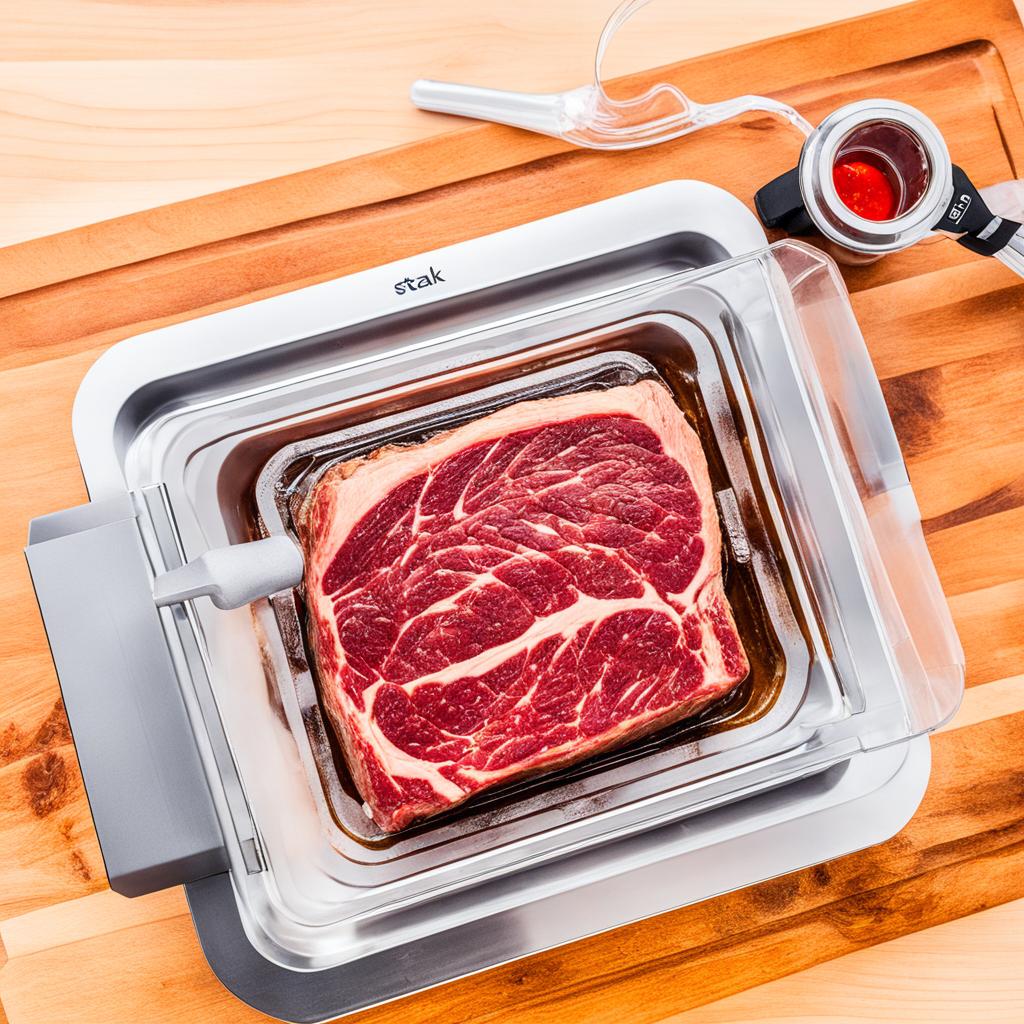
Did you know over 80% of home chefs find cooking steak challenging? This is especially true for ribeye because of its rich taste and softness. Yet, many are afraid to overcook it. Luckily, sous vide makes cooking steak easy and perfect every time. This guide will show you how to make your steak juicy and full of flavor. With these sous vide tips, your meals will always be a hit!
Understanding the Sous Vide Cooking Method
The sous vide method changes the way you cook food, especially steak. It brings a unique way to make sure your meals come out great every time. You might be asking what sous vide really is. And how does it help when cooking steak? Let’s dig into the details.
What is Sous Vide?
Sous vide means cooking food sealed in plastic bags in a water bath at a set temperature. Unlike direct heat, this method cooks food evenly all the way through. This prevents the outside from overcooking before the inside is done.
Benefits of Sous Vide Cooking for Steak
Using sous vide can change the way you cook. One big benefit is it makes your steak tender. This is thanks to the low temperature and slow cooking. Plus, it keeps all the good flavors and moisture in your steak. You get a perfectly cooked steak without having to worry about overcooking it.
How Sous Vide Ensures Perfectly Cooked Meat
Figuring out how sous vide works tells you why it’s so reliable. It cooks steak at a steady temperature. This means the whole piece of meat is done just right. You get juicy, flavorful, and tender results every time. Sous vide helps you avoid the mistakes common with traditional cooking. You get to enjoy meat cooked to perfection.
Choosing the Right Ribeye Steak
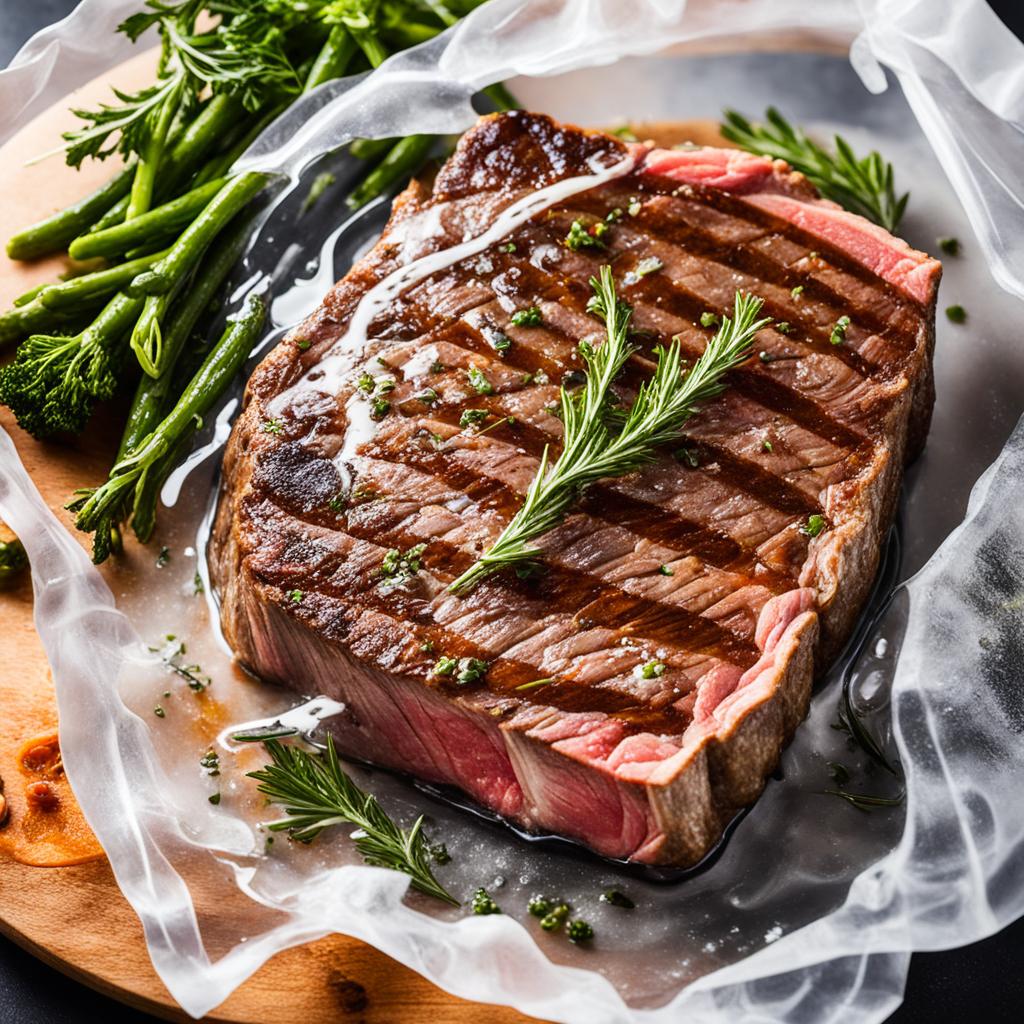
Choosing a high-quality ribeye steak is the first step to making a delicious sous vide ribeye. This choice greatly affects the dish’s flavor and tenderness. For any home cook wanting to impress, knowing which cuts to pick is key.
Identifying Quality Cuts
Look for ribeye steaks with a vibrant red color and a thin fat layer on the edge. This indicates the steak is fresh and the fat can make it better. You can find good steaks at local butchers or trusted grocery stores. Always look at the steak carefully to pick the best one.
Marbling and Fat Distribution
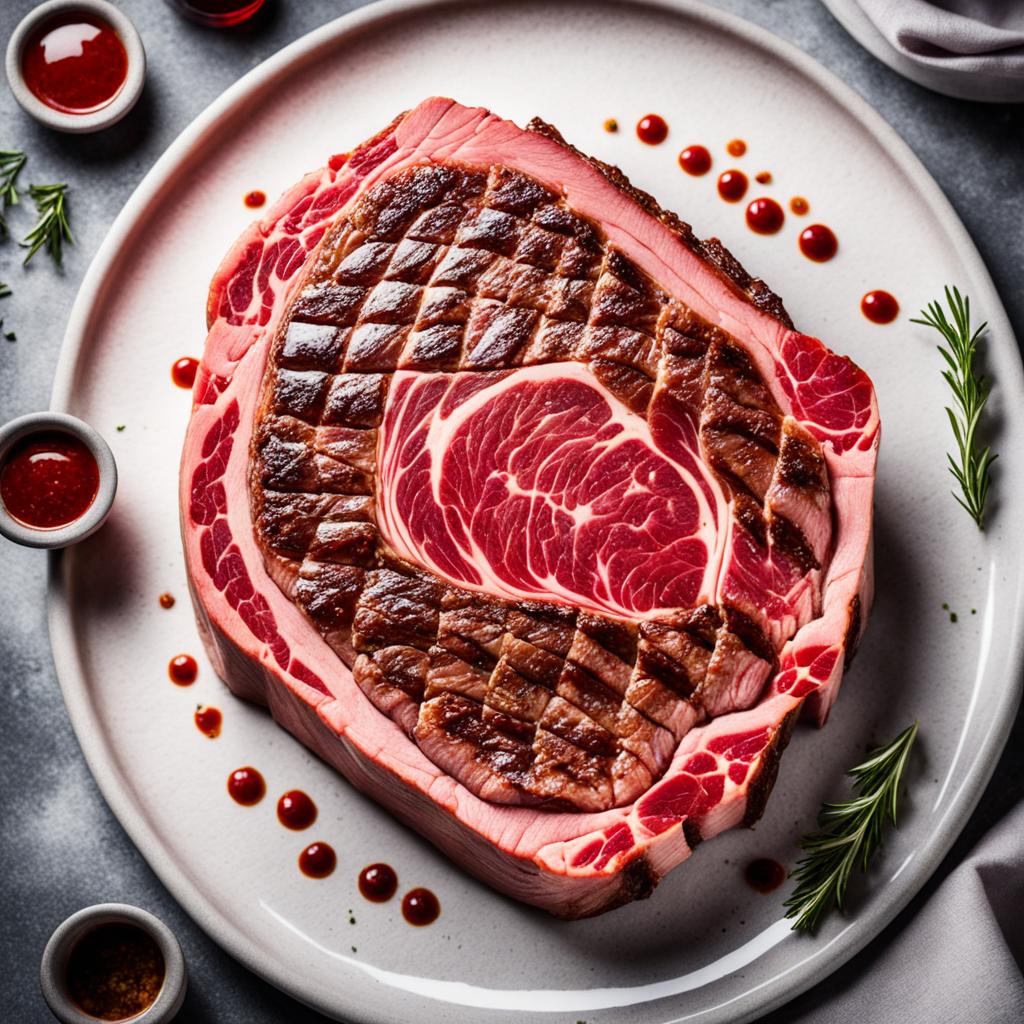
Marbling in ribeye steaks means the fat stripes within the muscle. It’s essential because it makes the steak flavorful and tender. The steak should have fat spread out evenly for a better taste. Choose steaks with a lot of marbling for the best results.
Sous Vide Ribeye: The Ideal Cooking Temperatures
Knowing the right sous vide temperatures is key for a perfect ribeye. You get to control the heat closely. This ensures your steak comes out just how you like it. Below, find a temperature guide and tips for cooking times, making you a sous vide pro.
Temperature Guide for Various Levels of Doneness
Here’s a quick guide for sous vide ribeye temperatures:
- Rare: 126°F
- Medium-Rare: 132°F
- Medium: 138°F
These temperatures make your ribeye perfect inside, boosting its flavor and softness. It’s like baking a cake; the right heat makes everything come out great.
Recommended Cooking Times
For ribeye cooking times, keeping them steady is vital. Here are the usual times:
- 2-4 hours for a fresh ribeye steak
- 2.5 hours for cooking from frozen
These times help tenderize the meat while keeping it juicy and tasty. Adjust these based on how thick your steak is for the best texture.
Preparation Steps for Your Ribeye
Getting your ribeye steak ready is key for tastiness and tenderness. First, season your steak well for an amazing outcome. A ribeye seasoned nicely brings out its natural tastes and gives a yummy crust when cooked.
Seasoning Your Steak Properly
For ribeye seasoning, simple is often best. Just kosher salt and fresh black pepper can be magic. To boost the flavor, you might want to add:
- Garlic powder
- Fresh rosemary
- Dried oregano
Generously sprinkle this mix on your steak. It creates flavors that are perfect for sous vide cooking.
Dry Brining Techniques
Dry brining is a great choice to keep your ribeye moist and tasty. This method means salting the steak at least an hour before cooking. The salt goes into the meat. Here’s how to do it right:
- Put a lot of kosher salt on both steak sides.
- Leave the steak in the fridge without covering it for at least one hour. You can even leave it up to 24 hours for more taste.
- Wash off the extra salt under cold water before you season it again, if you like.
This dry brining step makes your ribeye juicier and full of flavor. It turns your meal into something unforgettable.

Vacuum Sealing Your Ribeye for Sous Vide
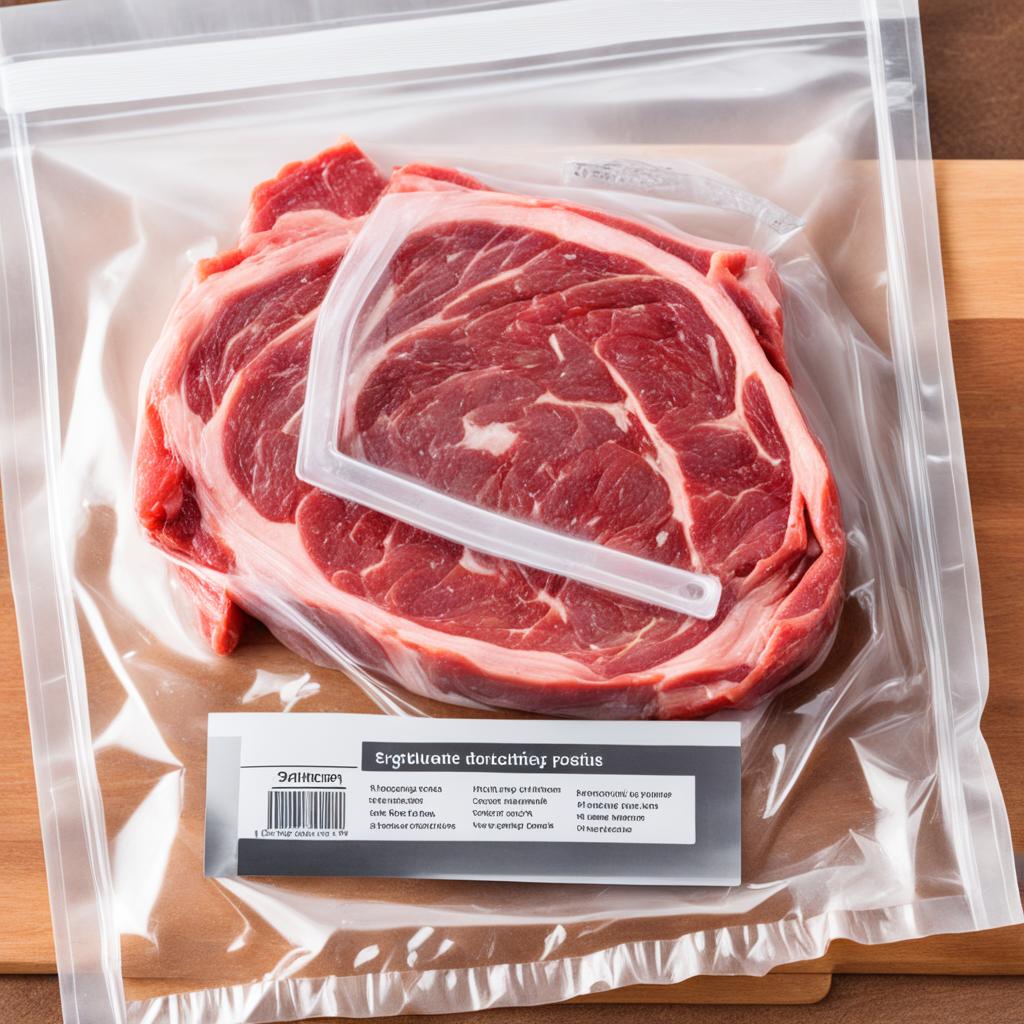
Vacuum sealing your ribeye is key for the best sous vide cooking. It makes sure the steak cooks evenly by keeping it in direct contact with the water. Doing it right keeps the flavor and texture perfect.
Best Practices for Vacuum Sealing
For top-notch results when vacuum sealing your ribeye, stick to these tips:
- Choose a top-quality vacuum sealer. It should remove air well, keeping the steak’s natural juices.
- Make sure the ribeye is dry before sealing. Use paper towels to absorb extra moisture that could mess up the seal.
- Put the steak in the bag flat without stuffing it. This helps create a secure seal.
Alternative Methods to Vacuum Sealing
Don’t worry if you don’t have a vacuum sealer. Try the water displacement method instead:
- Put your steak in a zip-seal bag, placing it near one end.
- Gently submerge the bag in water. This pushes the air out. Then, seal it tightly.
- Be sure the bag is sealed well to keep the vacuum intact while cooking.
Cooking Your Sous Vide Ribeye to Perfection
To cook a sous vide ribeye well, setting up and timing are key. Make sure your equipment is ready and at the correct temperature. This will help you make a delicious dish.
Setting Up Your Sous Vide Equipment
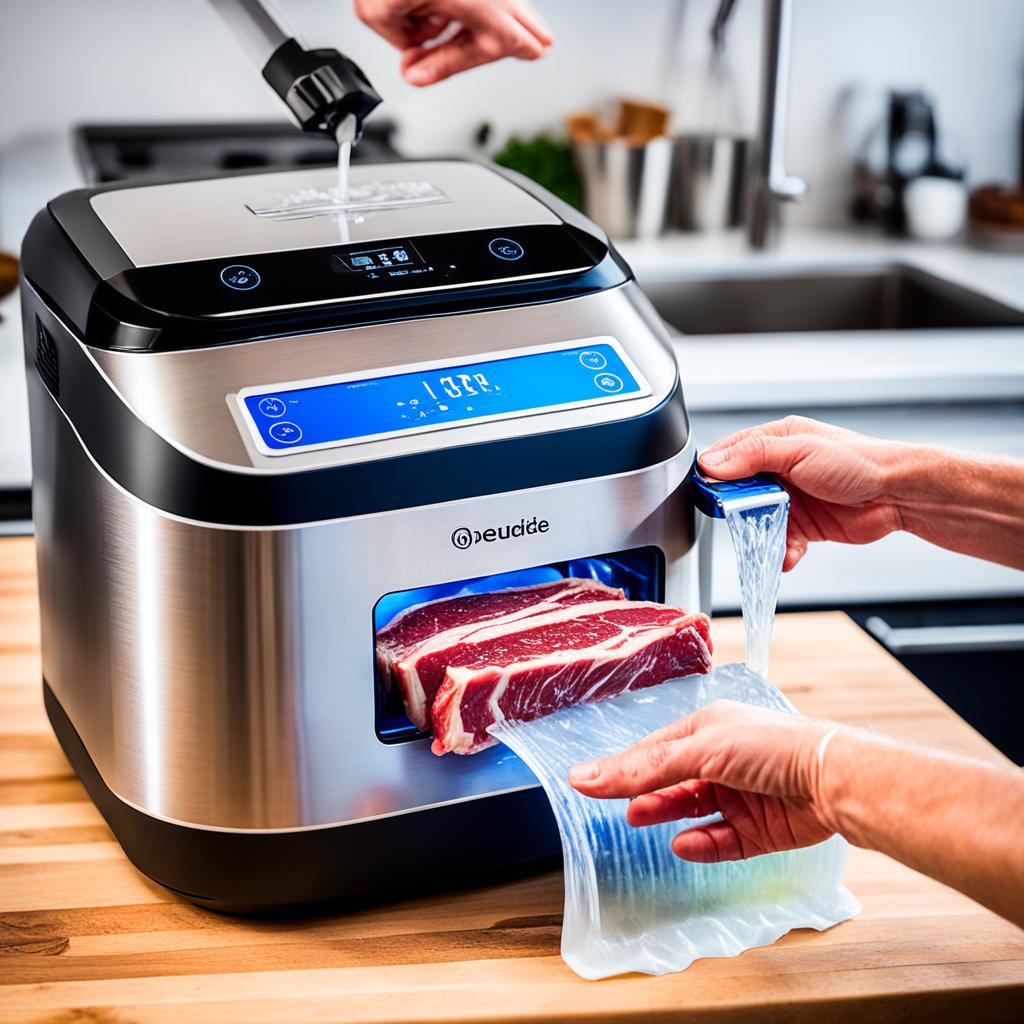
Setting up is easy to do. First, put the circulator in a large pot of water. Then, heat the water to the temperature that matches how you like your steak. It’s important for a perfect steak.
Keep an eye on the water to keep the temperature steady. This helps cook the steak just right.
Recommended Cooking Duration
Cooking a ribeye well takes 2 to 4 hours. This makes it tender and full of flavor. The meat gets a good taste from the seasonings and cooks evenly.
Watch the time closely to get the best results. Following the recommended time is key to a great steak.
After the sous vide ribeye is done, get it ready for a final sear. This step makes it even tastier. For more on ribeye, like its benefits and how to cook it, read this: ribeye steak guide.
The Essential Searing Process
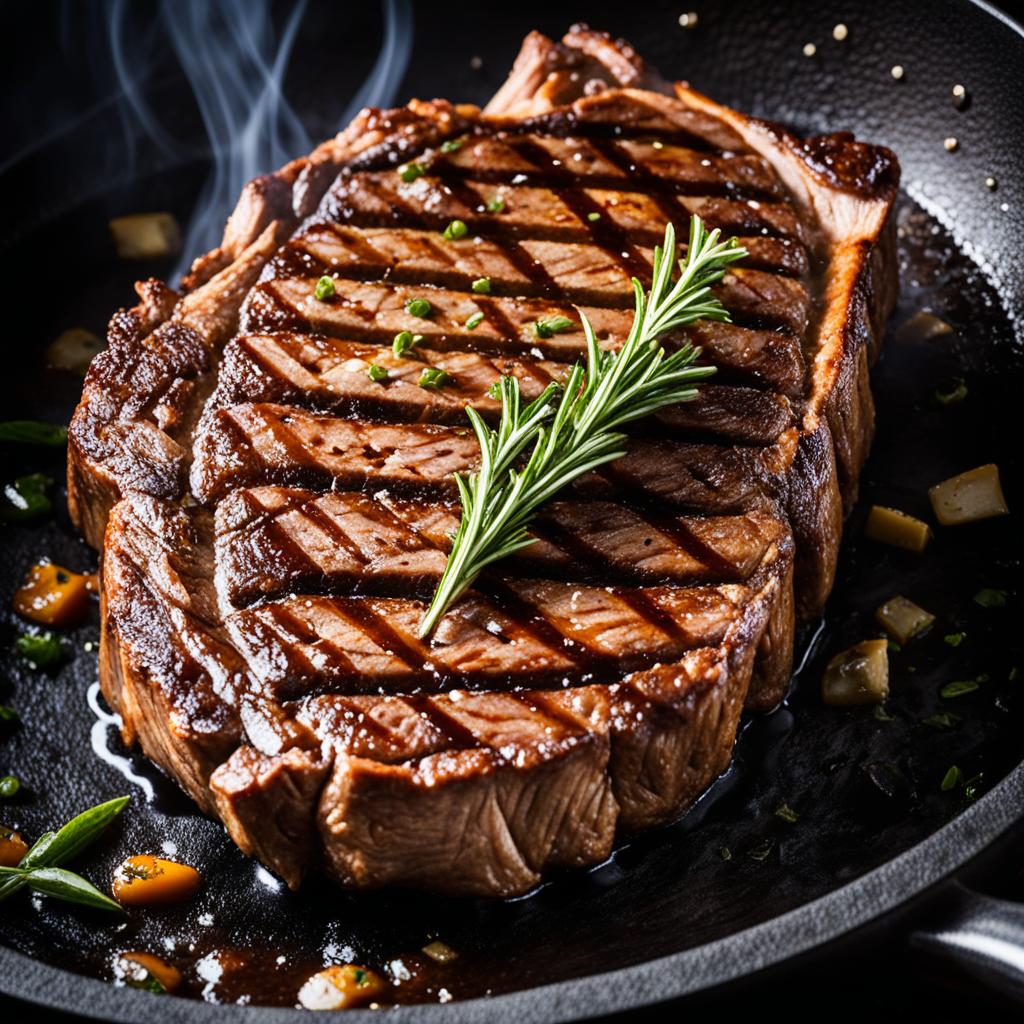
Searing sous vide steak makes your meat a culinary masterpiece. After sous vide, searing is vital. It adds rich flavor and a beautiful, caramelized crust.
Why Searing is Crucial After Sous Vide
Searing locks in the juices, creating a beautiful outer texture. This layer boosts the overall flavor of your ribeye. Without searing, you miss the amazing contrast between the juicy inside and crispy outside.
Best Techniques for Achieving the Perfect Sear
To get the best sear, follow these steps:
- Dry your steak with paper towels after the sous vide bath. This prevents steaming during the sear.
- Heat a cast iron skillet on high heat for a quick, intense sear.
- Add a bit of ghee or butter to the skillet for flavor.
- Don’t cook the steak more than 1 minute on each side. This creates a perfect crust without overdoing it.
Flavor Enhancements for Your Ribeye
To make your sous vide ribeye even better, try adding some flavor boosters. A great idea is to use butter mixed with fresh herbs like thyme or rosemary when you sear the steak. This adds a rich aroma and taste that goes well with the steak’s own flavors. Also, exploring different sauces can elevate the ribeye’s taste even more.
Butter and Herb Options
Butter makes your ribeye rich and luxurious. When you add fresh herbs, the taste is incredible. Some good mixes include:
- Garlic Herb Butter
- Chive and Lemon Zest Butter
- Blue Cheese Herb Butter
These butters melt over the steak, creating amazing flavors that match perfectly with the meat.
Pairing Sauces and Sides
Trying different sauces can really change up your ribeye. Some top picks are:
- Horseradish Cream Sauce
- Blue Cheese Reduction
- Chimichurri Sauce
Pair these with sides that go well with the ribeye’s strong flavors. Mashed potatoes, grilled asparagus, or a fresh salad are perfect choices to complete your meal.
Conclusion
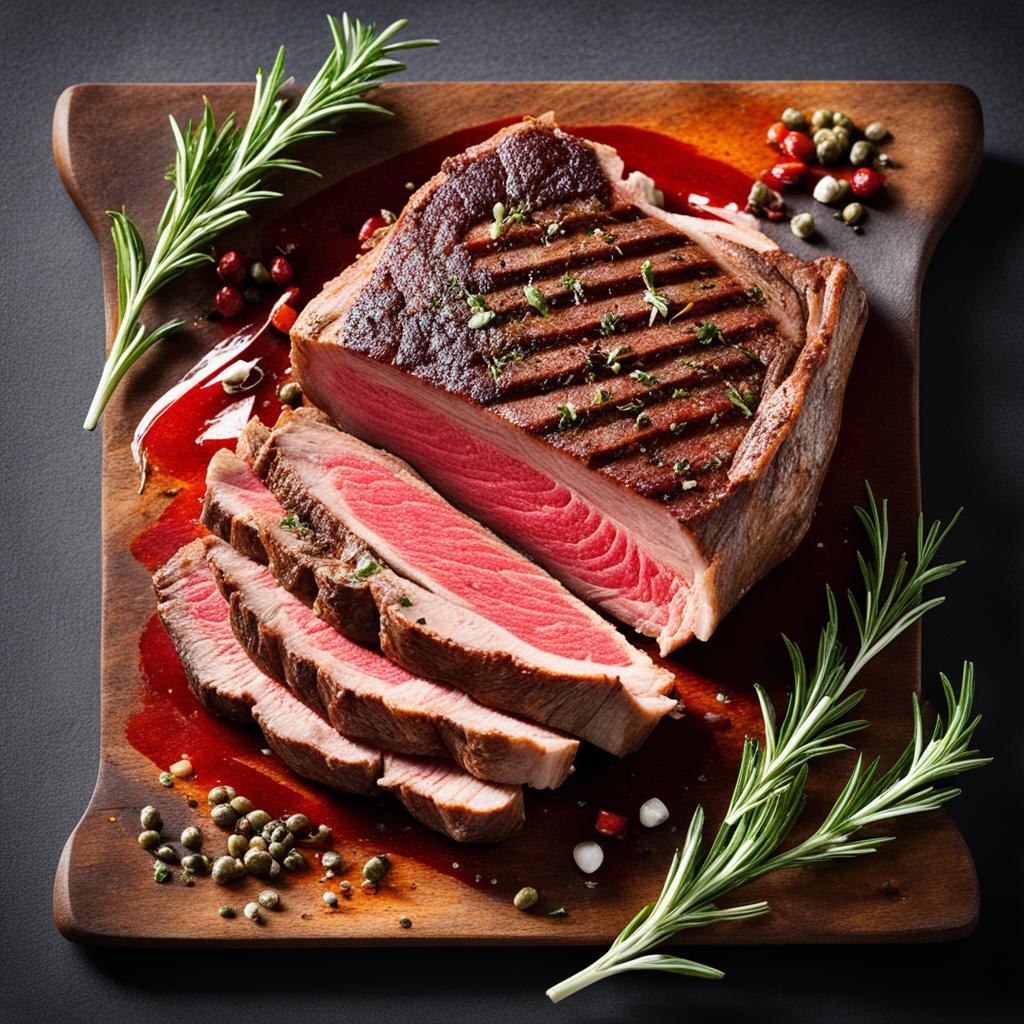
Mastering sous vide is key for perfect ribeye steaks. It starts with picking the right cut and knowing how to sear it just right. This ensures your steak is juicy and flavorful, boosting your dining joy.
Think of sous vide cooking not just as a method, but as a joy in cooking. With practice and care, you can make meals that wow your guests. These meals also satisfy your craving for tasty steak dishes.
Feel confident in sous vide cooking. Whether it’s a fancy dinner or a simple treat for yourself, nailing the perfect ribeye will upgrade your kitchen skills. It will make everyone at your table happy.