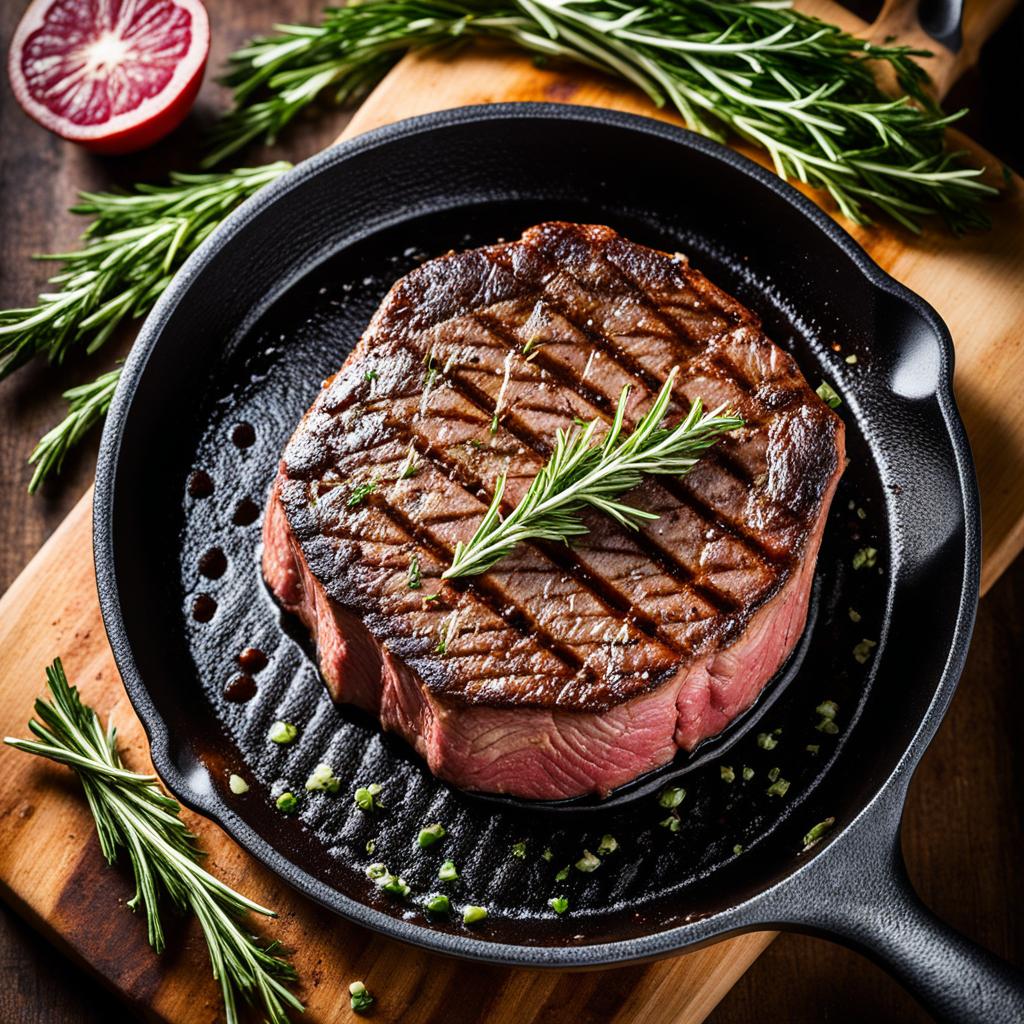
Did you know filet mignon is super tender, more so than other beef cuts? This makes it a top pick for steak fans. It shines when cooked right, especially in a cast iron skillet.
This fancy beef cut is perfect for celebrations or romantic dinners. It’s like bringing a fine dining experience into your kitchen. In this guide, you learn to cook filet mignon to perfection. You’ll find tips to make your cooking adventure shine. For more, see this resource.
What Makes Filet Mignon a Special Cut of Beef
Filet mignon is a favorite among steak lovers for its unique features. It is known for its tenderness and buttery taste. Knowing what makes filet mignon special can make your meals better.
Unique Characteristics of Filet Mignon
The melt-in-your-mouth texture of filet mignon is why it’s so loved. It comes from the tenderloin, from a muscle that doesn’t do much work. This means it has less fat. Cooking filet mignon right keeps it juicy and tender.
Filet Mignon vs. Other Cuts of Steak
Filet mignon and other popular cuts like ribeye or New York strip are quite different. Ribeye is known for its fat and strong taste. But filet mignon is more subtle and clean. It’s great for special moments when you want something truly special. Cooking filet mignon carefully brings out its best traits.
Essential Ingredients for the Perfect Filet Mignon
Making an amazing filet mignon starts with picking the right ingredients. Choosing the right cut of meat is key. It affects the taste and texture a lot. Seasoning it right brings out those natural flavors.
Choosing the Right Filet Mignon Cut
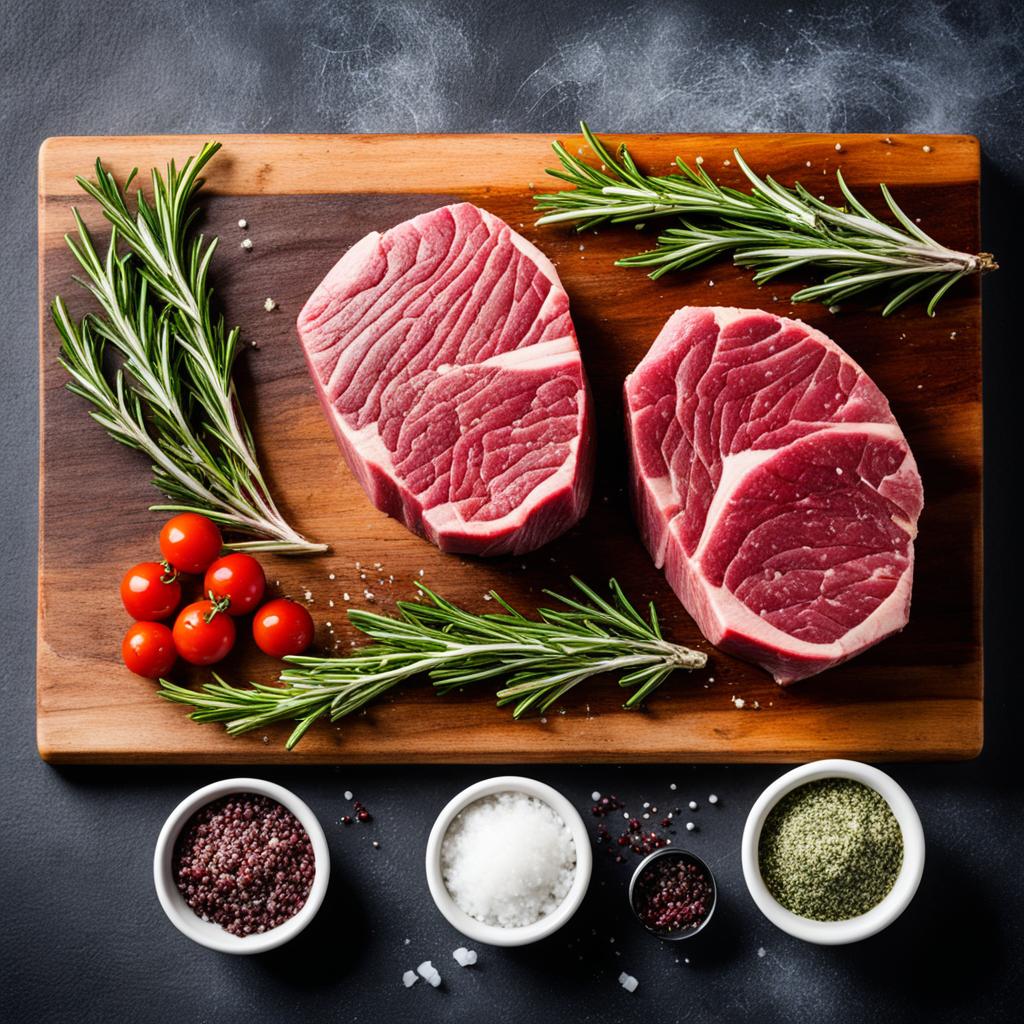
Choosing the right filet mignon is crucial. In the U.S., these cuts range from 6 to 8 ounces. That’s bigger than the 3 to 4 ounces common in Europe. Look for bright red cuts with nice marbling. This shows they are fresh and tasty. Go for top-quality beef like USDA Prime or Choice for the best taste.
Seasoning Your Filet Mignon for Flavor
The best seasoning for filet mignon is simple. Start with coarse salt and fresh black pepper. This lets the meat’s own flavor stand out. To make it even better, add some minced garlic and herbs like rosemary or thyme. These add a wonderful smell and depth of flavor. It turns your steak into a fancy meal.
The Importance of Room Temperature Steak
To cook the perfect filet mignon, start with a room temperature steak. Letting your steak warm up for 30 to 60 minutes before cooking helps it cook evenly. This step makes the steak tender and avoids toughness from a cold start.
Why You Should Let Your Steak Rest
It’s crucial to let your steak rest after cooking. This process allows the juices to move back through the meat. If you cut it right away, the juices will run out, making the steak dry. Letting it rest makes sure every bite is juicy and full of flavor. Here are some tips:
- Resting time should be about 5 to 10 minutes, depending on the size of the cut.
- Cover the steak loosely with foil to keep it warm while it rests.
- Slice against the grain to maximize tenderness when serving.

Preparing Your Cast Iron Skillet
Using a cast iron skillet can make cooking filet mignon so much better. These skillets are amazing because they keep heat well and cook food evenly. With proper preparation, your skillet will give your steak a perfect sear, keeping it juicy and flavorful.
Benefits of Using a Cast Iron Skillet
A cast iron skillet does more than cook. It’s a key piece in any kitchen. Let’s look at why:
- It holds and spreads heat evenly, which means better cooking.
- It’s good for both stovetop and oven use, making it very versatile.
- The more you use and season it, the less food sticks to it.
- With care, it can last forever, saving you money in the long run.
How to Properly Preheat Your Skillet
Getting your cast iron skillet hot first is key for a great steak. Here’s how to do it:
- Put your skillet on the stove over medium-high heat.
- Heat it up for 5-10 minutes. You’ll know it’s ready when water drops sizzle and vanish.
- To get an even better crust on your steak, wait until it smokes before adding oil or steak.
Perfect Cooking Technique for Filet Mignon in Cast Iron
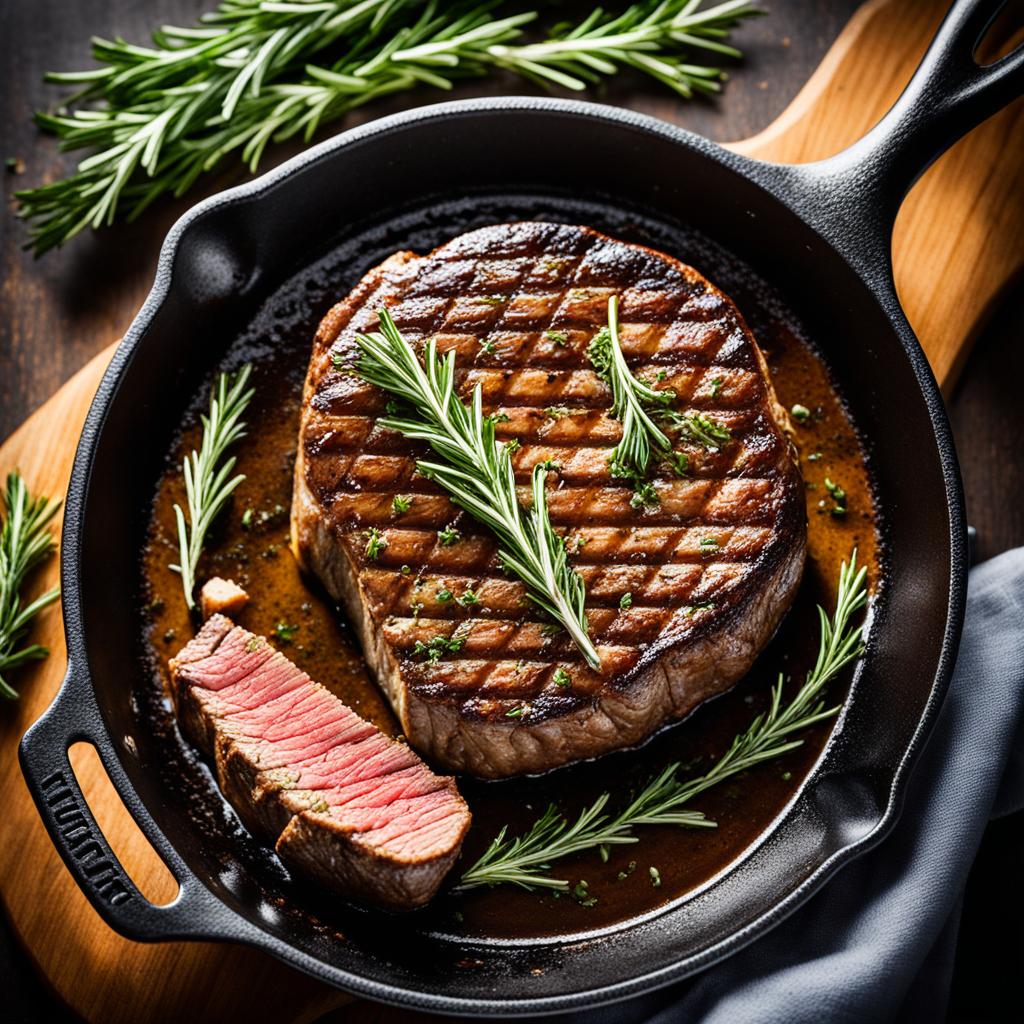
Learning how to cook filet mignon brings out its rich flavors and tenderness. Begin by searing the steak in a hot cast iron skillet. This method results in a delicious, caramelized crust.
Searing: The Key to a Great Crust
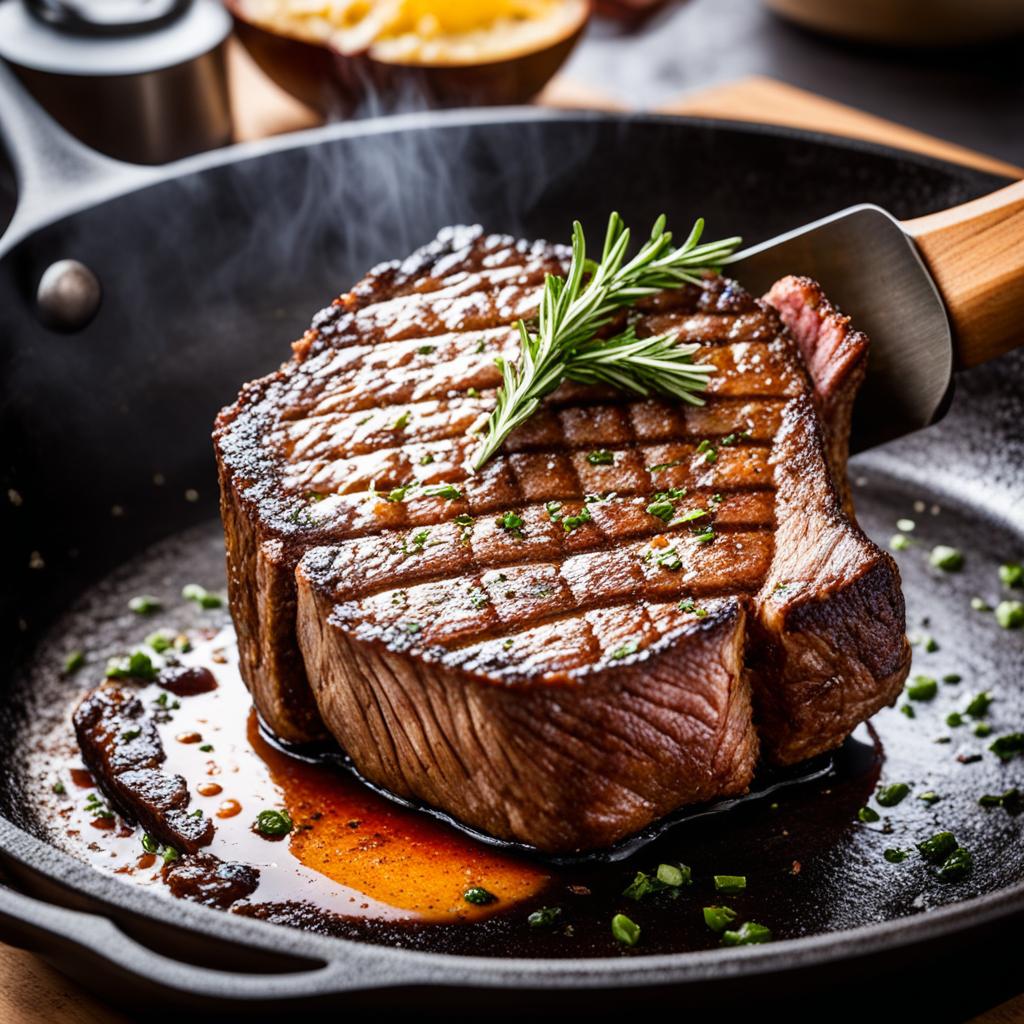
For a perfect sear, make sure your skillet is very hot before you add the steak. Put the steak in and don’t move it for a few minutes. This helps form a beautiful sear.
When searing the steak, it should turn a rich brown. This shows that the Maillard reaction is happening, which adds flavor. After a crust forms on one side, then you can flip it.
Finishing in the Oven for Tenderness
After searing, put the skillet in the oven to finish the steak. This step makes sure the inside cooks properly while staying moist. Heat your oven to 400°F. Cook the steak for about 6-8 minutes for medium-rare. Use a thermometer to know when it’s done just right.
Filet Mignon Cast Iron: Timing and Temperature Guide
Cooking filet mignon the right way means knowing the perfect temperatures. It’s key to watch the steak’s inside temperature closely. A meat thermometer helps you hit the exact doneness you want without overdoing it. Here’s how to get that steak just right, with some handy tips on using a thermometer.
Internal Temperatures for Desired Doneness
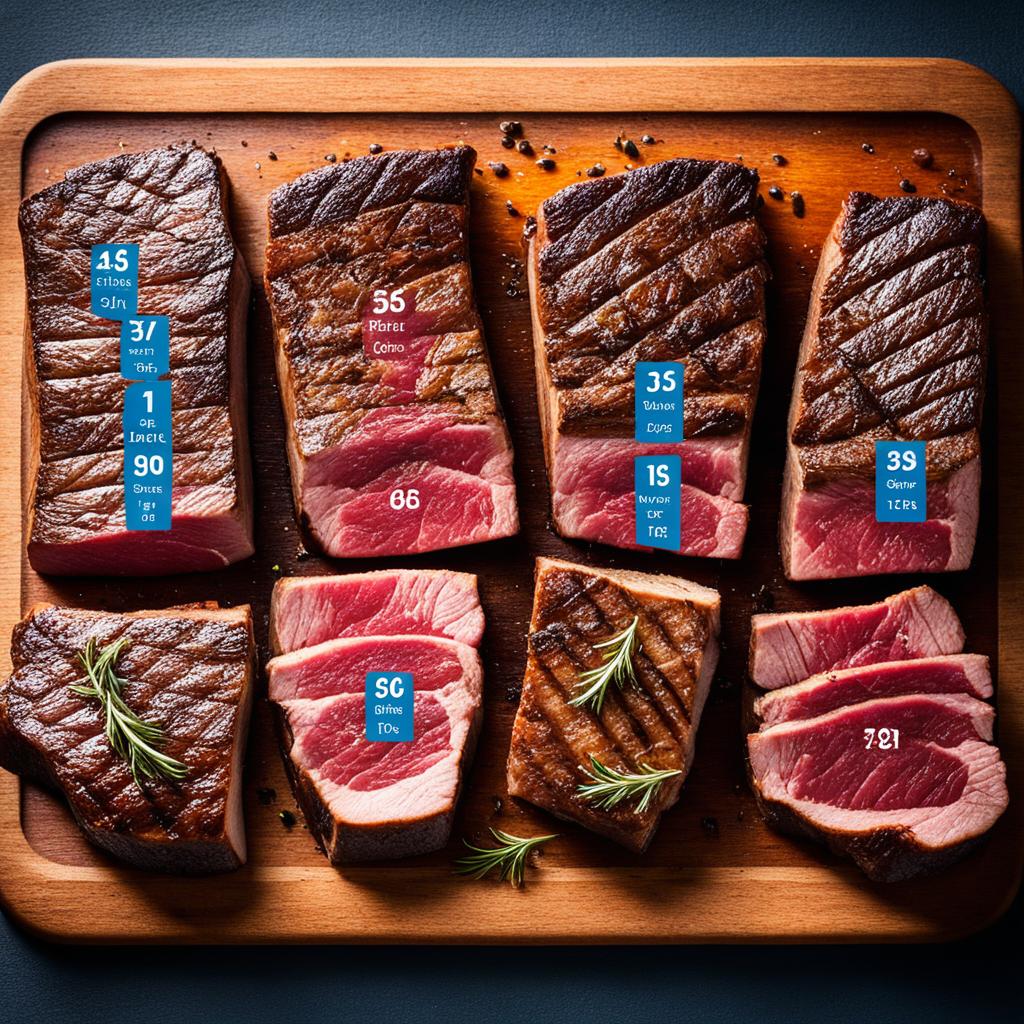
It’s important to know the temperatures that make your steak done to your liking. Here’s what temperatures to aim for with your filet mignon:
- Rare: 120-125°F
- Medium-Rare: 130-135°F
- Medium: 140-145°F
- Medium-Well: 150-155°F
- Well-Done: 160°F and above
Remember, your steak keeps cooking a bit after it’s off the heat. So, pull it off the fire a bit before it hits your target number.
How to Use a Meat Thermometer Effectively
Follow these tips to get a true read with your meat thermometer:
- Insert the thermometer into the steak’s thickest part, steering clear of bones and fat.
- For thinner steaks, check the temp from the side, not the top.
- Give the thermometer a few seconds to settle for an accurate read.
Keep an eye on those internal temps, and you’ll cook your filet mignon just right. Knowing these tips will make you a better cook. Your steaks will be delicious every single time.
Pairing Suggestions for Your Filet Mignon
Make your filet mignon meal even better with great sides and wines. Pairing them well is key to a wonderful taste. Try these ideas for the best steak sides and wines for a meal to remember.
Classic Sides to Serve with Filet Mignon
Choose classic sides to make your plate complete. Consider these tasty options:
- Roasted potatoes seasoned with herbs
- Garlic butter sautéed vegetables
- Creamy mashed potatoes with a touch of garlic
- Sautéed mushrooms in balsamic glaze
- Fresh green beans with toasted almonds
Wine Pairings That Complement Your Steak
Picking the right wine can make your steak even better. Go for light reds that don’t overpower the steak’s flavor. Here are wines that go well with steak:
- Pinot Noir
- Merlot
- Cabernet Sauvignon
- Malbec
- Syrah
Want to become a pro at making filet mignon? Check out this detailed guide. Choosing the perfect sides and wines will make your dinner special.

Tips for Achieving the Juiciest Filet Mignon
For the best taste and tenderness of filet mignon, follow these tips. It’s vital to slice the steak right and let it rest. These steps ensure juiciness and a great look on your plate.
Resting Your Steak for Optimal Juiciness
Let your filet mignon rest after cooking it to the perfect level. You should wait for five to ten minutes. This makes sure the juices spread out inside the steak. It stays juicy and tasty. Cutting too early means losing those juices, making it less delightful.
Slicing Techniques for a Perfect Presentation
Slice your steak against the grain for tenderness. This makes the fibers shorter, giving you a softer bite. Thin slices look good and make your dish more attractive. Place them nicely on the plate to wow your guests and make the meal special.

Common Mistakes to Avoid When Cooking Filet Mignon
When you cook filet mignon, not making basic steak errors can boost both flavor and softness. Using the right equipment and the correct cooking heat will ensure a tasty result every try.
Not Using the Right Tools
Choosing the right cooking tools is key for the best filet mignon. A trustworthy meat thermometer helps you keep track of the steak’s internal temp accurately. Without this, you might cook the steak too much or not enough. Other important tools include:
- A cast iron skillet for even heat distribution
- Tongs for flipping the steak without piercing it
- Sharp knife for proper slicing
These tools help make sure you follow top tips for a tender, flavorful steak.
Cooking at the Wrong Temperature
Cooking at the wrong heat is another big mistake. Cooking filet mignon on too low heat stops a good crust from forming. But, too high heat could burn the outside and leave the inside not done. Here’s how to avoid that:
- Make sure your skillet is really hot before adding the steak for the right sear.
- Keep an eye on the heat to cook the steak evenly.
By paying attention to these tips, you can steer clear of basic steak cooking errors. This way, you’ll make your filet mignon even better.
Conclusion
Starting your journey to cook the perfect filet mignon? Remember, every step is key. Choosing top-notch ingredients, bringing steak to room temperature, and using the right methods in your cast iron skillet matter. Proper seasoning and resting make it juicy.
Throughout this recap, you’ve learned crucial tips. Like how searing adds texture and checking the temperature ensures the perfect doneness. You’re now ready to wow guests or spoil yourself. These steak tips will boost your cooking skills and upgrade your meals.
It’s time to prepare for an unforgettable dinner. Making this outstanding steak at home adds class to any event. Your filet mignon journey starts now. It’s set to make your cooking ventures thrilling.