
Did you know cooking a ribeye to perfection is easy? Just heat it until the inside is 130 to 135°F. This exact heat is key for those who love grilling. With this ribeye steak guide, you’ll learn how to pick the best cut and cook it right.
This detailed guide shows the importance of internal temperature over time. It makes cooking a ribeye both fun and easy. Get set to up your grill skills and wow your loved ones with a tender, juicy steak every time.
Understanding Ribeye Steak
The ribeye cut is a highly favored beef cut known for its deep flavor and tenderness. It comes from the cow’s rib section. This steak is famous for its rich marbling. Marbling adds to its taste and juiciness, pleasing steak aficionados everywhere.
Ribeye steaks are available with or without bones, suiting different tastes. Some prefer bone-in for extra flavor; others like boneless for simplicity. This choice often depends on personal preference and how you plan to cook it.
Both amateur and expert cooks love using ribeye for their dishes. Its qualities are perfect for grilling, broiling, and pan-searing. Knowing more about ribeye steaks can make cooking more enjoyable. It helps in preparing delicious meals every time.
Importance of Cooking Temperature
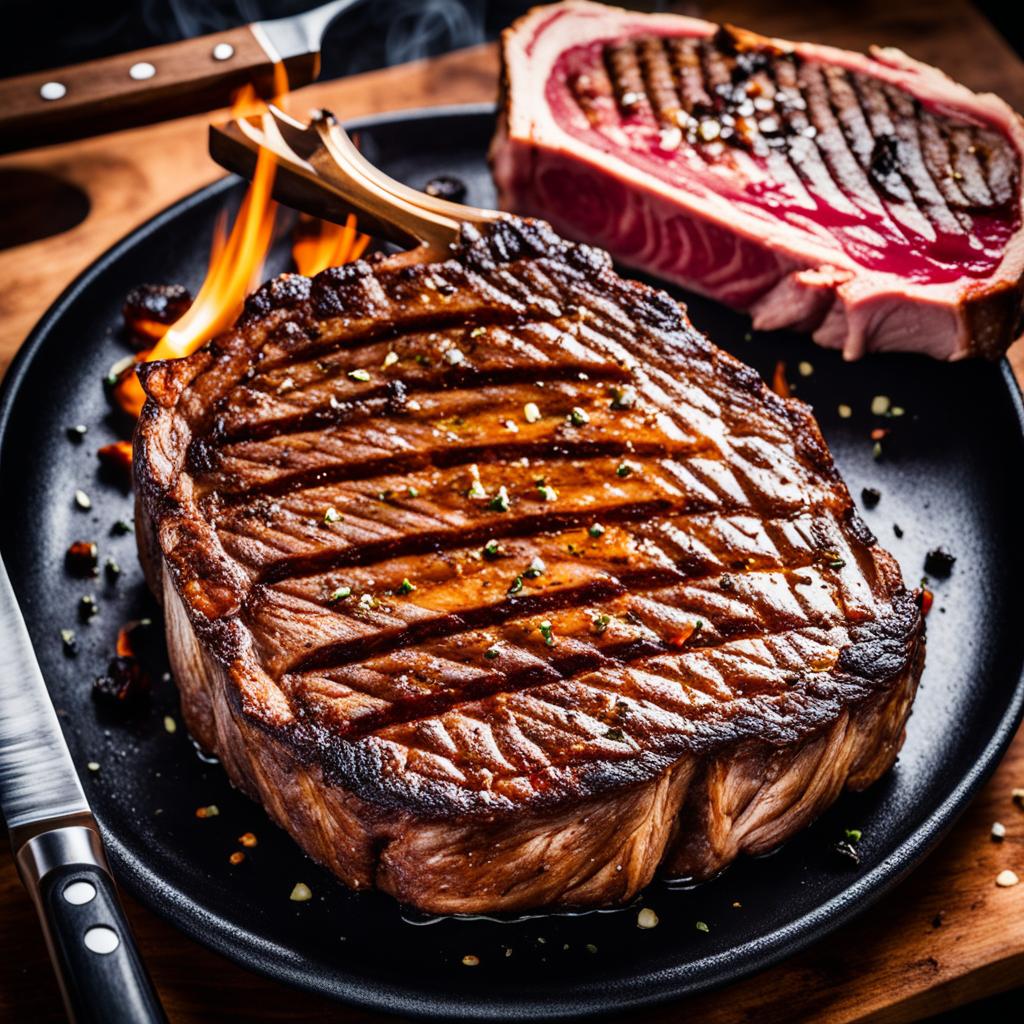
When you cook steak, getting the right temperature is key to a great meal. Unlike cooking time, internal temperature really shows if your steak is done. It’s crucial to know the right temperature, especially for a perfect medium rare ribeye.
By focusing on the internal temperature, your ribeye stays juicy and tender. Keeping an eye on the temperature gives you control over how it turns out. For a medium rare ribeye, aim for 130-135°F. This makes the steak juicy and boosts its flavor.
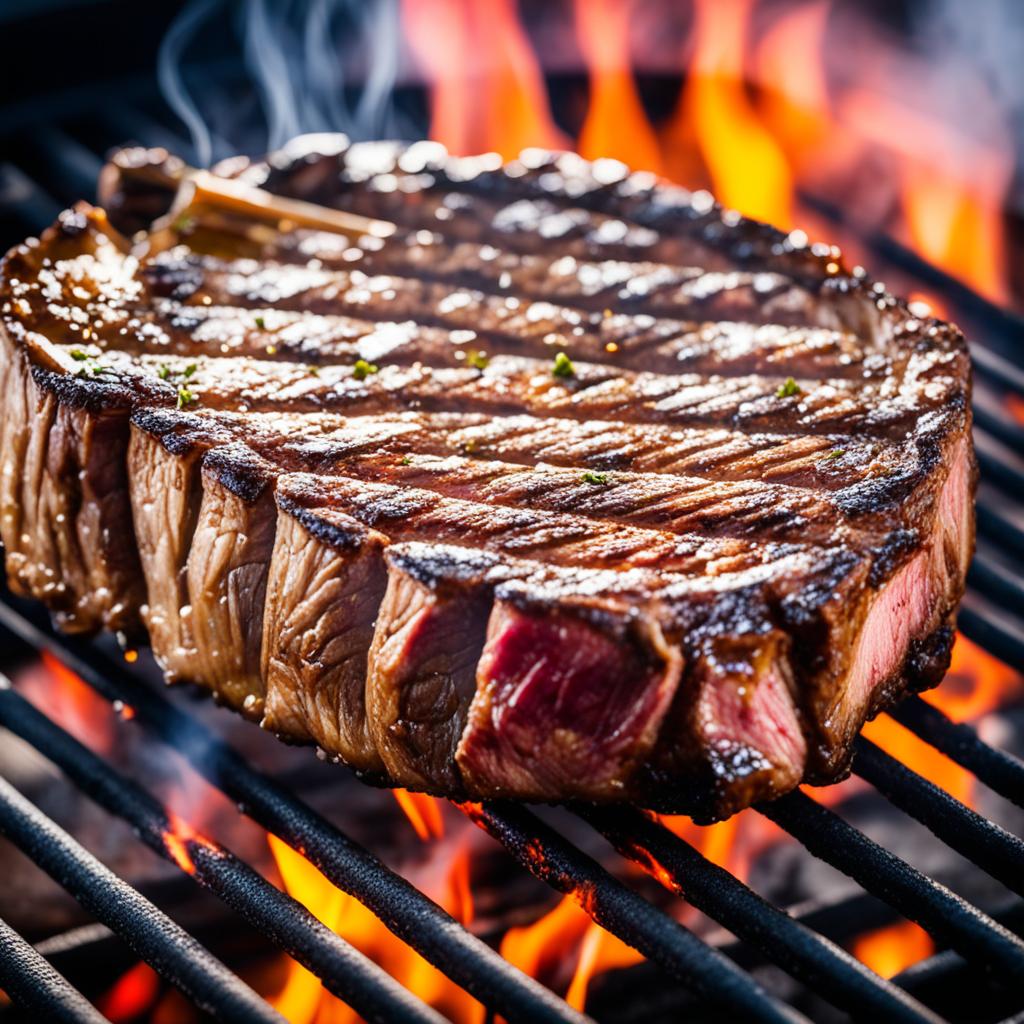
The way you cook a steak also matters a lot. Techniques like pan-searing or grilling create a crust but keep the inside tender. Getting these techniques right means your ribeye will taste amazing and be cooked just right. For tips on reaching the perfect temperature, check out this medium rare ribeye temp guide.
What Does Medium Rare Mean?
For many steak lovers, medium rare is the perfect steak doneness. It reaches an internal temperature of 130°F to 135°F. This makes your ribeye steak juicy and incredibly tender. The steak’s warm, pink center brings out its robust flavors.
In comparison to other steak temperatures, medium rare really stands out. Let’s look at them briefly:
- Rare: 120°F to 125°F – cool, red center
- Medium Rare: 130°F to 135°F – warm, pink center
- Medium: 140°F to 145°F – mostly brown, with a slight pink center
- Medium Well: 150°F to 155°F – mostly brown, slight pink
- Well Done: 160°F and above – brown throughout
Choosing medium rare improves your steak experience. It keeps the taste and texture that fans of ribeye steak love. By cooking steak to medium rare, you impress everyone with your meals. Each bite is cooked to perfection.
Choosing the Right Ribeye Cut
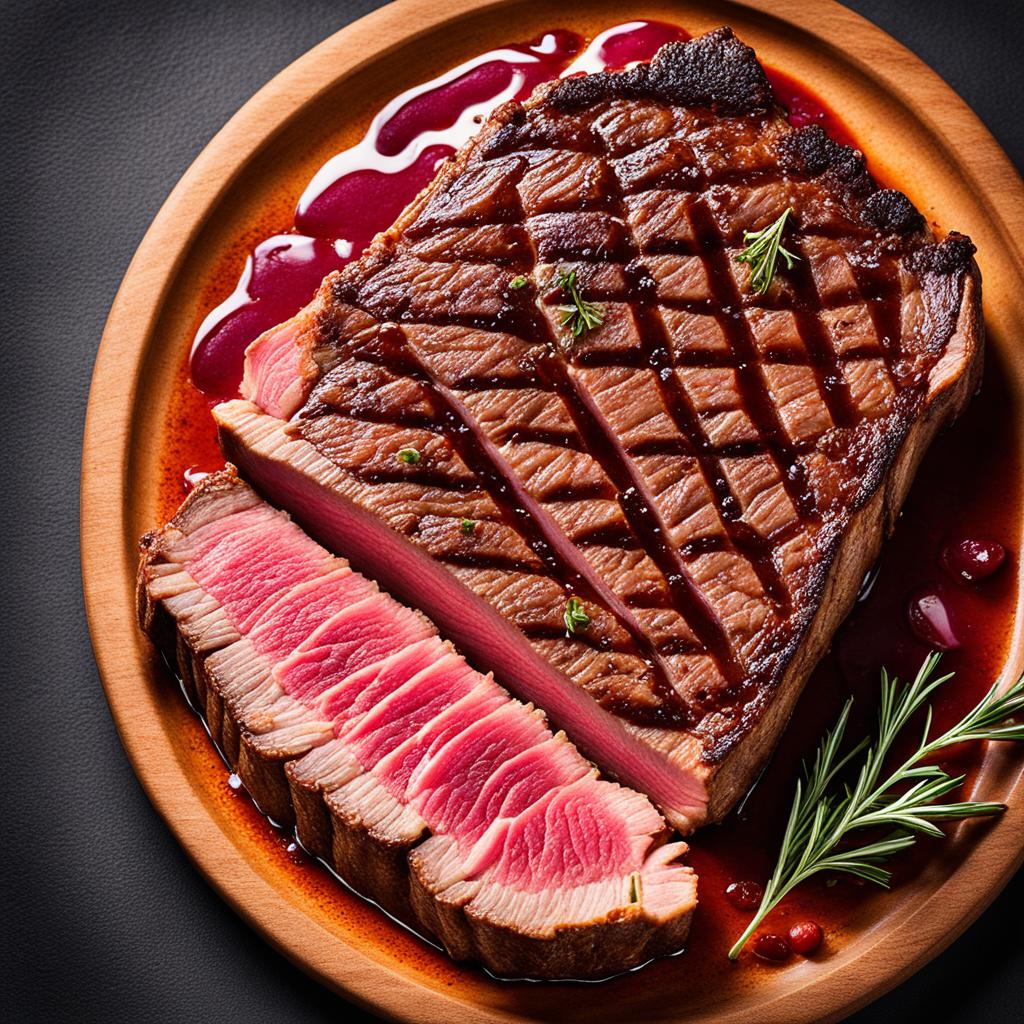
Finding the right ribeye cut can truly change your cooking game. Knowing the difference between bone-in and boneless ribeye is key. These options have their own benefits based on your cooking needs. The marbling of the ribeye also affects its flavor and softness.
Bone-In vs. Boneless Ribeye
Choosing between bone-in and boneless ribeye is up to you. The bone in the ribeye adds deep flavor, making the meat tastier as it cooks. This cut also cooks more evenly because it keeps heat well. Meanwhile, boneless ribeye is simpler to handle, favoring many who cook at home. Think about how you like to cook and the event when picking your ribeye.
Identifying Quality Marbling
Quality marbling is crucial when picking a ribeye. Look for steaks with plenty of fat specks across the meat. This fat makes the steak tender and flavorful. A steak with thick marbling is usually a sign of good quality. It gives that delicious, melting taste. Always check the steak closely at the store to pick the best one for flavor.
Perfect Medium Rare Ribeye Temp
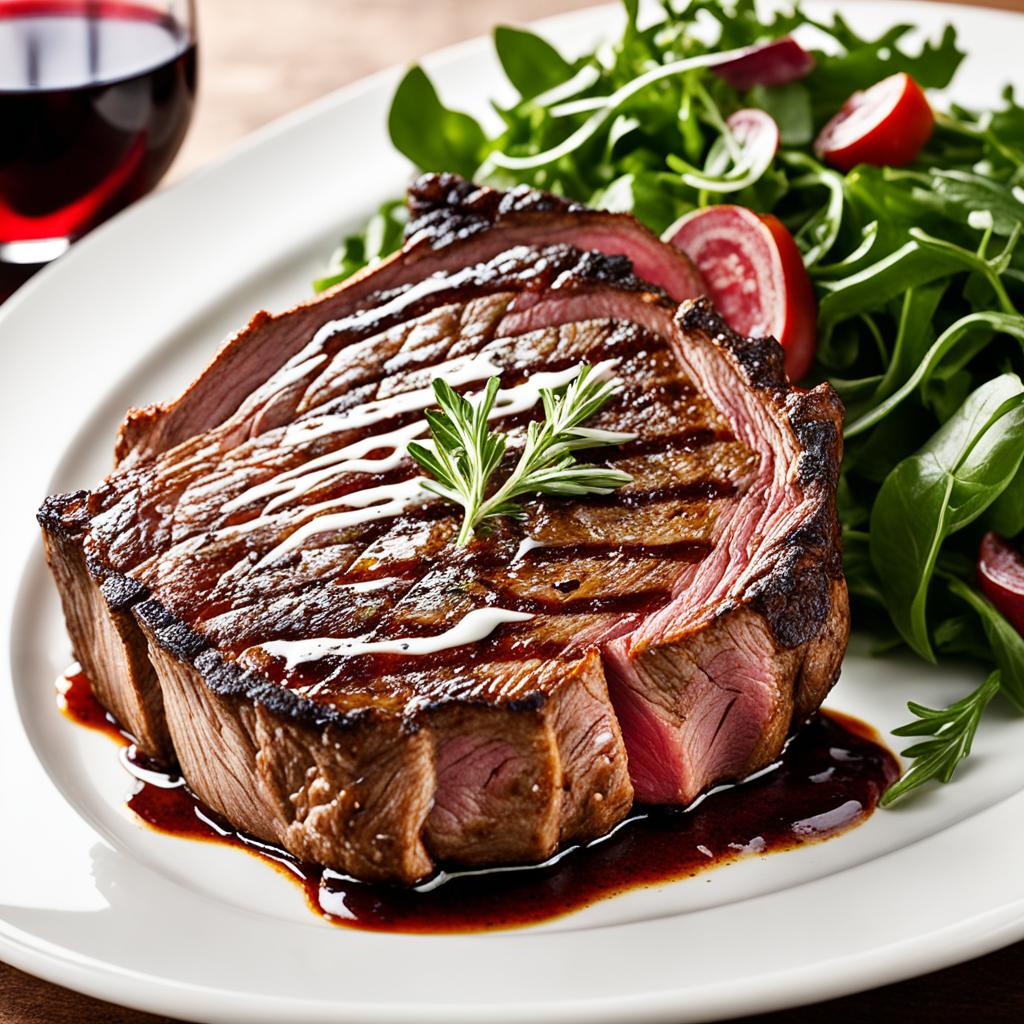
Getting that perfect medium rare ribeye requires precise temperature control. Your ribeye’s internal temp should be between 130°F and 135°F. Hitting this sweet spot ensures a juicy, tender steak, making your recipe a hit.
Optimal Internal Temperature for Medium Rare
For ribeye, internal temperature is key to perfection. Keep it within the ideal range for a medium rare finish. A meat thermometer is essential. It gives you the accuracy needed for the steak’s temperature.
How to Measure Temperature Accurately
Correct temperature measurement is crucial. Always use a digital meat thermometer for accurate results. Here’s the right way to do it:
- Insert the thermometer into the steak’s thickest part, steering clear of bones.
- Wait until the temperature reading settles.
- Take the steak off the heat once it’s between 130°F and 135°F.
Remember, the steak’s temp will slightly rise as it rests. This rest period helps the steak keep its juices and reach perfect doneness. This ensures your ribeye is both flavorful and tender inside.
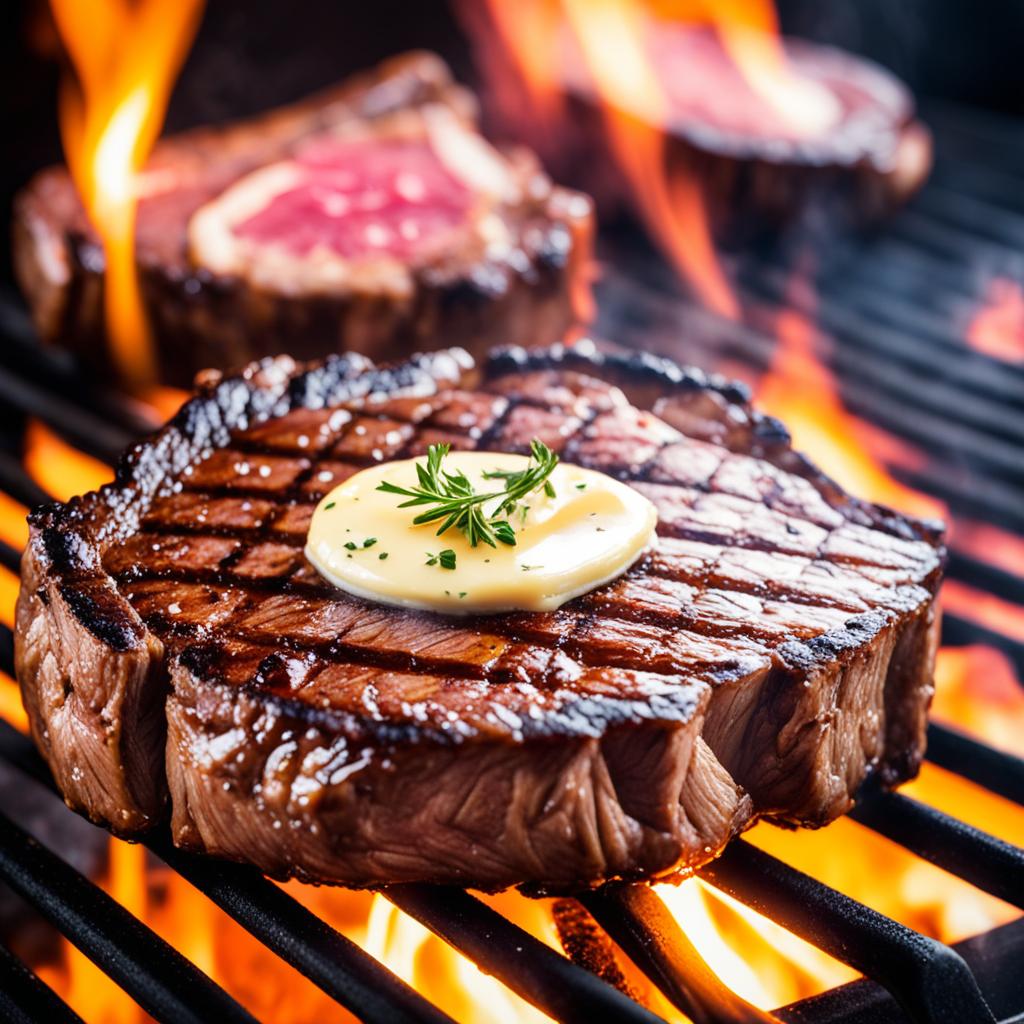
Preparing Your Ribeye for Cooking
Getting your ribeye ready is key for a tasty steak meal. Start by making sure it’s thawed out properly for even cooking. It’s best to thaw the steak in the fridge for a day. This method boosts flavor and keeps the steak moist and tender. Also, let the steak warm up to room temperature before cooking. This step is critical for that perfectly cooked medium rare steak.
Thawing and Bringing to Room Temperature
To get the texture you want, thawing the steak right is crucial. Here’s how to do it right:
- Place the ribeye steak in the refrigerator for at least 24 hours.
- If you need it quicker, seal the steak in a plastic bag and put it in cold water for about an hour.
- After it’s thawed, let the steak sit out for 30 minutes before you cook it.
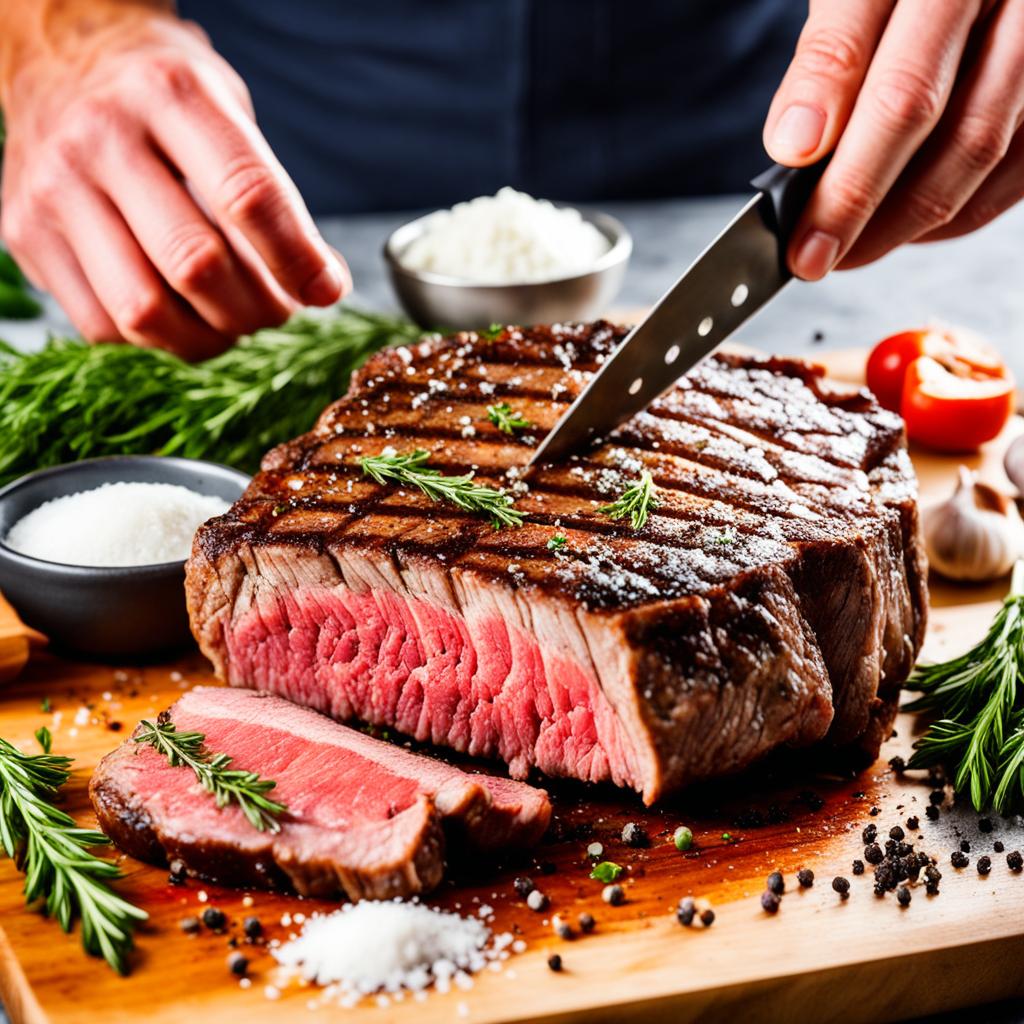
Seasoning Your Steak
Seasoning your ribeye is simple but very important. Just salt and pepper can really bring out the meat’s flavor. Here are some tips:
- Season both sides of the ribeye steak well with salt and freshly cracked black pepper.
- Try adding garlic powder, onion powder, or your favorite steak rub for more taste.
- Always dry the steak’s surface with a paper towel before seasoning. This helps create a nice crust when cooked.
Cooking Techniques for Perfect Ribeye
Mastering different cooking techniques can make your ribeye steak incredible. Each method affects its flavor and texture. Find out which techniques make your steak a medium rare delight below.
Grilling Methods: Charcoal vs. Gas
Grilling is classic for ribeye, giving it a smoky flavor.
- Charcoal Grilling: Takes extra prep time. You need to light the coals and wait until they’re ready. The smoky taste it adds is unmatched.
- Gas Grilling: It’s quicker and easier to control the temperature. You can still get a great crust and keep the inside tender.
Oven Cooking: Broiling and Roasting
Prefer your steak from the oven? Broiling and roasting are top methods.
- Broiling: Place your steak on the top rack near the heat. It’s an easy way to get a great crust.
- Roasting: It takes a bit longer but cooks your steak evenly. The result is a juicy, flavorful feast.
Pan-Seared Ribeye in a Skillet
Pan-searing gives ribeye a delicious crust. A heavy skillet, like cast iron, works best. Just heat your pan, add some oil, and cook each side for a few minutes. It’s a perfect method for any home cook to impress.
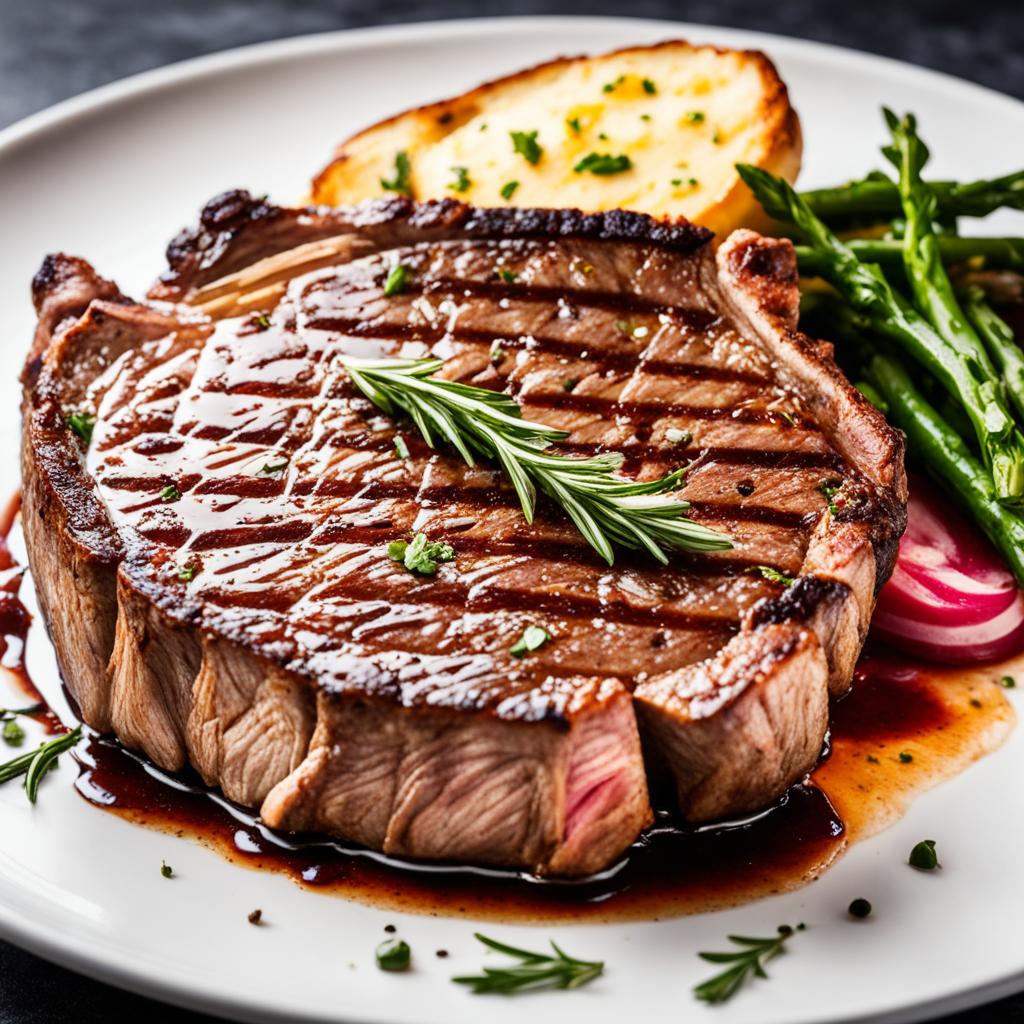
Resting and Serving Your Ribeye
After cooking your ribeye, let it rest. This is a must. The juices spread out, making the meat tasty and moist. Let it sit for 5-10 minutes before eating. This wait makes the steak even better.
Significance of Resting Time
Resting your steak makes a big difference. Cutting it too soon means losing juices, which dries out the meat. Let it rest, and you’ll keep the moisture and flavor. It’s a simple step that makes your meal much better.
How to Slice Ribeye for Optimal Flavor
After resting the ribeye, it’s time to slice. Cut against the grain of the meat. This makes the steak tender and easy to chew. Doing this ensures a wonderful meal for you and your guests.