
There are several available variations of beef cuts, each with special qualities. Before cooking, it’s crucial to know these several cuts and their optimum applications; some are only good for slow cooking, some for grilling, and some for barbecue and smoked meat.
The 8 Basics of Beef Cuts
We will discuss all the typical cow cuts in two halves: the hindquarter and the forequarter.
1. Forequarter Cuts: Ribs
Comprising the cow’s ribs and backbone, ribs are a soft and delicious piece of meat. The cow has 13 rib bones; only the last six fall into this category; the remaining six are with the “Plate”.
- Ribeye
- Sirloin Steak
- Cowboy & Cowgirl steak
Often the priciest pieces of meat, ribs are soft and delicious cuts; examples of these cuts are prime rib and ribeye steak. Among the various variations of beef rib cuts are sirloin steak, rump roast, and ribeye. Every cut has particular advantages.
One well-known for its rich taste and soft texture is ribeye steak. Less costly but ideal for roasting or slow cooking is rump roast. A leaner choice perfect for pan-frying or grilling is sirloin steak.
Located close to the shoulder, the sirloin steak boasts somewhat more fat than other steaks. This makes grilling perfect since the additional fat keeps the steak moist and juicy.

Found in front of the loin, the ribeye steak features a lot of bone. It has rather perfect marbling. One may present it boneless or bone-in.
Popular cuts of meat since they are quick to cook and taste great are beef ribs. Usually presented at steakhouses in 12-16 ounce cuts (or more), they are rather beautifully marbled and tender.
You may even come across Cowboy steaks and Cowgirl steaks, which are very thick slices, up to 1 and 1/2-inch bone-in cuts of the ribeye. Cut the steaks somewhat thinner if you are pan-searing them.
Should your grocery shop fail to provide for you, make sure to correctly season your wood-cutting board to preserve it and prevent food contamination.
2. Forequarter Cuts: Plate
The cow has thirteen bones in the ribs and backbones; the plate is the first seven ribs; the last six are in the upper part under “Ribs”. Usually, they are a bit tougher cut of beef, but they are tasty but not nearly as costly.
- Short ribs
- Ground Beef
- Skirt Steak
- Hangar Steak
- Bacon
- Pastrami
Popular menu item cuts are short ribs, ground beef, and skirt steak.

The very delicious short ribs can be “Korean cut,” in which case they slice them against the bone in 1/4″ thickness, or slow cooked, in which case they come as bone-in short ribs.
Common dishes, including carne asada at Mexican restaurants, feature the skirt steak, which is found on the beef plate primeval.
A suitable choice for braising or ground beef, the beef plate is a thin, cheap, easy-to-cook piece of meat.
3. Forequarter Cuts: Brisket
- Corned beef
- pastrami
- stews
- brisket

Coming from the breast or lower chest of a cow, the beef brisket consists of two primary cuts: the flat and the point. The flat is the larger and the lower of the two and is separated from the point by a layer of fat.
Sometimes, the fat has to be cut first; sometimes, you may find a brisket ready for cooking.
Although the brisket comes in several sizes, it can be really big—between 12 and 15 pounds. Make sure you have a cutting board big enough to fit the size of a brisket if you intend to season, cut and cook one.
A brisket is somewhat costly and ideal for low “n’ slow BBQ; its high fat content causes the beef brisket to become quite tender and tasty when slow-cooked.
Along with other cuisines such as stews, chilis, and sandwiches, beef brisket can be used to make corned beef and pastrami.
4. Forequarter Cuts: Beef Shank
- foreshank
- hindshank
Affordable to purchase and best utilized for low and long cooking, the beef shank is a tough and full-bodied part of meat used in producing osso buco, a rich Italian meal.
The foreshank, a leaner, rougher cut of meat best fit for braising or stewing, and the hindshank, a fattier, more flavorful cut of meat best suited for slow roasting or braising, comprise the cuts of beef shank.
A lean, tough cut located at the top of the legs, shanks are a primitive or sub-primal zone.
5. Hindquarter Cuts: Round
Cheap cuts fit for slow cooking are found in the area near the cow’s hind legs, known as round cuts.
- Top round
- Bottom Round
- Eye Round
- Round Roasts
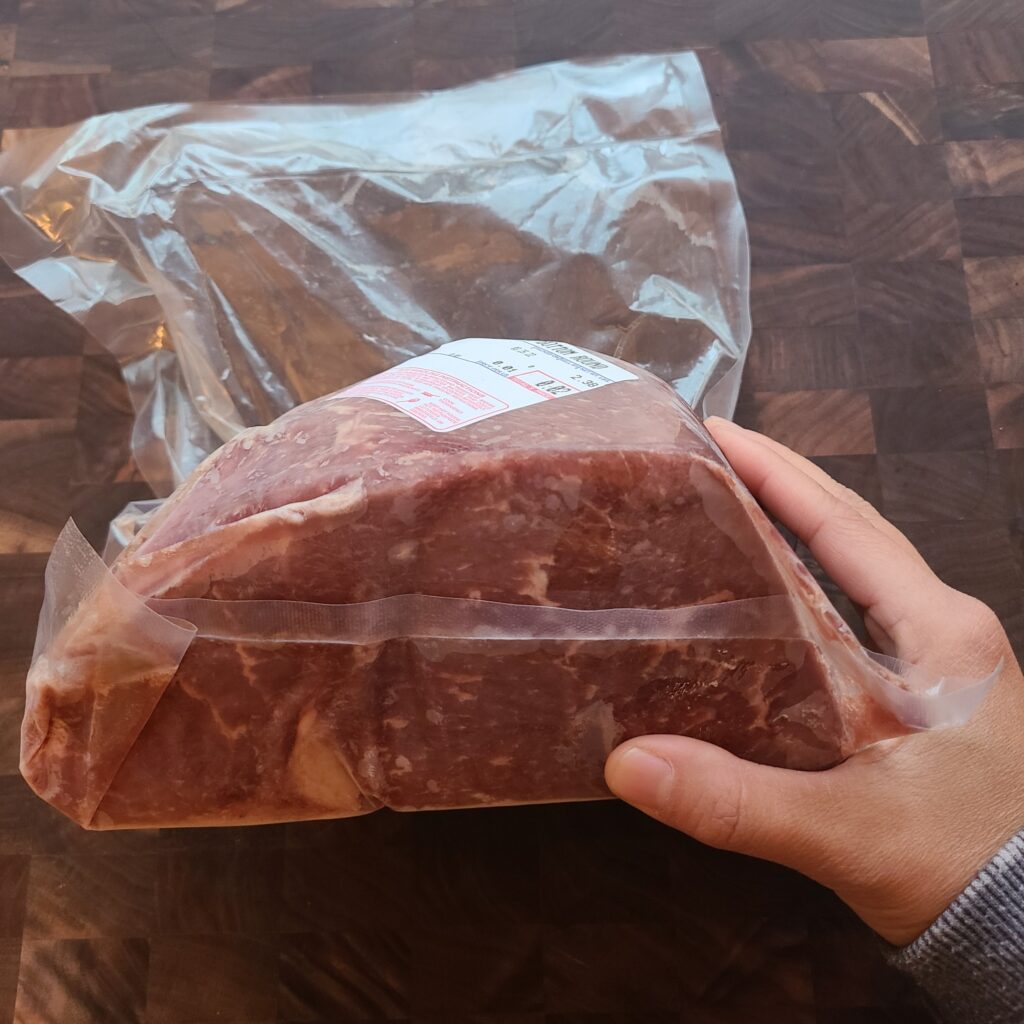
Usually tough meat, this section is exceedingly lean; cuts include top round, bottom round, eye of round steak, and top or bottom round roasts. Often used for hamburgers, the Round Beef Cut is cheap and rough.
The Top Round Beef Steak is flexible and can be utilized in various ways, such as ground beef or thinly sliced. It is most commonly found in Vietnamese Pho noodle soup (that thinly sliced meat you get in Pho noodle soup).
6. Hindquarter Cuts: Short Loin
One of the most sought-after cuts from the hindquarter is beef short loin; the cow doesn’t use this area much; therefore, it’s rather soft and has great marbling. This is where you will discover all the pricey cuts of beef.
- Sirloin
- Tri-tip steaks
- bone-in strip steak (Club Steak)
- T-bone
- Porterhouse
- Filet Mignon
There are two or three porterhouse steaks and six or seven center-cut T-bones at the sirloin end. The first-cut steaks are club steaks or bone-in strip steaks.
One of the most flexible steaks for grilling is the t-bone steak, which falls between sirloin and strip steak and has a modest bit of both muscle and fat in it. You can cook it to perfection any way you like your meat done.

From the bottom rib of the cow near the loin, Porterhouse steak, sometimes referred to as “king of the steaks,” is a sizable cut weighing up to 32 ounces with a t-shaped bone and tenderloin and strip steak.
Though a porterhouse is substantially broader (1.25 inches), a T-bone has less of the tenderloin and is usually thinner (around 0.5 inches).
Extremely lean with practically no fat in it, the most tender piece of cut you will find, filet mignon, commonly known as “tenderloin steak,” is cut from the tenderloin. This incredibly expensive cut of beef is only 2-3% of the cow.

On restaurant menus, most filet mignon cuts are sold in 6oz, also known as petite sirloin; the most popular is 8oz, although occasionally, are also served as a 10oz portion.
Though you may find your friends refer to the filet mignon just as “filet,” “filet” is actually any cut of boneless beef.
7. Hindquarter cuts: Beef SIR-loin

The cow’s loin is directly behind the ribs and is a muscle she does not use too much; hence, it is quite sensitive and has excellent marbling. There are two distinctive areas: the SIR-loin and the SHORT-loin.
Comprising cuts like sirloin steak, top sirloin, and tri-tip steak, the sirloin is the rearmost of these two areas.
8. Hindquarter Cuts: Beef Flank
- Flank
- London Broil

A popular and lean cut of beef, the flank cut comprises London broil and flank steak. A reasonably tough cut of beef, the flank steak should be cooked using a tenderizing technique like marinating to help make it more palatable.
Most typically, it is presented thin, sliced, and/or stir-fried. Usually used in meals like PF Chang’s Mongolian Beef, flank steak is easy to prepare; if you choose flank, be ready to get slicing before serving it. You will also need to know the best wood for cutting boards to guarantee your knife isn’t getting harmed in the process.
For individuals watching their fat intake, this cut of beef is also rather lean.
Round-Up of the Steak Cuts
Located close to the animal’s spine, the most often used kind of steak is the strip steak, which has a reasonable fat content that keeps it tasty and juicy.
Perfect for grilling, the sirloin steak is found close to the shoulder and has somewhat more fat than other steaks. This helps to keep the steak wet and juicy.
Located in front of the loin, the ribeye steak has a stronger taste that some people like because it has lots of bone.
One of the most flexible steaks for grilling is the t-bone steak, which is between the strip steak and sirloin and has a modest bit of both muscle and fat in it. This allows you to cook it to perfection in any way you like your meat done.
Where on the Cow Is “Tomahawk Steak”?

Cut from the cow’s rib primal—more especially, from the ribeye muscle along the spine—the tomahawk steak derives its name from the fact that it is frequently cut with a long bone that resembles a tomahawk axe.
Often regarded as a premium cut of meat, the tomahawk steak is well-suited for grilling or broiling and boasts a strong, meaty taste and sensitive texture.
The most costly steak suited for sharing is tomahawk steak. Except for very high-end steakhouses, most steakhouses do not even offer this kind of steak; it is distinguished by a massive curving bone that is usually presented alongside the steak for an eye-catching display at the steakhouse; it is indeed a show-stopper.
If you search internet forums, you may find discussions about how “overpriced” this steak is.
Meats are sold per pound; hence, you are paying for the bone as well. In terms of price, this is not the best bang for your money; ounce for ounce, it costs more than a ribeye steak, but you get less meat.
Unless otherwise specified, most of the time, the steak will come out already cut. Unless you prefer it this way, of course – it is definitely easier.
Pro Tip: If you’re going to order this at the steakhouse, ask for the steak not to be cut up. I find that it’s a lot more fun to cut my own steak.
What Cut Is Best for Slow Cooking, Grilling, or Stir Fry?
Beef will be more tender and juicy, the higher its grade. Various techniques of cooking beef—slow cook, grill, smoke, stir fry, etc.—will produce varying textures.
- Slower cooking calls for brisket, round roast, shank, rump, or chuck.
- Porterhouse, filet mignon, sirloin, t-bone, London broil, tomahawk—for grilling
- For stir fries: London broil, flank
What Are the Different Grades of Beef?
The hierarchy of quality goes like this: Prime > Choice > Select.
The highest grade and most marbling are found in prime meat. Though it has less marbling than Prime, Choice beef is also rather good.
The lesser grade of meat with little to no marbling is select beef. Different kinds of beef include Chuck Roast, Rump Roast, Sirloin Steak, T-Bone Steak, and Porterhouse Steak.
How Long Does Beef Last in the Freezer?
Use within three months for maximum flavor; keep up to one year; if vacuum packed carefully and frozen well, it will stay for up to two years in the freezer. You will know to throw it out when the red beef starts to turn gray.
What Is the Most Expensive Cut?
- Tomahawk is the priciest cut.
- Usually regarded as the “best” cuts are those from the loin and rib area; cuts like filet and ribeye are costly and tender.
- Generally speaking, the meat gets more tender (and costly) as the distance from the horn to the hoof increases.
What Is Kobe Beef?

Usually served as steak or sukiyaki, Kobe beef is regarded as a delicacy and comes from the Tajima strain of Wagyu cattle. Its high degree of marbling, or intramuscular fat, gives it a distinctive taste and tenderness. Kobe beef is named after the city of Kobe in Japan, where cattle were first raised.
What Cut of Meat Is Roast Beef?
Roast beef is usually made from a chunk of flesh from the animal’s upper hindquarters, sometimes referred to as the round.
Lean and mild in taste, the top round, bottom round, and eye of round cuts of beef are the most often used cuts for roast beef and fit for roasting.
What Is the Most Tender Steak?
The most tender cuts of steak originate from the rib and loin portions of the animal; these cuts include the ribeye, tenderloin, and sirloin. These cuts are noted for their tenderness since they come from muscles that do not get a lot of exercise, so rendering the meat more tender.
Sometimes referred to as the “filet mignon,” the short loin is very sensitive since it comes from the muscle running along the spine and does not do any work at all.
What Is Angus Beef?
Angus beef is a variety of beef derived from cattle reared under the Angus breed; renowned for their great quality of meat, Angus cattle are distinguished by black hair and strong physique.
Often regarded as some of the greatest in the world, Angus beef is regularly utilized in high-end steakhouses and restaurants. Its rich, strong taste and soft texture appeal both to consumers and chefs alike.
What Is Hanger Steak?

Made from the diaphragm of the animal, hanger steak—also called the hanging tender or bistro steak—is a long, narrow strip of flesh hung from the steer’s ribcage and joined to the last rib and the spine.
Usually cooked over high heat and served rare to medium-rare, sliced against the grain to optimize softness, hanger steak is a favorite option among steak enthusiasts because of its strong, meaty flavor and sensitive, juiced texture.
Dishes that frequently call for hanger steak include steak frites and bistro steak salads.
The Best Cuts of Beef for Stews
Usually coming from the tougher, well-exercised muscles of the animal, the best cuts of beef for stew are the chuck, shoulder, brisket, and shank.
These cuts are less expensive than other cuts of beef, which makes them a more sensible choice for stew; they also have more connective tissue, which breaks down during the extended boiling time of a stew and helps to produce a rich, flavorful broth.
What Are Variety Cuts
If you believe in “eating the whole cow”, you cannot ignore the organs and the bones! Variety cuts of beef are often disregarded despite the unique culinary experience they offer.
These cuts include parts like the liver, heart, and tongue, which may not be as familiar to many. Despite their unfamiliarity, these cuts can be quite flavorful and nutritious, offering a different perspective on beef consumption.
Liver

For instance, the liver in itself is a superfood; it is high in nutrients like iron and vitamin A. Ounce-for-ounce, the liver packs the most nutrients when compared to any other part of the cow; some influencers in the natural health space eat them raw. However, they are more commonly found thinly sliced and cooked with red onions.
Most would find the flavor profile to be quite unpleasant, so most would rather get liver supplements instead. If you are considering this, the best desiccated liver is from grass-fed cows.
Heart
Usually slow-cooked as the texture is somewhat chewy and unacceptable; otherwise, the heart is also a lean-cut high-protein meat that can be utilized in a number of cuisines. For a tender and flavorful dish, check out this Beef Heart Slow Cooker recipe, which is a great way to make the most of this lean and protein-rich cut.
Beef Tongue
Known for its soft texture, the cow tongue is a delicacy in many different countries. If you have visited a Japanese hot pot restaurant, you may have seen thinly sliced beef tongue.
This variety of slices provides a chance to explore many flavors and textures, even if their cooking methods could differ.
Bones
Rich in collagen and marrow, cow bones are a sought-after ingredient in the kitchen, especially when preparing savory bone broth. Their two most often used applications are slow-cooked for bone broth or grilled and presented as an appetiser.
Broth
Usually, you would slow-cook bones for 12 to 24 hours with some herbs. Bone broth can be enjoyed on its own or as a base for cooking any recipe that calls for beef broth. These bones, often derived from beef cuts like knuckles and marrow bones, offer vital nutrients and a pleasing depth of taste.
Broiled for Bone Marrow

Bone marrow butter is an optional add-on for your steak in the same section you would find flavored butter in luxury steak houses.
Beef bones can also be found in the appetizer section of some high-end steak houses or French restaurants. It is usually the long portions of bones, canoe cut, which are broiled and served with herbs or spices.