
When it comes to achieving the perfect steak, reverse sear filet mignon is the method that guarantees a tender, juicy interior with a beautifully crisp crust.
By slowly cooking the filet mignon at a low temperature and finishing it with a quick, high-heat sear, you get the best of both worlds: even cooking throughout and a golden-brown sear. This technique is perfect for anyone who wants restaurant-quality results in their own kitchen.
As you follow this process, you’ll find that precision is key, from monitoring the temperature to mastering the timing. Keep reading to discover the step-by-step guide that will turn your next meal into a masterpiece.
What Sets Reverse Searing Apart?
Reverse searing is a cooking method that flips the traditional approach. Instead of starting with a high-heat sear, you cook the steak slowly in the oven at a low temperature first. This allows the meat to cook evenly from edge to center, ensuring that every bite is perfectly tender.
Once the filet mignon has reached your desired internal temperature, it’s quickly seared in a hot pan to form a golden, flavorful crust. This final sear locks in the juices and creates a rich, caramelized exterior.
With reverse searing, you take control of every step, delivering restaurant-quality filet mignon from your own kitchen, with perfect texture and taste in every bite.
Related Article: If you’re looking to try the reverse sear technique on other cuts, check out our recipes for Reverse Sear New York Strip and Reverse Sear Ribeye.
Prepping Your Filet Mignon for Perfection
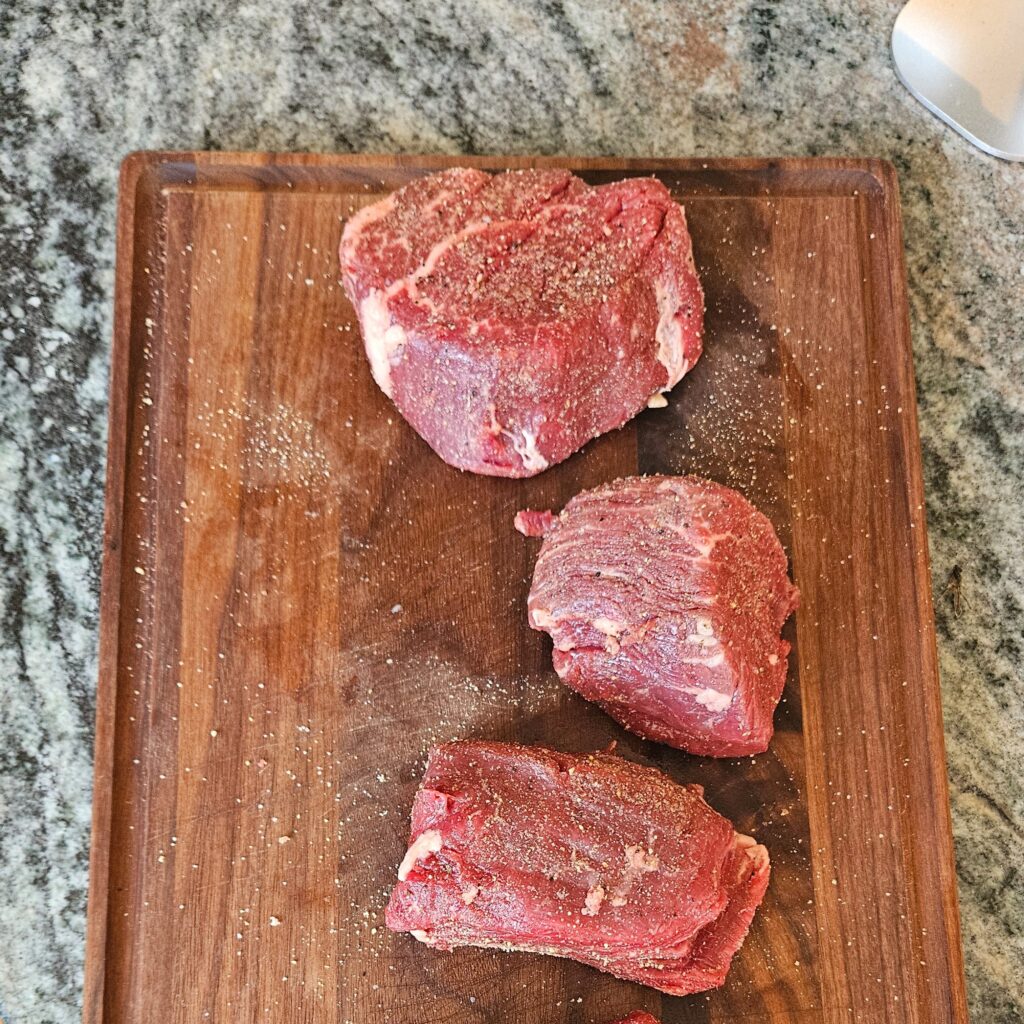
Getting your filet mignon ready for the reverse sear method doesn’t have to feel like a challenge. Start by dry brining—this simply means coating your steak generously with salt. This process enhances tenderness and boosts the flavor, giving you a juicy and savory filet mignon.
Let your steak rest in the fridge for several hours or even overnight. This allows the salt to fully penetrate, making the meat more tender and flavorful. Patience here is key—it’s the quiet step that ensures your filet mignon turns out perfectly cooked and full of rich, delicious flavor.
How to Reverse Sear Filet Mignon
Ready to perfect the reverse sear technique for filet mignon? This method ensures a juicy, tender interior with a beautifully seared crust, combining low heat and a quick sear for ultimate steak perfection. Here’s how to do it:
Step 1: Room Temperature Rest
Before cooking, let your filet mignon sit at room temperature for 30-40 minutes. This simple step ensures that the steak cooks evenly, preventing cold spots that can cause uneven doneness. Allowing the meat to rest at room temperature is key to achieving a more uniform cook throughout.
Step 2: Oven Time
Preheat your oven to 250°F. Place the filet mignon on a wire rack set over a baking sheet, allowing heat to circulate evenly around the meat. Cook the filet mignon steak until it reaches 10-15°F below your desired final temperature.
For medium-rare, aim for an internal temperature of 130°F. Use a meat thermometer to check the progress, ensuring that you don’t overcook the steak.
Step 3: Searing Finale

Once the steak reaches the target temperature, it’s time to sear. Heat a cast-iron skillet or heavy pan until it’s smoking hot. Add a small amount of oil with a high smoke point, such as avocado oil. Sear the filet mignon for 1-2 minutes on each side until you achieve a golden-brown crust.
For added flavor, toss in some butter, garlic, and fresh herbs like thyme, basting the steak as it sears to infuse even more richness.
Step 4: Final Check
After searing, use a meat thermometer to ensure the steak reaches your desired doneness. Once the steak is seared to perfection, let it rest for a few minutes before serving. This brief rest allows the juices to redistribute within the meat, ensuring every bite is as juicy as the last.
Reverse Sear Filet Mignon: Timing and Temperature

Getting your filet mignon just right is all about balancing time and temperature. Using a meat thermometer is your best tool for making sure the steak reaches the perfect level of doneness.
The reverse sear technique starts with cooking the steak at a low temperature, letting it slowly come up to just below your desired final filet mignon temp. Then, it’s finished with a high-heat sear for that perfect crust.
Here’s a little table that will be your cheat sheet for meat thermometer use mastery:
| Doneness | Remove at Temp (°F) | Final Temp (°F) |
|---|---|---|
| Rare | 120 | 125 |
| Medium Rare | 130 | 135 |
| Medium | 140 | 145 |
| Medium Well | 150 | 155 |
| Well Done | 160 | 165 |
Pairings and Accoutrements: Elevating Your Filet Mignon

You’ve perfected the art of reverse searing your filet mignon, but what truly elevates your steak dinner are the perfect pairings and side dishes. Here’s a guide to make your meal unforgettable.
Best Wines to Complement Your Steak
- Malbec: This bold red wine enhances the richness of your steak without overpowering it.
- Cabernet Sauvignon: Its robust character pairs perfectly with the tender, juicy nature of filet mignon.
- Merlot: For herb-seasoned steaks, Merlot brings out earthy flavors in a smooth, subtle way.
- Zinfandel: Its fruity notes balance out the savory, salted cuts beautifully.
Side Dishes that Harmonize with Your Main Course
- Garlic Roasted Mushrooms: Adds a deep, savory complement to the steak’s richness.
- Creamy Horseradish Mashed Potatoes: A velvety side with a subtle kick, pairing well with the steak’s tenderness.
- Herb-Infused Grilled Asparagus: Light and flavorful, this side is perfect for herb-seasoned steaks.
- Heirloom Tomato Salad: Offers a fresh, tangy contrast to the steak, ideal for simply seasoned filet mignon.
These perfect pairings and sides will bring out the best in your filet mignon, turning an already impressive dish into a truly memorable feast.
Conclusion
Reverse sear filet mignon is more than just a cooking method; it’s the secret to creating a steak that’s flavorful, tender, and perfectly cooked every time. By starting with a slow roast and ending with a high-heat sear, you can achieve a professional-quality steak right at home.
Remember to use a meat thermometer for precision, and don’t rush the process. Give this method a try, and you’ll never look at steak cooking the same way again!
PrintThe Ultimate Reverse Sear Filet Mignon Recipe

This reverse sear filet mignon recipe is perfect for achieving a tender, juicy steak with a flavorful crust. By cooking the filet mignon low and slow, followed by a quick sear, you’ll get restaurant-quality steak every time.
Ingredients
- 2 filet mignon steaks, 2 inches thick
- 2 tablespoons kosher salt
- 1 tablespoon freshly ground black pepper
- 2 tablespoons olive oil
- 2 tablespoons butter
- 2 cloves garlic, crushed
- 2 sprigs fresh rosemary
Instructions
- Step 1 – Preheat your oven to 250°F and place a wire rack on a baking sheet.
- Step 2 – Season the filet mignon generously with kosher salt and black pepper on all sides.
- Step 3 – Place the steaks on the wire rack and cook in the oven until the internal temperature reaches 130°F for medium-rare (about 30-40 minutes).
- Step 4 – Heat a cast-iron skillet over high heat and add the olive oil.
- Step 5 – Sear the steaks in the skillet for about 1-2 minutes per side until a golden-brown crust forms.
- Step 6 – Add butter, garlic, and rosemary to the skillet, and baste the steaks with the melted butter for an extra 1-2 minutes.
- Step 7 – Remove the steaks from the skillet and let them rest for 5 minutes before serving.
FAQ
How thick should the filet mignon be for reverse searing?
For best results, use filet mignon steaks that are at least 1.5 to 2 inches thick. Thicker cuts work better with the reverse sear method as they allow for a more even cook.
Do I need to marinate the filet mignon before reverse searing?
Marinating filet mignon isn’t necessary, but dry brining the meat with salt for a few hours or overnight can enhance flavor and tenderness. This method lets the salt penetrate the meat for a more seasoned taste.
What type of pan should I use for the final sear?
A cast-iron skillet is the best option for the final sear because it retains and distributes heat evenly. It helps achieve a golden-brown crust in just a minute or two.
Can I reverse sear filet mignon on a grill?
Yes, you can use a grill to reverse sear by cooking the steak over indirect heat at first, then searing it over direct high heat at the end for the final crust.
How long does it take to reverse sear filet mignon?
Depending on the thickness of the steak and your preferred doneness, the reverse searing process can take 30-60 minutes. The oven phase typically lasts around 20-30 minutes, and the final sear takes 1-2 minutes per side.
How can I tell if my skillet is hot enough for the final sear?
Your skillet is hot enough when you see a light smoke rising from the surface. You can also test by sprinkling a drop of water; if it sizzles and evaporates immediately, it’s ready for searing.
Can I use the reverse sear method on other cuts of steak?
Yes, the reverse sear method works well with other thick cuts like ribeye, New York strip, and porterhouse. It’s especially effective for steaks that are 1.5 inches or thicker.